

The Arabian Gulf’s maritime threat classification has reportedly been raised from MODERATE to SUBSTANTIAL following tanker attacks off Saudi Arabia. New Iranian mine-strike claims, Black Sea drone interceptions and severe tanker freight costs reinforce the wider operational disruption.
1. JMIC Raises Arabian Gulf Threat Classification
- JMIC Update 106, released October 18 with an information cut-off of 13:00 UTC, reportedly upgrades the Arabian Gulf from MODERATE to SUBSTANTIAL, while the Strait of Hormuz remains SEVERE.
- A detailed review of the advisory reports 153 confirmed vessel incidents since March 1, compared with 149 in Update 105. The figures represent JMIC’s reporting dataset, not a universal casualty count.
- The update reportedly identifies tanker MT ST 3 against UKMTO Warning 174-26, concerning the October 16 projectile attack approximately 68 nautical miles northeast of Al Jubayl, Saudi Arabia. Crew were reported safe and evacuated. An IMO number and final damage assessment were not established.
- The same assessment reports approximately 217 vessels anchored near Fujairah and Khor Fakkan on October 18, alongside elevated GNSS interference in the western Arabian Gulf. This increases exposure for vessels operating beyond the Hormuz transit corridor.
2. Iran Reports Another Hormuz Tanker Mine Strike
- On October 19, Iran’s Revolutionary Guards Navy claimed that an unidentified oil tanker struck a naval mine in the southern Strait of Hormuz.
- According to the IRGC statement carried by IRNA, an explosion caused an engine-room fire while the tanker was departing through a route Tehran described as unauthorized.
- The IRGC alleged that the vessel had disabled positioning and navigation equipment. No vessel name, IMO number, flag, confirmed casualties or independent damage assessment accompanied the claim.
- The reported casualty has not been independently verified as a separate new incident. JMIC had also described earlier October 17 Iranian claims involving two supertankers as unsubstantiated. The October 19 statement must not be added automatically to confirmed casualty totals.
3. Romania Intercepts Two Drones Over Black Sea Waters
- Romania’s Defence Ministry reported that two suspected Russian drones were shot down by Romanian F-16 fighter aircraft over its territorial waters on October 17.
- Reuters reported that Romanian authorities suspected Geran-4-type drones, although their precise origin and identification were still subject to assessment.
- The interceptions followed separate attacks on chemical tankers WINE TRADER and YARA J near Romania’s Black Sea coast earlier in the week.
- Romania’s new aerial interceptions represent an independent air-defence development, not evidence of additional merchant-vessel casualties. The operating area remains significant for traffic connected with the Sulina Canal and Ukrainian export routes.
4. Tanker Freight Consumes 82% of Asian Refining Margins
- Reuters analysis published October 19 calculates average Asian refinery gross margins at approximately $40 per barrel during October.
- Average freight costs of approximately $33 per barrel leave just over $7 per barrel before other deductions, consuming the equivalent of 82% of gross refining margins.
- LSEG data cited by Reuters puts freight for a two-million-barrel shipment from Nigeria to Singapore at approximately $32 per barrel, around eight times its pre-war level.
- Complex tanker shuttle arrangements, ship-to-ship transfers and longer replacement routes are constraining available tonnage. Reuters reports that some Middle Eastern suppliers are offering discounts approaching $30 per barrel to retain buyers.
5. Typhoon Champi Leaves Pacific Port Restrictions Uneven
- HYDROPAC 3029/26, issued October 19 at 04:41 UTC, reports Saipan reopened while Rota and Tinian remain closed following Typhoon Champi.
- The warning lists Apra Harbor, Guam, as open with restrictions and cancels the earlier HYDROPAC 3015/26.
- Guam’s port authority separately reported on October 19 that its gatehouse had reopened for cargo release, but waterside operations remained suspended under Port Heavy Weather Condition ZULU, pending U.S. Coast Guard clearance.
- The distinction between harbor-status messaging and authorization for actual vessel operations remains material. Landside cargo release does not establish unrestricted berthing or vessel-entry availability.
Latest DeepDraft Analysis
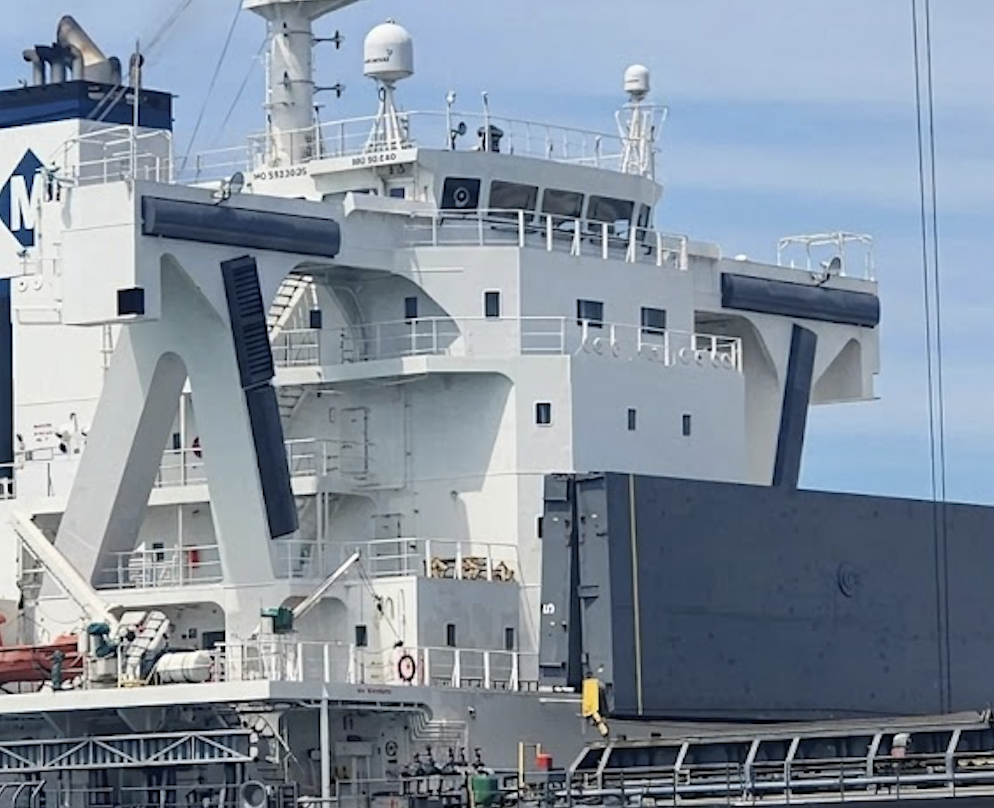
The Strange Accommodation Fitting That Explains Shipping’s Real Efficiency Problem
Excerpt: Cleaner fuels matter, but a small accommodation-side fitting on a bulk carrier illustrates how design choices can eliminate avoidable waste without reducing a ship’s capability.
Related DeepDraft SITREPs
Related DeepDraft Articles & Analysis
Sources
UKMTO/JMIC advisory reporting, Reuters, IRNA, HYDROPAC navigational warnings, Port Authority of Guam.
Security Desk | Maritime Security Dashboard →
This update is part of the DeepDraft SITREP series covering developing maritime operational situations.



Leave a Reply