
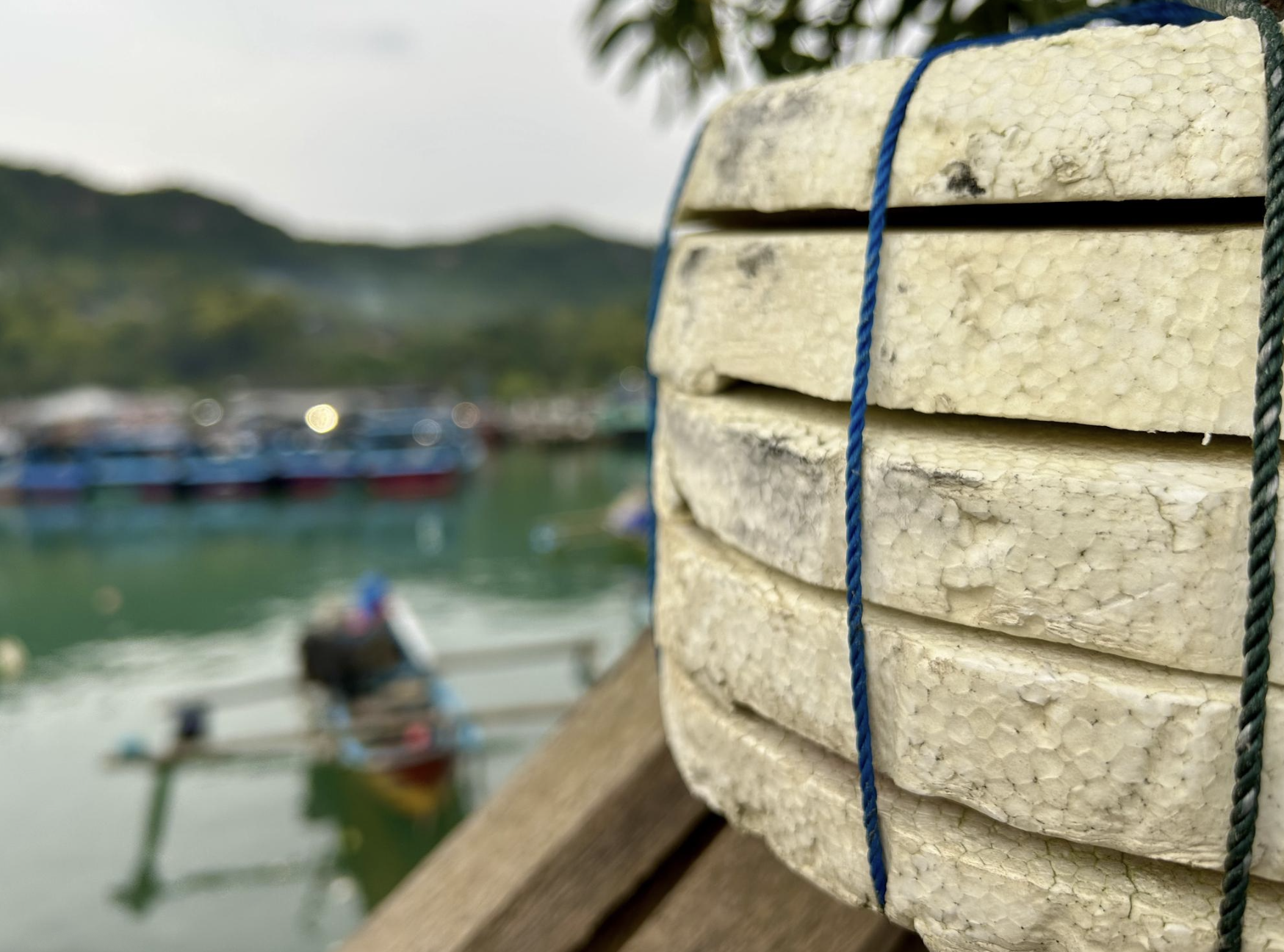
The report came from the bridge while the vessel was drifting off Indonesia and awaiting orders.
A large thermocol float was coming down the ship’s side. From above, it looked harmless: soft, light, and small against the hull. The float passed along the side, reached the aft area, and disappeared from view. It had not passed clear. From the steering gear flat and rudder stock area, the rope could be seen caught at the propeller. The float was only the marker.
The real hazard was below it.

What Are Rumpon?
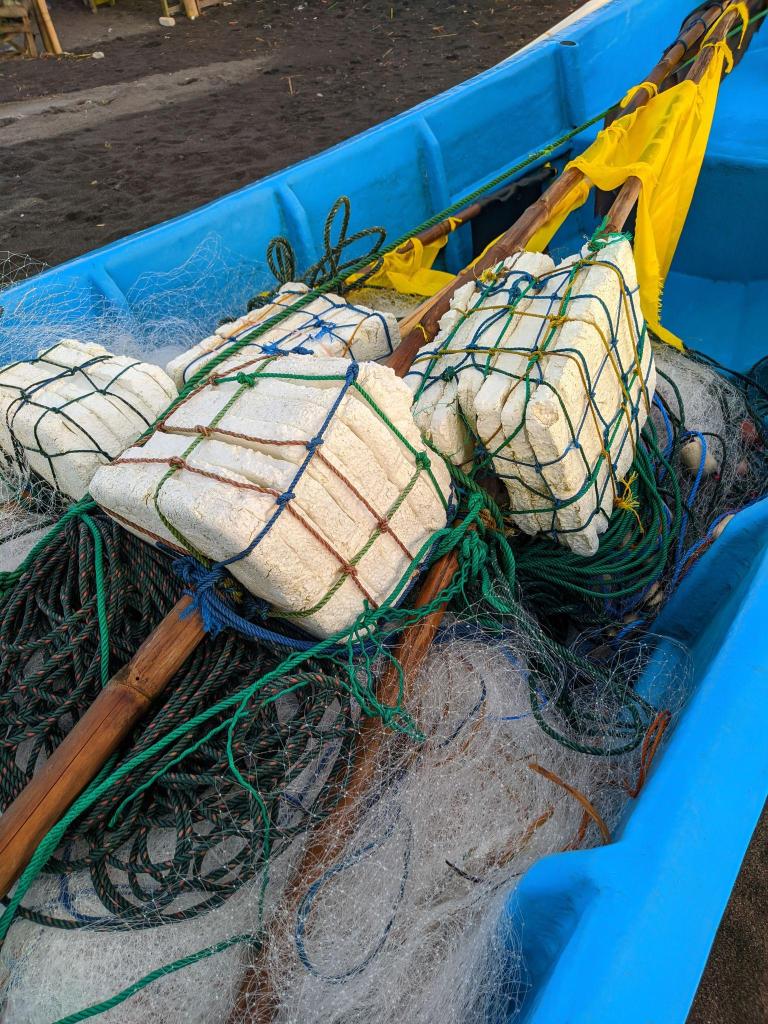
In Indonesian waters, many fish aggregating devices are known as rumpon. They are fishing systems & not simple marker buoys. A fixed rumpon may include a float, attractor, mooring rope, weight, or anchoring arrangement. The surface marker is only the visible part of a larger underwater system.
A properly fixed, marked, and charted fishing device can be identified and avoided. The higher risk appears when part of the system fails, parts, shifts, or breaks away. A thermocol block, drum, or marker may remain on the surface while heavy synthetic rope, attractor lines, anchor connections, netting, or fishing gear trail below.
In one observed case off Indonesia, the line was approximately 72 mm in diameter, with an estimated suspended or trailing length of 30 metres near the float. These figures are not a fixed rumpon standard, but they show why the hazard is different from ordinary floating debris.
For fishermen, rumpon are fishing infrastructure. For a drifting merchant ship, the hazard begins when they part away from the main system. Research into Indonesian anchored fish aggregating devices, or AFADs, estimates that 10,000 to 50,000 unlicensed AFADs may be operating and describes monitoring as a major challenge.
Why Drifting Changes the Risk
A ship making way has relative control and the OOW can alter course early, increase clearance, or pass upwind and up-current of visible gear. But, a drifting vessel awaiting orders has less control.
The synthetic rope attached to the buoy remains suspended in the water and it may run away from the marker and sit at a depth where the rudder, rope guard, and propeller aperture can meet it. As the vessel sets through the water, flow closes around the stern and can bring the suspended rope into the propeller and foul it even before the shaft turns.
Once the shaft is moved, this can become severe with the line already near the aperture can be taken by the propeller and wound around the boss within seconds. This is where the exposure becomes commercial as well as operational. A fouled propeller can delay berthing, require diver attendance, involve tug assistance, trigger machinery inspection, and create off-hire or charterparty friction. When a charterer instructs a vessel to drift awaiting orders off Indonesia, the vessel remains exposed to local fishing-gear conditions. Who carries the time and cost will depend on the charterparty, notices, Master’s actions, and whether the risk was known or reasonably foreseeable.
It is imperative that the drifting position is assessed before the vessel is left to drift through fishing-dense water.

The Lookout Warning
Vessels drifting off Indonesia or in any fishing-intensive coastal waters should treat unexplained floats as possible fishing gear until their movement and risk are understood. Thermocol blocks, drums, bamboo clusters, improvised buoys, plastic containers, small flags, or semi-stationary debris may be the visible part of a larger underwater arrangement.
Modern bridge equipment does not reliably remove this hazard. Low-profile thermocol blocks, plastic drums, and bamboo markers generally gives poor radar returns. Rain or sea clutter, darkness, and swell can hide small markers until they are close. X-band radar may detect small targets in good conditions, but it cannot be relied upon for every improvised fishing float. AIS will not help unless the gear carries a transmitter.
The risk is often underestimated because drifting is treated as a lower-intensity condition. On many cargo ships, bridge watch levels are reduced during waiting periods, sometimes leaving the OOW alone on the bridge. That may be acceptable in open water, but it is not suitable when fishing floats, rumpon markers, or unlit surface objects are present around the vessel. During drifting in fishing-dense waters, lookout should be treated as an active control. Use binoculars in daylight. At night, assume many floats are unlit, without AIS, and unreliable on radar. Protect night vision, reduce unnecessary bridge glare, track any weak or intermittent radar/visual contact, and pay particular attention to the quarter and stern. If the drift is setting the vessel toward suspected fishing markers, do not wait to confirm the rope. Increase watch level, place engines at readiness, and manoeuvre early.

This is where watchkeeping must remain active rather than merely manned, a point discussed earlier in DeepDraft’s Standing Watch vs Seated Bridge.
What Fouling Can Do
A heavy rope entering the propeller area can wind around the boss, jam near the rope guard, load the shaft, restrict rotation, damage the stern tube seal area, affect rudder clearance, create vibration, or prevent safe propulsion use.
Incident sharing from IMCA shows the failure mode clearly. In one case, unmarked fishing nets entered both main propellers during night operations close inshore, leaving the vessel with limited manoeuvrability. In another, fishing gear damaged an azimuth thruster, requiring dry-dock repairs, high repair cost, and nearly ninety days off-hire.
These were not rumpon cases, but they show what can happen once fishing gear reaches propulsion: loss of manoeuvrability, emergency control measures, machinery damage, dry-dock exposure, and commercial loss.
The line does not need to be small. Fishing and mooring arrangements may use heavy synthetic rope strong enough to resist hooks, heaving lines, winches, or deck force once wound tight.
After removal, the vessel still requires checks. Shaft vibration, stern tube seal condition, rope guard damage, bearing temperature, rudder clearance, propeller blade condition, leakage, and abnormal shaft behaviour.
Unfouling is complete only when propulsion integrity is confirmed.

Before Starting the Engine
Before Starting the Engine
After drifting near fishing gear, treat the stern area as a propeller-clearance risk, not only an engine-room readiness matter.
Design, SMS, and Reporting
Lookout is only one layer of control. For vessels trading repeatedly through fishing-dense waters, the stern arrangement should be reviewed against actual exposure.
Two design defences matter. The first is the rope guard, which protects the stern tube and shaft area and should be inspected for condition, clearance, deformation, and effectiveness. The second is the rope cutter. Some vessels use fixed and rotating blade arrangements near the shaft or propeller area to cut rope, nets, or light floating gear before it tightens around the propeller.
For large merchant ships, rope cutters are not a simple retrofit. Shaft power, propeller size, hydrodynamics, cavitation, class approval, maintenance access, and dry-dock timing all matter. But for vessels regularly drifting off Indonesia, West Africa, or other fishing-intensive coasts, the question should still be asked: is the existing rope guard enough, and is additional protection technically feasible?
Most vessels already have checklists for anchoring, coastal passage, pilotage, harbour arrival, departure, and restricted visibility. Drifting, however, is often treated as a waiting condition rather than an operation. That gap matters because commercial drifting has increased with berth congestion, port delays, charterer instructions or geo-political uncertanities to await orders outside port limits or anchorage areas. Company SMS should incorporate a dedicated drifting checklist. It should cover drift position limits, traffic, depth, weather, current, proximity to land, territorial waters or coastal-state considerations, fishing-vessel density, visible floats or rumpon markers, required bridge watch level, engine readiness, and pre-engine-start propeller clearance.
Reporting culture is part of the control. Most companies already have near-miss systems, but Masters may hesitate if every report leads to excessive questioning or blame. Rope contact, suspected fouling, unusual floats, and recovery actions should be captured for learning, not fault-finding. That is how one vessel’s experience becomes fleet protection.

The same gap appears in other shipboard systems, where procedure exists but operational competence and verification still decide the outcome, as discussed in DeepDraft’s ECDIS Certification Is Not the Same as ECDIS Competence.
DeepDraft View
The case that triggered this analysis ended only after hooks, hoisting attempts using the winches, and manual pulling failed. The rope released when the engine was slowly turned on the turning gear in the opposite direction.
For a vessel making way, keep well clear. For a vessel stopped or drifting, treat fishing floats and rumpon markers as stern-area hazards, maintain an active lookout, and confirm propeller clearance before shaft movement.
The marking issue also needs attention at authority level. Large offshore rumpon near anchorages, approaches, waiting areas, or commercial traffic routes should be fitted with reliable visual marks and good-quality radar reflectors. Where feasible, AIS, low-power electronic beacons, or another approved tracking method should also be required, so that even parted or drifting gear remains visible, identifiable, and traceable before it reaches a vessel’s stern.
Do not judge rumpon by what floats. Judge them by what may be below, and by whether the bridge has any reliable way to detect them before they reach the propeller.

Sources Reviewed
- Indonesian Ministry of Marine Affairs and Fisheries, Ministerial Regulation No. 26/PERMEN-KP/2014 on Rumpon
- Widyatmoko et al., Scientific Reports, research on Indonesian anchored fish aggregating devices
- FAO, Voluntary Guidelines on the Marking of Fishing Gear
- IMCA Safety Flash 08/19, Fishing Nets Caught in Propellers
- IMCA Safety Flash 21/18, Costly Damage to Azimuth Thruster Caused by Fishing Gear
- IMO Resolution A.893(21), Guidelines for Voyage Planning
- SOLAS Chapter V, Regulation 34, voyage planning principles
- Operational experience from the author


Leave a Reply