

Two Saudi-crude tankers reversed course in the Red Sea after Houthi blockade warnings, turning Bab el-Mandeb from a threat signal into a confirmed voyage-disruption event.
1. Saudi Crude Tankers Reverse After Houthi Warning
• Two oil tankers carrying Saudi crude to Asia made U-turns in the Red Sea on Tuesday after Houthi threats against Saudi-linked shipping.
• Reuters reported the vessels had loaded at Saudi Arabia’s Yanbu terminal and were bound for China and India before heading toward the Suez Canal instead of continuing south toward Bab el-Mandeb.
• The vessels were identified in industry reporting as the Singapore-flagged VLCC XIN LONG YANG, IMO 9761463, and the Liberia-flagged tanker RODOS, IMO 1024948.
• XIN LONG YANG had reportedly completed loading about 2 million barrels of Saudi crude at Yanbu, while RODOS had loaded a smaller Saudi crude cargo for India.
• The reversal is the first confirmed commercial tanker-routing change after the Houthi maritime embargo declaration against Saudi Arabia.
2. Bab el-Mandeb Moves From Threat to Routing Consequence
• Yemen’s Houthi movement declared a maritime embargo against Saudi Arabia on Monday, saying the measure was effective immediately.
• The Saudi-led coalition said it had begun protection measures for ships transiting Bab el-Mandeb and described the threat as maritime piracy.
• Bab el-Mandeb is now a routing-control problem for Saudi cargoes, Red Sea port calls, Suez planning and India/China crude delivery windows.
• Yanbu had been functioning as the main Saudi bypass while Hormuz movements were constrained. The U-turns show that the bypass route now carries its own disruption trigger.
• Operators should separate Houthi declaration risk from confirmed enforcement, but the tanker reversals now provide the first hard routing consequence.
3. Hormuz Strike Pressure Remains the Co-Foremost Security Layer
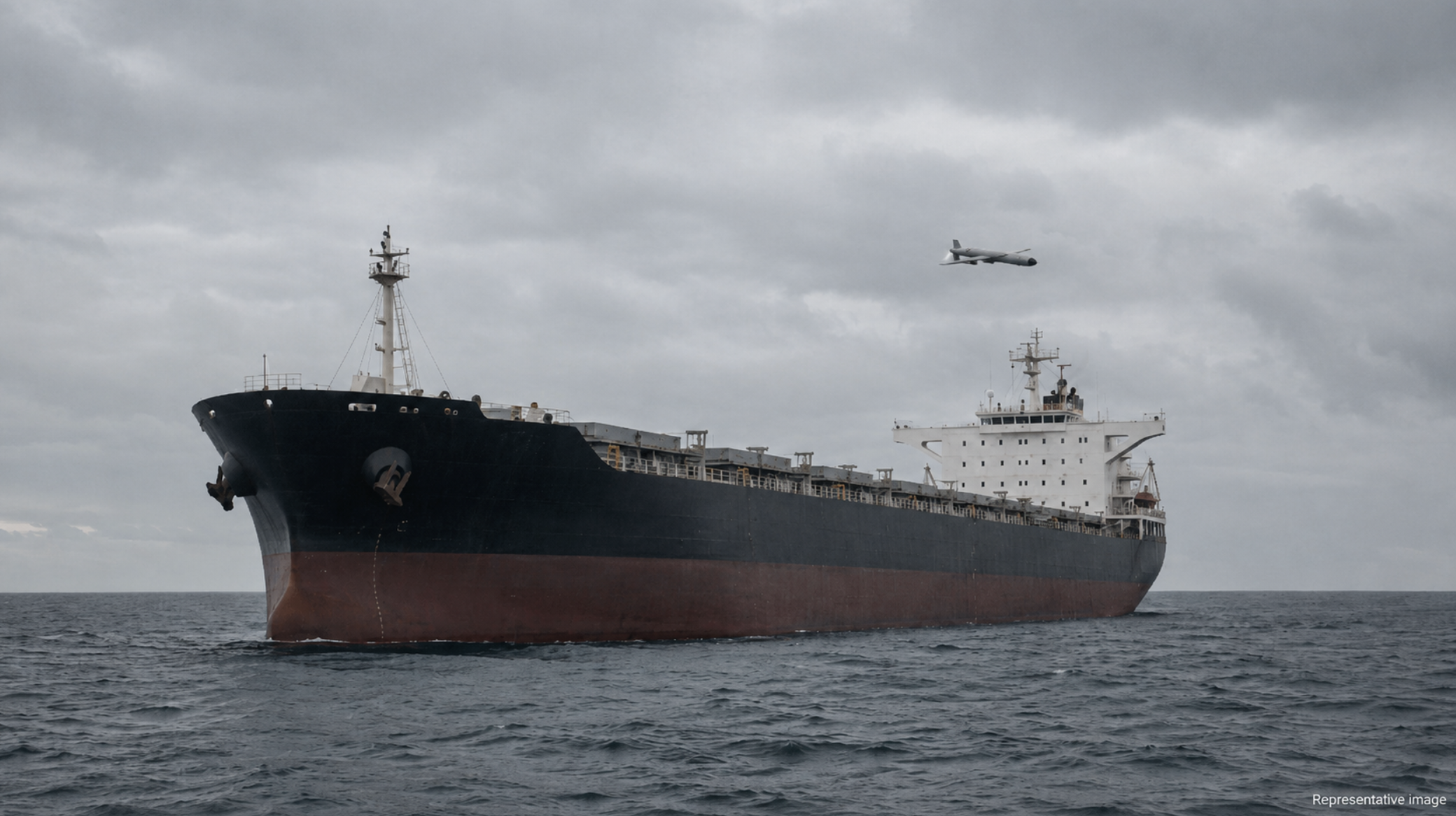
• UKMTO-linked reporting said a tanker in the Strait of Hormuz was struck by an unknown projectile on Tuesday, forcing the crew to abandon the vessel and board a lifeboat.
• DeepDraft’s latest July 21 SITREP already reported the Dynacom double strike off Oman, with Kavomaleas evacuated after an engine-room fire and Acheloos proceeding to anchorage for damage assessment.
• The latest Hormuz layer does not replace the Red Sea routing lead, but it keeps Gulf passage under CRITICAL RED security conditions for Masters, CSO teams, insurers and chartering desks.
• Vessels transiting Hormuz should verify UKMTO/JMIC advisories, company transit authority, AIS policy, lifeboat readiness, fire boundary control and emergency reporting before entering the Strait.
• Any instruction to alter route, report voyage details or use a designated lane should be logged, escalated and cleared through company, P&I and security channels before response.
4. Black Sea Vessel Attacks
• Reuters reported the Liberian-flagged LPG Gas Lisbon was hit outside Romanian territorial waters, about 20 nautical miles off Romania, while sailing from Egypt to Ukraine.
• Romanian authorities evacuated the crew, including three injured members, and dispatched a tug to prevent the vessel drifting into a navigation hazard.
• Four Indian nationals died after MV Golden Leo was attacked while departing Odesa, with 17 crew onboard including five Indian nationals.
• Black Sea operators should treat Ukraine-bound approaches as active crew-risk and casualty-response areas, not only war-zone routing exposures.
• Ship managers should review crew nationality reporting, port-approach risk assessment, war-risk cover, emergency towage availability and casualty-notification procedures before confirming Ukraine-linked voyages.
Strategic Summary & Actions Required
• Masters on Red Sea passages should confirm Bab el-Mandeb threat updates, Saudi-linked cargo exposure, AIS policy, route alternatives and security reporting before committing southbound from Yanbu.
• Charterers and operators should recheck Saudi crude stems for deviation, Suez/SUMED availability, delivery windows, force majeure, off-hire, demurrage and war-risk premium allocation.
• Ship managers should require written voyage-risk acceptance where the route now touches both Hormuz disruption and Bab el-Mandeb blockade exposure.
• DPA/CSO teams should brief bridge teams on Houthi communication tactics, emergency reporting, safe-space readiness, lookout reinforcement and VHF discipline in the Red Sea and Gulf of Aden.
• Black Sea desks should review Ukraine-bound casualty response, tug availability, crew exposure and notification procedures after the LPG Gas Lisbon and MV Golden Leo incidents.
Operational Status
CRITICAL RED — Saudi Tanker Rerouting / Bab el-Mandeb Blockade Threat / Hormuz Projectile Strikes / Red Sea, Gulf and Black Sea Voyage-Risk Control Required
Latest DeepDraft Analysis
ECDIS Corrections: Why Updated Charts Still Confuse the Bridge
Updated ECDIS can still leave bridge teams exposed where AIO, EP polygons, No Overlay areas and date-dependent corrections are not operationally assessed.
Related DeepDraft Articles & Analysis
Sources
Reuters, UKMTO, MARAD, The Maritime Executive, The DeepDraft
This update is part of the DeepDraft SITREP series covering developing maritime operational situations.

Leave a Reply