

Two chokepoints now sit inside the same operating frame.
Iran’s declaration that the Strait of Hormuz is fully closed, U.S. blockade enforcement against Iranian-linked movement, and warnings over a possible Bab el-Mandeb closure have turned this week’s maritime risk picture into a routing, insurance, crewing and voyage-clearance problem.
Armed boarding risk has reappeared in the Gulf of Aden, Russian strikes have damaged foreign-flagged ships in Ukraine, and operators are already paying for instability through emergency surcharges and tightened route decisions.
At the same time, the EU is softening parts of its carbon-market pathway while preparing to extend ETS coverage to smaller ships.
This week’s DeepDraft analysis adds a bridge-team lesson. Safe navigation depends on what the watchkeeper can correctly judge from the actual working position. In a week of contested chokepoints and unstable orders, the bridge team’s operating picture must be both external and internal.
Weekly Analysis
This week’s flagship analysis is When Bridge Windows Look the Wrong Way.
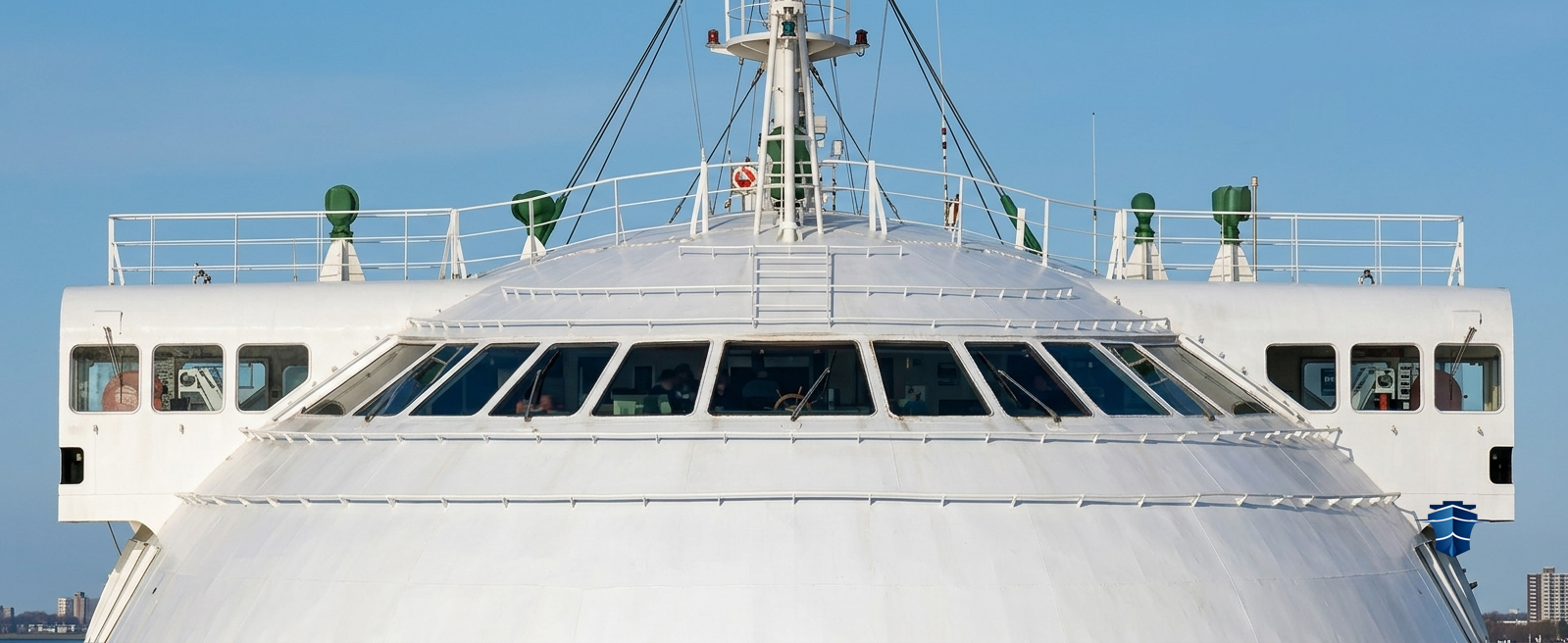
The article examines the City of Rotterdam / Primula Seaways collision and the deeper design question it left behind. Visibility is not the same as visual reference. A bridge team may have a clear external view, functioning equipment, VHF communication and formal compliance, yet still be positioned where ship geometry distorts heading, bearing and relative movement.
City of Rotterdam’s off-axis bridge window and unconventional forward geometry created a false visual frame. The pilot’s apparent assessment of relative motion was not only a human-error event but a bridge-layout problem that entered the vessel at design approval stage.
This matters to masters, pilots, bridge teams, designers, class societies, flag administrations, VTS authorities and ship managers. Shipping is moving through rapid design change – wind-assist systems, compact superstructures, altered sightlines, rounded bow forms and bridge-forward arrangements. Each may have technical or commercial logic. If it changes the navigator’s visual reference, that effect belongs in the operational risk assessment before delivery.
The DeepDraft view is simple. Unconventional bridge geometry needs a human-factors test from the navigator’s actual working position. Can the officer correctly judge what he sees from where he actually stands?
This Week in Maritime: Timeline of Escalation
July 14 — Blockade Enforcement Turns Hormuz Into Vessel-Level Risk
U.S. blockade enforcement against Iranian ports and coastal areas moved the Gulf operating picture from advisory risk into vessel-level exposure. Visit, search, diversion, capture and documentation risk became immediate voyage considerations for Gulf-linked traffic.
July 15 — Tanker Damage Pushes Crude-Shuttle Confidence Lower
Reports and claims of tanker damage in the Strait of Hormuz sharpened concern around crude-shuttle continuity, crew exposure and war-risk appetite. For owners and charterers, the question moved from theoretical routing to whether a loaded or ballast passage could still be justified.
July 16 — Operators Reject Guided Hormuz Passage
Operators began pulling away from U.S.-guided Hormuz passage after attacks in Omani waters exposed the limits of escort confidence. The practical outcome was voyage refusal, route fragmentation and a heavier burden on masters, CSOs, insurers and charterers to define acceptable transit conditions.
July 17 — Belma Disabled, Asana Boarded and Ukraine Port Risk Widens
The Curaçao-flagged VLCC M/T Belma was disabled after attempting to move toward Kharg Island under renewed blockade enforcement. The same cycle brought the boarding of the chemical tanker Asana off Yemen and Russian drone strikes damaging foreign-flagged ships at a Ukrainian port, extending the week’s risk picture beyond the Gulf.
July 18 — Hormuz Closure Declaration and Bab el-Mandeb Threat Create Dual-Chokepoint Exposure
Iranian sources declared the Strait of Hormuz fully closed after vessel interdictions, while warnings over potential Bab el-Mandeb closure brought Red Sea energy movement back into the operating frame. Hormuz traffic was already sharply reduced, leaving owners and insurers facing a broader chokepoint problem rather than a single-route disruption.
Full Live Wire coverage for the week:
https://thedeepdraft.com/category/wire/
Markets, Shipbuilding and Policy Signals
Emergency surcharges are moving into the India-Europe trade.
Maersk’s increase to its Emergency Contingency Surcharge on cargo from the Indian subcontinent to North Europe from August 1 shows how regional instability feeds directly into liner cost structures and customer pricing.
U.S. naval shipbuilding is adjusting to missile-defense demand.
Philly Shipyard’s role in building missile-tracking vessels for a new U.S. missile-defense program reflects a wider shift in maritime infrastructure toward persistent surveillance, tracking and defense-support platforms.
EU ETS policy is becoming less linear.
The European Commission’s proposed ETS revision softens the emissions pathway for industry while also preparing to apply maritime ETS coverage to ships over 400 GT. For shipping, the message is mixed: regulatory pressure continues, but the timing, cost curve and scope of exposure are being adjusted.
Strategic Summary
The main operational implication is loss of routing certainty across multiple theatres. Hormuz is declared closed by Iran, U.S. blockade enforcement is active, Bab el-Mandeb is being threatened, the Gulf of Aden has seen a tanker boarding, and Ukraine-linked port risk remains live. Masters and operators are being asked to execute voyages inside a moving legal, military, insurance and commercial frame.
Ship managers, insurers and charterers should watch three signals next: whether any neutral Hormuz transit channel remains practically available, whether Bab el-Mandeb threats move from warning to action, and whether seafarer deployment restrictions expand beyond the first national advisories.
The regulatory track also matters. EU ETS softening does not remove compliance exposure. It changes the timing, scope and commercial assumptions behind that exposure. Security risk may dominate the week, but carbon-market policy continues to shape the operating cost of shipping.
This report is part of the DeepDraft Weekly Maritime Brief series tracking operational, regulatory, and security developments across global shipping.


Leave a Reply