
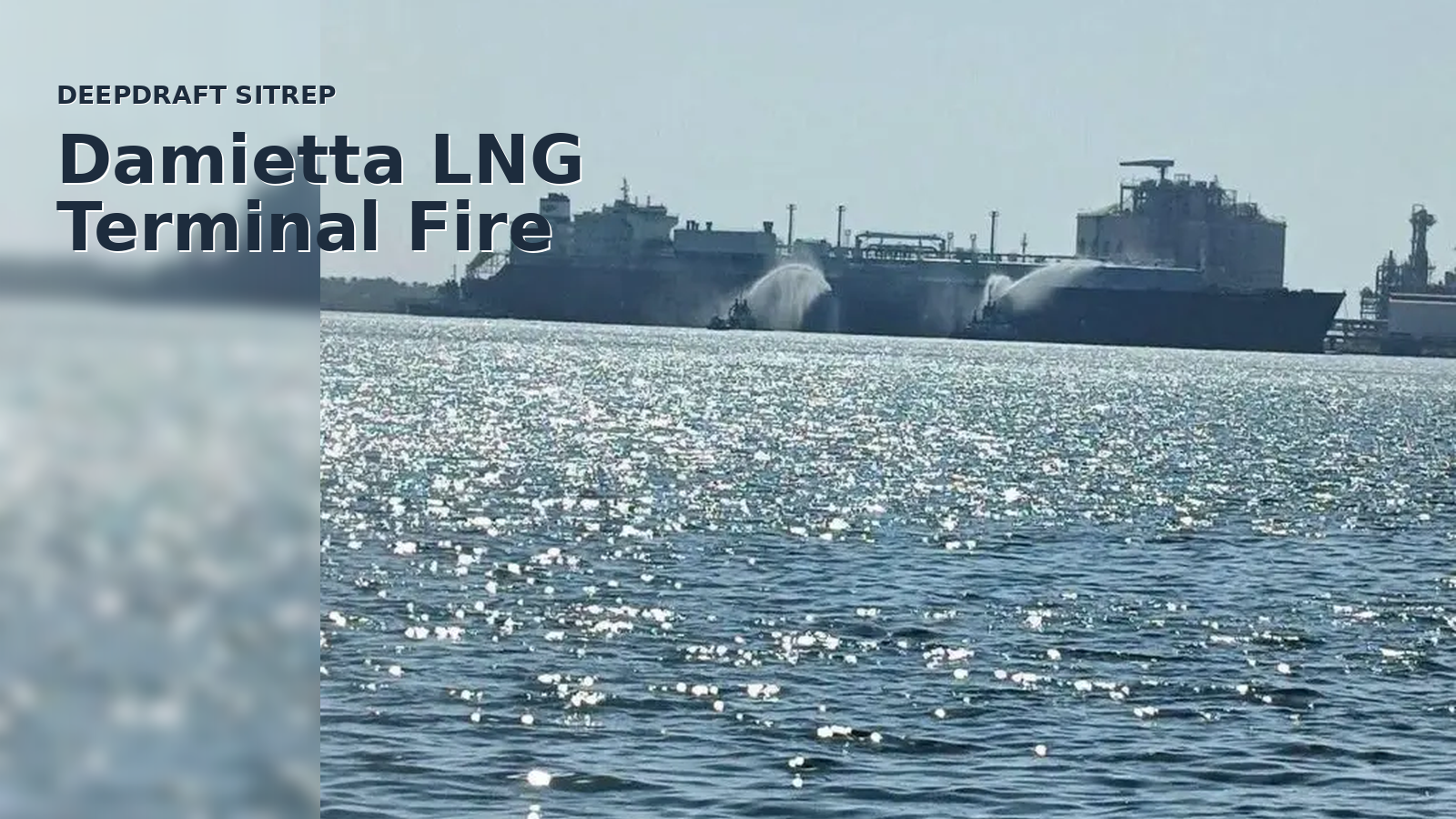
A reported drone strike and fire at Egypt’s Damietta port has moved Middle East maritime risk into LNG infrastructure on the Mediterranean.
The immediate operating picture is LNG terminal safety, FSRU exposure, Red Sea vessel targeting, Hormuz insurance sanctions and Black Sea strike risk.
1. Damietta LNG Fire: Energos Winter and GasLog Salem Affected
• Reuters reported that the U.S.-owned FSRU Energos Winter was struck at Egypt’s Mediterranean port of Damietta on July 29.
• The fire spread to the LNG carrier GasLog Salem, according to trading sources cited by Reuters.
• Reuters identified the vessels as ENERGOS WINTER, IMO 9256614, and GASLOG SALEM, IMO 9638915, using vessel-tracking data, satellite imagery and visual verification.
• Egypt’s petroleum ministry confirmed a fire involving a gasification vessel and a storage vessel at Damietta port, but did not confirm a drone strike or identify the cause.
• The ministry said the fire was dealt with under approved emergency-response plans, with no injuries or fatalities reported.
2. Red Sea Vessel Strike: NCC GHAZAL Adds Saudi Tanker Exposure
• Yemen’s Houthis claimed a ballistic-missile attack on the Saudi oil tanker NCC GHAZAL in the Red Sea.
• The vessel was reported as a roughly 50,000 dwt product tanker.
• Maritime Executive reported that the vessel turned back and returned to port after the strike report.
• The claim follows the Houthi declaration of a maritime blockade against Saudi-linked shipping.
• The Red Sea operating issue is now vessel-specific targeting, not only general route avoidance or advisory language.
3. Hormuz Insurance Sanctions: OFAC Targets Transit-Control Revenue Layer
• OFAC designated Persian Gulf Marine Insurance Company and HormuzSafe Marine Services Authority on July 29.
• The U.S. Treasury described the action as targeting an IRGC-backed Strait of Hormuz maritime insurance and services network.
• Treasury alleged the network was designed to force commercial vessels into mandatory insurance or service payments linked to Hormuz transit.
• Reuters reported the wider sanctions package included 10 entities and eight tankers.
• Charterers, operators, owners and insurers now face a direct compliance screen on Hormuz-related insurance, payment, routing and service instructions.
4. Black Sea Strike Layer: Odesa and Mykolaiv Remain Active Vessel-Risk Areas
• Reuters reported that Russia said it struck at least two Ukrainian vessels in the Black Sea on July 28.
• The Russian Defence Ministry said one target was a bulk carrier carrying military cargo and another was a vessel in the port of Mykolaiv.
• Separate Ukrainian-linked reporting said a Liberian-flagged civilian vessel near Odesa had been attacked again while at anchor.
• The Black Sea risk layer remains operationally relevant for port calls, coastal-corridor transits, crew exposure, war-risk clauses and voyage suspension decisions.
• Masters and managers should separate confirmed official warnings from belligerent claims, but treat vessel-level targeting as active in Ukrainian approaches.
Strategic Summary & Actions Required
• Masters and ship managers with Egypt, East Mediterranean or LNG-terminal exposure should verify Damietta port status, berth availability, terminal instructions, emergency-response limits and cargo-transfer timing before arrival.
• LNG operators and technical managers should review FSRU interface controls, fire-response readiness, manifold isolation, gangway access, emergency shutdown chains and third-party vessel proximity at gas terminals.
• Red Sea voyages involving Saudi-linked cargo, ownership, charterers or port calls require refreshed threat assessment, abort criteria, AIS policy, naval reporting and insurer approval before Bab el-Mandeb commitment.
• Hormuz-linked fixtures should screen Persian Gulf Marine Insurance Company, HormuzSafe Marine Services Authority and any related service, payment or traffic-management instruction before acceptance or response.
• Black Sea and Ukrainian port exposure should be reviewed against war-risk cover, safe-port wording, crew-change feasibility, local agency confirmation, flag guidance and vessel-specific strike history.
Operational Status
CRITICAL RED – Damietta LNG Fire / Reported FSRU Strike / Red Sea Saudi Tanker Targeting / Hormuz Insurance Sanctions / Black Sea Vessel-Risk Layer
Latest DeepDraft Analysis
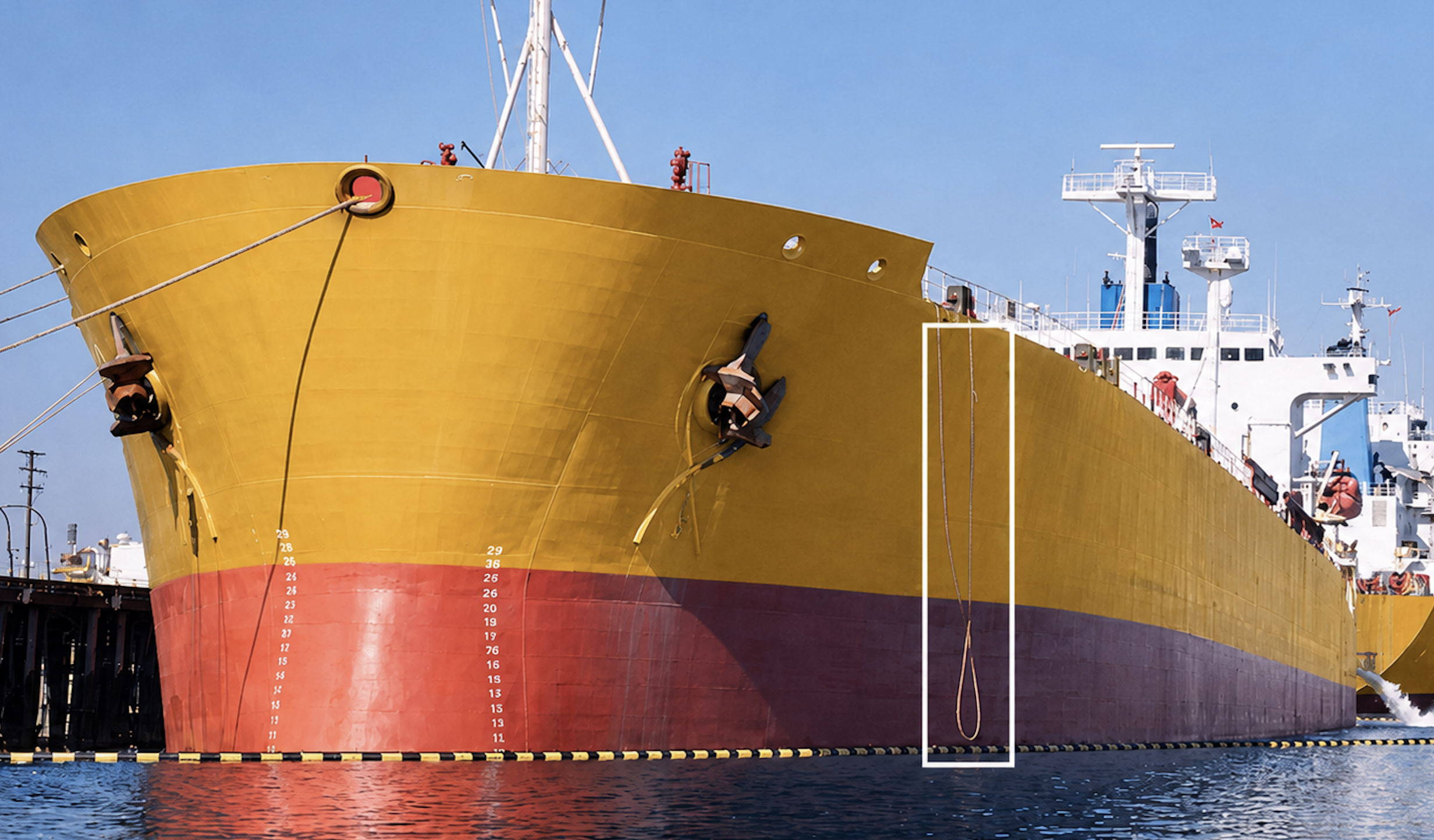
MEG-4 Mooring Numbers: Why Ships Are Still Getting Confused
MEG-4 shows why mooring strength language still creates operational confusion when SDMBL, WLL, LDBF and brake render are not tied to design basis.
Related DeepDraft Articles & Analysis
Sources
Reuters, Egypt Petroleum Ministry, Ambrey, U.S. Treasury OFAC, The Maritime Executive
This update is part of the DeepDraft SITREP series covering developing maritime operational situations.

Leave a Reply