

Maritime security led the week, with the Strait of Hormuz again at the centre of tanker risk.
DeepDraft’s weekly reporting covered projectile strikes on tankers leaving Hormuz, confirmed crew fatalities on SIDR, Iran’s expanded non-compliance list, Black Sea crude-loading exposure, and a container loss off Batangas. Additional industry reports added further developments: the reported abandonment of Senegal Prosperity, Norway’s seizure of the Russian vessel Professor Molchanov, South Korea’s review of possible Hormuz deployment options, and a fatal collision off Istanbul.
Weekly Analysis
This week’s flagship DeepDraft analysis is Dark Transits in Hormuz: The Illusion of Disappearance.
The article examines what happens when tankers switch off AIS during high-risk transits. A vessel may disappear from public tracking platforms, but it does not disappear from the sea. It can still be detected by radar, satellites, RF monitoring, LRIT, coastal sensors, naval forces and nearby ships.
Full analysis available on DeepDraft:
This Week in Maritime: Timeline of Escalation
September 1 — Tanker Hit in the Strait of Hormuz
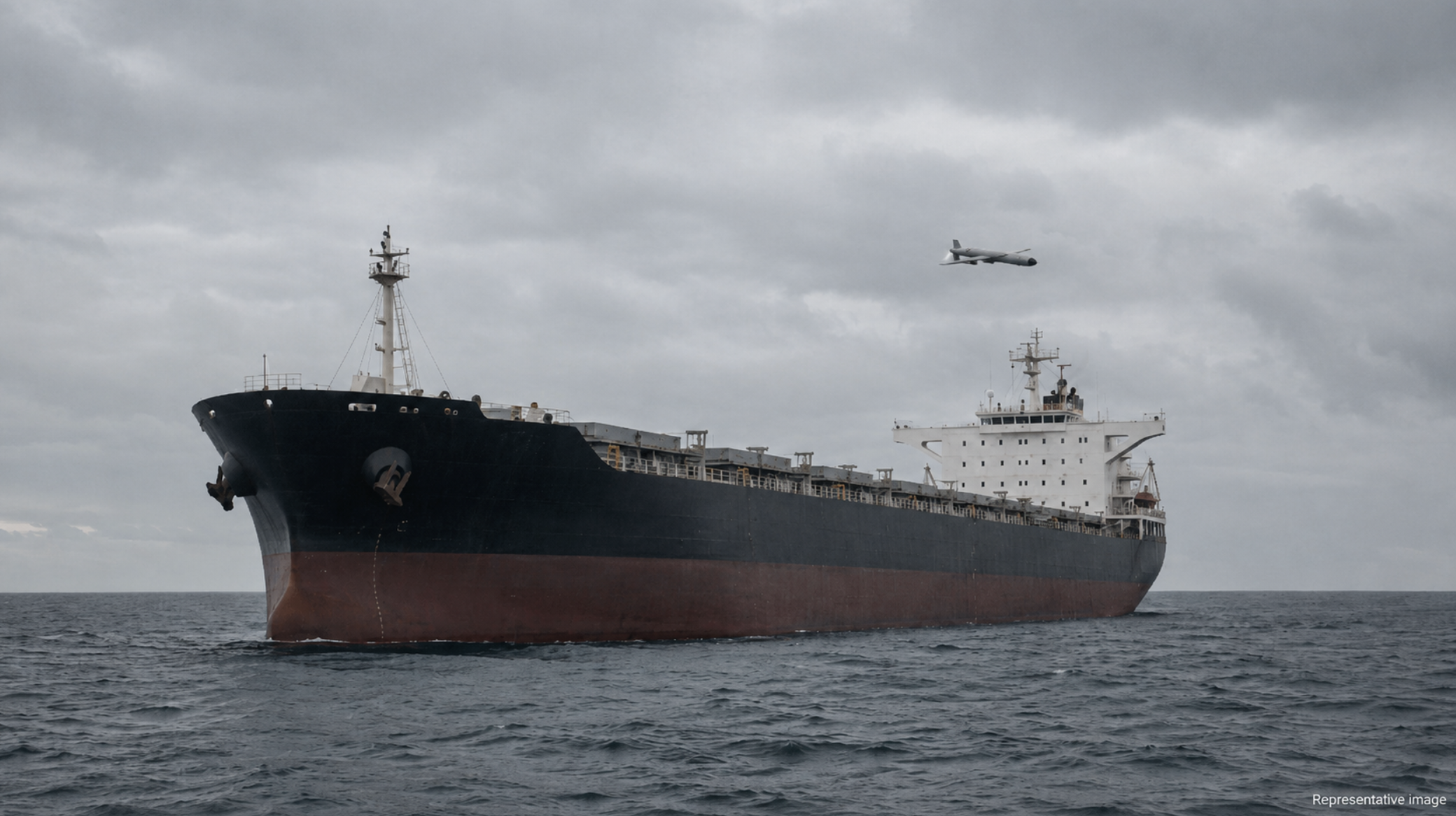
A tanker was struck by three unknown projectiles while transiting outbound through the Strait of Hormuz east of Khasab, Oman. U.S. forces also struck Iranian launchers on Larak Island after reported mine-deployment preparations. The incident placed projectile and mine risk back into voyage planning, war-risk review and bridge-team preparation.
September 2 — Saudi Crude VLCCs Hit While Leaving Hormuz
The Saudi-flagged VLCC SIDR and Liberian-flagged VLCC SENEGAL PROSPERITY were reported struck by unknown projectiles while leaving Hormuz. Each vessel was carrying about 2 million barrels of Saudi crude. The incident affected Gulf loading assumptions, owner consent, deviation rights, off-hire exposure, laycan reliability and cargo delivery planning.
September 3 — SIDR Fatalities Confirmed as Iran Expands Vessel List
Two Filipino seafarers were confirmed dead after the attack on Bahri VLCC SIDR. Iran’s Persian Gulf Strait Authority also expanded its non-compliant list from 45 to 56 ships. The development added crew-casualty exposure and compliance pressure to an already high-risk Hormuz operating environment.
September 4 — Black Sea Support-Vessel Strike Raises CPC Loading Concerns
Ukraine’s reported strike on the Russian support vessel Nefrit placed the repair chain behind the Caspian Pipeline Consortium’s Novorossiysk export system under pressure. The concern is not limited to one support vessel. If offshore mooring repairs are delayed, tanker loading windows and crude-export resilience from the CPC system may be affected.
September 5 — Span Asia 39 Loses 46 Containers off Batangas
The Philippine Coast Guard issued a navigation warning after Span Asia 39 lost 46 containers off Batangas near Hamilo Point. The immediate concern is floating or semi-submerged container risk for coastal traffic, Manila approaches, VHF safety broadcasts, drift tracking and container-securing review.
Full Live Wire coverage for the week:
https://thedeepdraft.com/category/wire/
Additional Maritime Developments
The following items were reported by external maritime and industry sources and add useful context to the week’s DeepDraft coverage.
Hormuz — Senegal Prosperity Reported Abandoned After Strike
Insurance Marine News reported that Senegal Prosperity was evacuated after being struck while exiting the Strait of Hormuz toward the Gulf of Oman. The vessel was reported abandoned, dead in the water and listing to port, with the crew evacuated by local authorities and no crew casualties reported. The report adds salvage, cargo continuity and casualty-response issues to the Hormuz tanker-risk picture.
Svalbard — Norway Seizes Russian Vessel Professor Molchanov
Norwegian authorities seized the Russian vessel Professor Molchanov at Barentsburg, Svalbard, under a court order linked to Naftogaz enforcement action against Russian assets. The case shows how geopolitical and legal claims can reach individual vessels in exposed jurisdictions.
South Korea — Hormuz Deployment Review Still Ongoing
South Korea’s presidential office said no final decision had been made on sending forces to the Strait of Hormuz. Reports said the options under review include military and non-combat support, including maritime patrol aircraft, a logistics support vessel and mine-detection or clearance capability. For shipping, the point to watch is whether Hormuz security becomes a longer-term multinational operating issue.
Sea of Marmara — Ten Crew Missing After Collision off Istanbul
Ten crew members were reported missing after a cargo ship sank off Istanbul following a collision with another vessel. The incident is relevant for bridge teams because collision investigations usually focus on watchkeeping, AIS use, VHF communication, radar plotting, traffic assessment and preservation of voyage data.
Container Shipping — Samsung Files $186 Million Complaint Against CMA CGM
Samsung Electronics America filed a $186 million complaint against CMA CGM in the United States, alleging Shipping Act violations linked to pandemic-era service failures, inland delivery breakdowns, demurrage, detention and rail storage charges. The case shows that pandemic-era disruption is still producing legal and commercial claims in container shipping.
Nuclear Shipping — Pink Corridor Study Announced
Lloyd’s Register, A.P. Moller-Maersk and two major container ports are collaborating on a “pink corridor” project to study nuclear-powered transatlantic container shipping. The study is focused on the framework needed for such a route, including ports, regulation, safety, security, emergency response, insurance and operational readiness.
Alternative Fuels — August Orders Reach Near Two-Year High
Orders for alternative-fuelled vessels reached a near two-year high in August, led by LNG-powered container ships and car carriers. The figures show that alternative-fuel investment continues, with LNG still taking the largest share of recent ordering.
South Korea — Offshore Wind Siting Moves to Government Control
South Korea is changing its offshore wind development policy by shifting site selection to the government. The country is targeting 25 GW of preliminary development zones by 2031. For shipping and offshore operators, the change matters because future offshore wind development will affect marine spatial planning, traffic routes, fisheries, military areas and permitting.
Strategic Summary
Hormuz remained the main maritime security focus this week. Tanker strikes, the reported evacuation of Senegal Prosperity, the deaths on SIDR, and South Korea’s review of possible deployment options all point to continuing risk for Gulf transits.
The Black Sea remained a concern for energy shipping after the reported strike on Nefrit, which may affect support work linked to CPC offshore loading infrastructure. Separately, the seizure of Professor Molchanov in Svalbard showed how legal enforcement linked to geopolitical disputes can affect ships directly.
Outside the security file, the week also included a serious collision off Istanbul, a major container-shipping complaint in the United States, progress on a nuclear-powered shipping study, strong alternative-fuel vessel ordering, and South Korea’s offshore wind policy change.
This report is part of the DeepDraft Weekly Maritime Brief series tracking operational, regulatory, and security developments across global shipping.
Leave a Reply