

China is seeking safe passage for tankers through Bab el-Mandeb as Saudi crude routes split between direct Red Sea passage, Suez and delay.
The immediate operating picture is selective clearance, vessel turnbacks, Hormuz routing uncertainty and armed-convoy risk in the Azov Sea.
1. China Seeks Safe Passage for Tankers Through Bab el-Mandeb
• China has held direct talks with Yemen’s Houthis to allow Chinese tankers to sail through the southern Red Sea without being attacked.
• The talks are focused on keeping Saudi crude moving from Red Sea terminals, especially Yanbu, while Hormuz remains constrained at the Gulf exit.
• At least four tankers have loaded crude from Saudi ports for China and transited Bab el-Mandeb since the Houthi restrictions were announced.
• Vessel clearance is reportedly being handled individually, with each tanker checked before passage.
• The VLCCs New Champion and New Prime both turned back from the Gulf of Aden into open waters after safety concerns around entering the Red Sea.
2. Bab el-Mandeb Traffic Rebounds From Sunday Low
• Bab el-Mandeb traffic rose to 28 vessels on Monday, a four-day high.
• The rebound remains below the July 14 peak of 46 vessels.
• Twelve vessels entered the Red Sea on Monday, including one VLCC, two Suezmax tankers and one Aframax tanker.
• Sixteen vessels exited the Red Sea, including 10 oil tankers.
• The Hong Kong-flagged VLCC New Pearl exited the Red Sea for Zhoushan with about 2 million barrels of Saudi crude.
3. Oman Proposes Voluntary Transit Fees for Hormuz
• Oman has presented Iran with a Gulf-backed plan for joint regional management of the Strait of Hormuz.
• The proposal includes voluntary fees from shipping companies for navigation, environmental protection and search-and-rescue services.
• The plan is modelled partly on Strait of Malacca arrangements, where shipping firms contribute to navigational safety aids.
• The IMO said it is not involved in the discussions and that any new shipping routes or traffic-management measures should be submitted to IMO member states.
• Iran has pushed back with a temporary arrangement that would give Tehran greater control over parts of the traffic lanes.
4. Saudi Crude Routing Splits Between Bab el-Mandeb, Suez and Cape Options
• The VLCC Olympic Luck has exited the Red Sea through Suez while carrying Saudi crude toward Asia.
• DHT Gazelle was reported near the Suez entrance, also partially laden with Yanbu crude and apparently bound for Asia.
• Fully laden VLCCs cannot transit Suez because of draught limits, requiring partial discharge at Ain Sukhna and reloading at Sidi Kerir before onward passage.
• Southbound Yanbu-to-Asia passage through Bab el-Mandeb averages about 16 days.
• A northbound Suez movement followed by a Cape of Good Hope routing can extend the voyage toward about 50 days, depending on destination and operational constraints.
5. Russia Considers Armed Grain Convoys Through the Azov Sea
• Russian officials are proposing to arm grain ships in the Sea of Azov with machine guns and mobile missile launchers.
• The proposal also includes armour plating, sandbags and anti-drone mesh for merchant vessels.
• Military teams would board ships in Azov Sea ports and remove weapons and ammunition after vessels pass through the Kerch Strait.
• The plan calls for bulk carriers to sail in convoys between the Sea of Azov and the Black Sea under military-patrol-boat escort.
• Commercial vessel traffic at Russian Azov Sea ports is reportedly at a standstill, with monthly grain-export losses estimated at 0.5 million to 1.5 million tonnes if restrictions continue.
Strategic Summary & Actions Required
• Masters approaching Bab el-Mandeb should confirm routing instructions, AIS policy, abort criteria and company authority before committing to the strait.
• Ship managers should separate China-linked, Saudi-linked, U.S.-linked, Israel-linked and Iran-linked exposure in voyage risk assessments instead of applying one generic Red Sea security label.
• Charterers and operators should price Yanbu, Bab el-Mandeb, Suez, SUMED and Cape options against laycan, bunker, demurrage, insurance and customer-notification exposure.
• Gulf voyages should treat Hormuz as a live routing and traffic-management negotiation until coastal-state, IMO, insurer and flag guidance become operational instructions.
• Dry-bulk operators exposed to Azov should review armed-guard, convoy, sanctions, insurance, charterparty and port-call wording before accepting voyages through a militarised grain corridor.
Operational Status
CRITICAL RED – Bab el-Mandeb Tanker Clearance / Hormuz Transit-Fee Proposal / Saudi Crude Route Split / Azov Armed-Convoy Risk
Latest DeepDraft Analysis
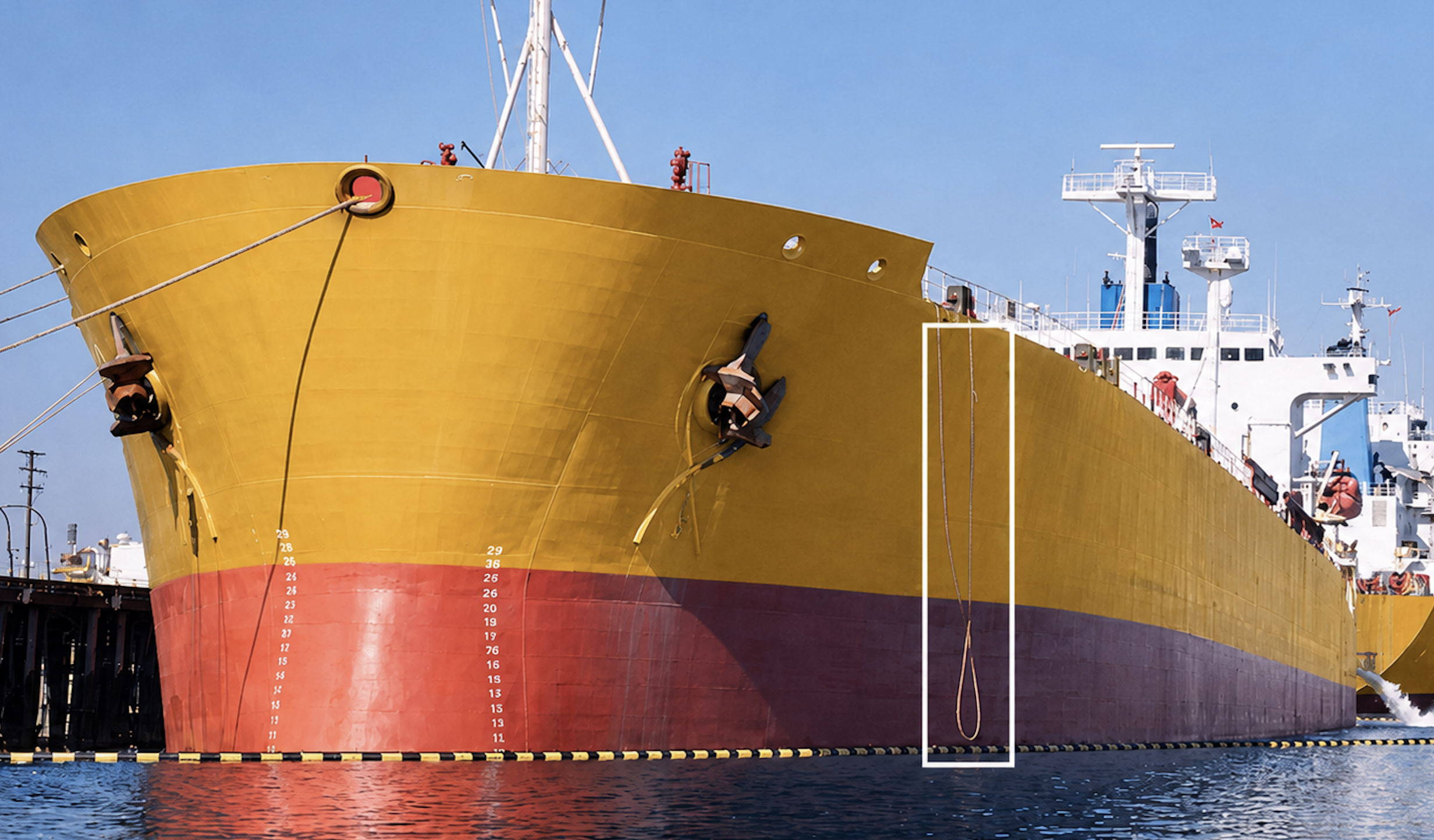
MEG-4 Mooring Numbers: Why Ships Are Still Getting Confused
MEG-4 shows why mooring strength language still creates operational confusion when SDMBL, WLL, LDBF and brake render are not tied to design basis.
Related DeepDraft Articles & Analysis
Sources
Reuters, Bloomberg, gCaptain, Ship & Bunker, The DeepDraft
This update is part of the DeepDraft SITREP series covering developing maritime operational situations.

Leave a Reply