
Inspections are meant to identify risk. They become weaker when they identify wording instead of hazard.
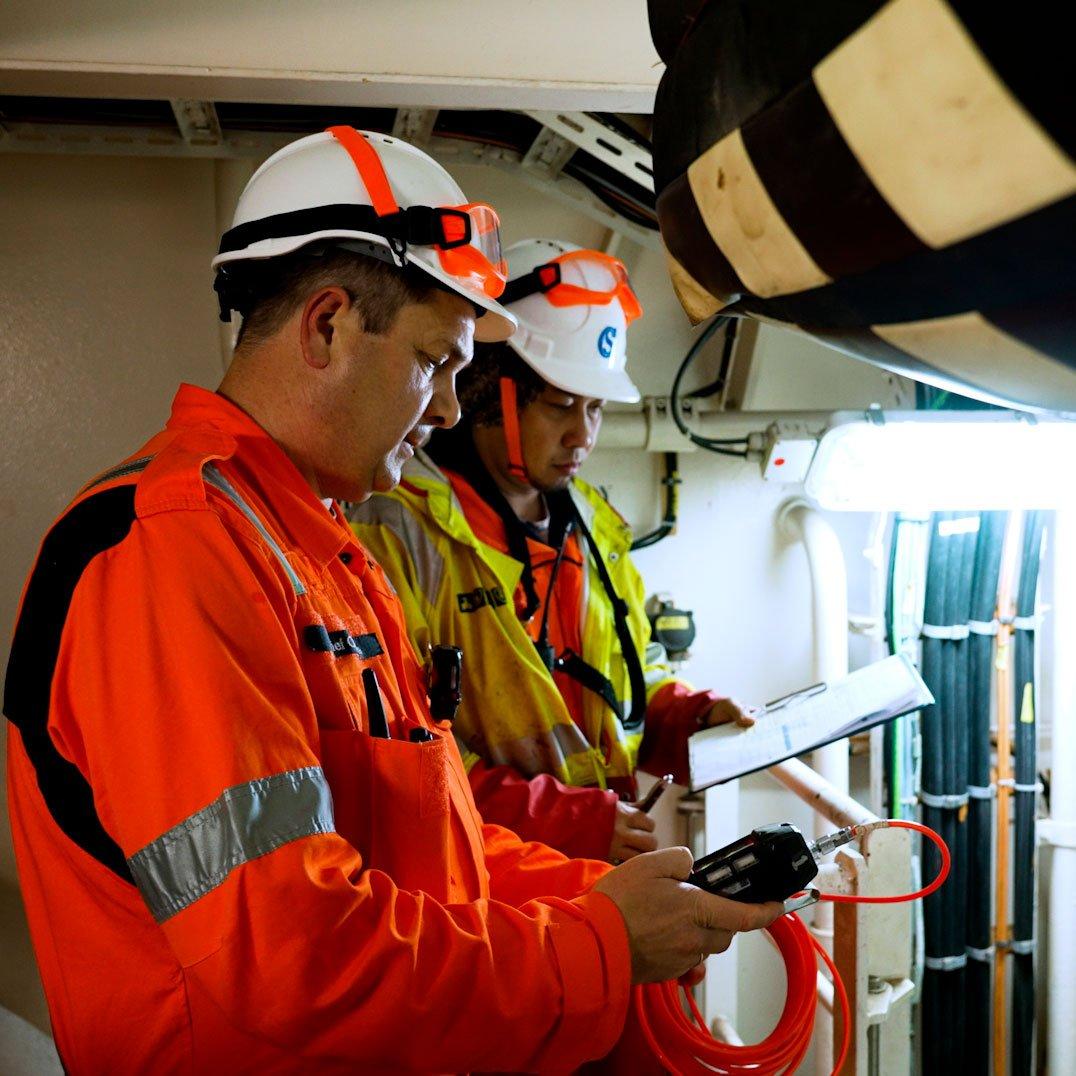
During a recent SIRE 2.0 inspection on one tanker in the fleet, an observation was raised because the company enclosed-space entry permit did not require CO₂ measurement in addition to oxygen, flammable gas and toxic vapours. The observation referred to IMO Resolution MSC.581(110). This is the same inspection weakness discussed in SIRE 2.0: Digital Ambition Crashing into Analog Ineptitude. Digital tools only work when the person applying them understands the operation behind the entry.
The issue is not whether CO₂ can ever be relevant on a tanker. It can. The issue is whether MSC.581(110) is being read to require CO₂ measurement as a fixed tanker permit item, regardless of space, source or operation. If that is the interpretation, managers must ask – is this safety control, or checklist overreach?
To test the logic, reverse the trade. Imagine a bulk carrier carrying grain. Before entry into a cargo hold or connected space, an inspector raises an observation because benzene was not checked. The argument would not stand because grain can create oxygen depletion and CO₂ accumulation, but it does not make benzene a routine enclosed-space hazard.
The same logic applies in tanker operations. An oil tanker is expected to control tanker hazards: oxygen deficiency, hydrocarbon vapour, flammability, H₂S, CO, benzene and cargo-specific toxic vapours. These gases are linked to the cargo, residues, inerting condition, adjacent spaces and work being carried out.
The risk assessment identifies the hazard, and the permit records the controls required for that entry.

Where CO₂ Actually Matters
CO₂ becomes a serious enclosed-space concern when there is a source of generation, release or accumulation.
Organic cargo is the clearest cargo-related case. Grain, timber, wood pellets, palm kernel shells and similar cargoes can consume oxygen and produce CO₂ through degradation, fermentation, oxidation or self-heating. MSC.581(110) recognises this directly and its strongest CO₂-specific language is linked to organic solid cargoes, where it recommends continued CO₂ testing before entry and frequently thereafter because such cargoes continue to emit CO₂.

Fixed CO₂ firefighting systems can create a dangerous atmosphere after discharge, leakage or accidental release. Entry into an engine room, CO₂ room or protected space after such an event requires verification that the atmosphere is safe. That is a source-specific re-entry condition. It does not make CO₂ a routine cargo-tank gas on a crude or product tanker.
Sewage tanks, grey-water tanks and fixed CO₂ release cases may require CO₂ assessment on any ship. That includes an oil tanker. But those are space-specific hazards, not a reason to treat CO₂ as a routine measured gas for every cargo-tank entry. Petroleum cargo residues create a different risk profile: hydrocarbon vapour, oxygen deficiency, H₂S, benzene, mercaptans and cargo-specific toxic vapours. The control is risk assessment, cargo history and space history, not a universal printed gas list.
DeepDraft made the same point in Fire Wires on Tankers: The Safety Control That Became the Hazard: a safety control loses value when it survives after its operational basis has changed.

Reading this as a maritime insider, seafarer, or enthusiast?
Subscribe to The DeepDraft for maritime analysis, daily SITREP updates, weekly briefings, and operational signals worth watching.
Why a Gas-Freed Tanker Cargo Tank Is Different
Crude oil does not behave like grain. Product cargo does not ferment like timber. A tank may be oxygen-deficient because of inert gas, or the atmosphere may still be too rich in hydrocarbon vapour to support safe entry. These are serious tanker hazards, but they are not active CO₂ generation mechanisms.
On tankers fitted with flue-gas inert gas systems, CO₂ may be present during inerting and purging. But purging is not the entry condition. Before entry, the tank is gas-freed with fresh air. The purpose is to remove the inert atmosphere, restore oxygen, reduce hydrocarbon vapour and control toxic gases. If representative readings show normal oxygen, nil hydrocarbon vapour and tanker-relevant toxic gases absent, then the observation must answer one scientific question: What is the source, pathway and mechanism by which CO₂ becomes a continuing hazard at the time of entry?
The answer cannot simply be that the tank was previously inerted. Previous inert gas remains relevant until gas-freeing and representative testing confirm it has been displaced. Once displaced, it is not a continuing CO₂ generator. Organic cargo is different because it remains in the space and can keep producing CO₂ after ventilation.

The Residual Inert Gas Test
The strongest technical challenge is residual inert gas.
If flue-gas inert gas contains about 5% oxygen and 13% CO₂, and fresh air contains 20.9% oxygen, then a representative oxygen reading of 20.8% means only about 0.6% of the previous inert atmosphere remains.
Residual IG fraction = (20.9 – 20.8) / (20.9 – 5.0) = 0.63%
The CO₂ contribution from that residual inert gas would be about 0.08%, plus normal background CO₂ in air. That remains well below the 0.5% CO₂ value used in MSC.581(110). Even at 20.5% oxygen, the residual inert gas fraction would be about 2.5%, giving a CO₂ contribution of roughly 0.33%, plus background CO₂, but that is not the normal target for a properly gas-freed tanker entry condition.
The calculation does not prove every point in the tank is safe. It only shows that previous flue-gas inert atmosphere, once genuinely displaced to near-normal oxygen, is not a continuing CO₂ generator.
Stratification must be addressed. CO₂ is denser than air, especially after a pure CO₂ release or another concentrated source. Residual flue gas is different: a mixed inert atmosphere, mainly nitrogen with CO₂ and low oxygen. If it remains in a bottom structure, that pocket should also show oxygen below normal. Multi-level sampling is the control that exposes failed gas-freeing. Residual flue-gas inert atmosphere is not a hidden CO₂-only condition.

What MSC.581(110) Actually Says
MSC.581(110) should be read as a complete document, not as a single extracted line.
Section 7.4 includes CO₂ below 0.5% after a suitable risk assessment targeted to the space. Appendix 2 also includes CO₂ in the example enclosed-space entry permit.
The preamble also says the recommendations complement national laws, accepted standards and procedures for specific trades, ships or operations, while requiring attention to the hazards of the specific entry.
MSC.581(110) contains an important tension that tanker operators should not ignore. Section 7.4 says that, after a suitable risk assessment targeted to the space, steady readings should include CO₂ below 0.5%. Section 8.2 also includes CO₂ among the gases to be monitored by personal detection equipment. At the same time, sections 4.3 to 4.5 require the competent person to identify the potential hazards of the specific space and decide the atmosphere-testing procedure on that assessment, while sections 6.5.6 and 9.3 link additional gas detection to gases identified or assessed as likely to occur. Appendix 2 remains an example permit. The unresolved tanker question is therefore not whether MSC.581(110) mentions CO₂. It clearly does. The question is whether those broad CO₂ provisions were intended to make CO₂ a routine measurement for every properly gas-freed tanker cargo-space entry, irrespective of a credible source or pathway. A permit system should capture additional gases identified by assessment.
The same document-versus-basis problem appeared in MEG-4 Mooring Numbers: Why Ships Are Still Getting Confused, where the number mattered only if the ship could explain where it came from.

SOLAS, Equipment and Permit Consequence
SOLAS XI-1/7 requires ships to carry portable atmosphere testing instruments capable, as a minimum, of measuring oxygen, flammable gases or vapours, hydrogen sulphide and carbon monoxide before entry into enclosed spaces. CO₂ is not listed in that SOLAS minimum.
MSC.581(110) is a revised IMO recommendation. It may influence company procedures, flag interpretation and vetting expectations, but it does not by itself rewrite the SOLAS XI-1/7 minimum gas list.
Standard tanker portable gas detection is commonly built around O₂, LEL, H₂S and CO, with separate arrangements for benzene and cargo-specific toxic vapours where required. CO₂ normally requires CO₂-capable equipment, calibration gas, maintenance, training and procedural control. Routine CO₂ measurement across every tanker entry is therefore a fleet equipment decision, not a permit-format correction.

The Observation Test
A defensible observation would ask how the vessel selects additional gases for the specific space, cargo history, connected systems and planned operation.
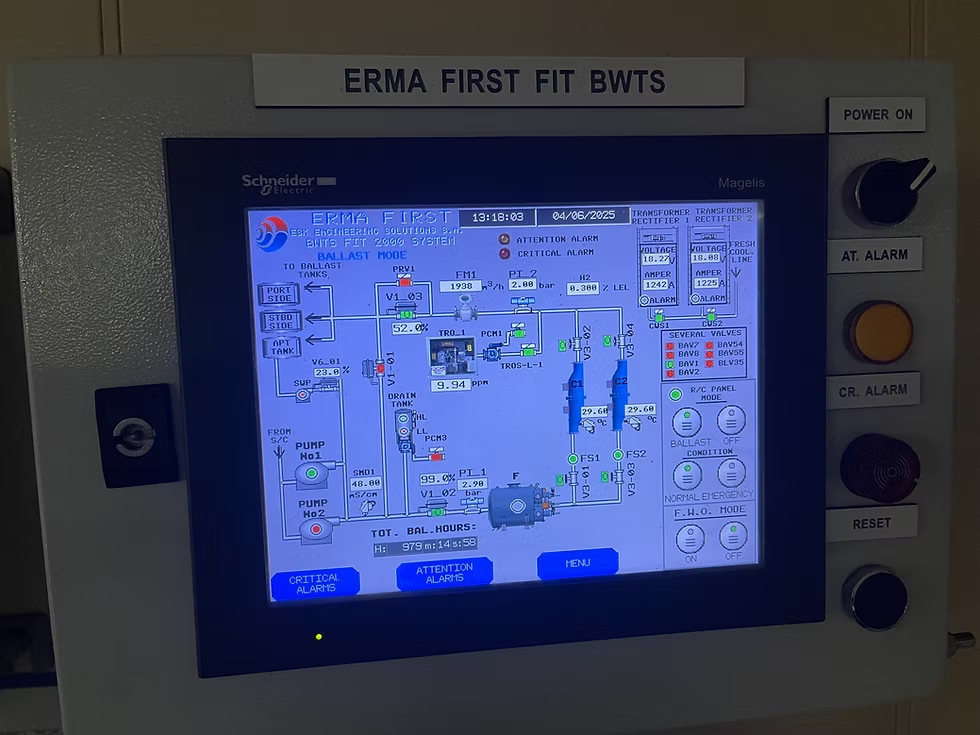
I have seen this approach applied correctly during a SIRE inspection. On one of my vessels, the enclosed-space review extended to ballast tanks because the ship was fitted with a ballast water treatment system that generated and injected oxidant. The inspector asked a fair operational question: had the vessel considered chlorine or residual oxidant exposure before ballast tank entry?
The vessel showed the risk assessment, manufacturer’s information and operating condition. Residual chlorine exposure at the entry stage was assessed as negligible, and no observation was raised.
The same principle should apply to CO₂ on tankers. If the SMS does not explain how additional gases are selected, the observation should say that. If the concern is simply that CO₂ is not a fixed permit line, the finding is too broad. It identifies neither source, pathway nor reason why the existing tanker gas-testing regime is insufficient.
In practice, that turns an example permit into a mandatory tanker measurement template. A valid observation should identify the uncontrolled hazard or the missing assessment mechanism, not only the missing box.
DeepDraft View
MSC.581(110) is important. Tanker operators should review their enclosed-space registers, permits and testing procedures against it.
But review does not mean automatic procurement of CO₂ meters across an oil tanker fleet. CO₂ must be measured where assessment identifies a credible source: organic cargo, CO₂ release, suspected leakage, sewage or grey-water contamination, unusual cargo history, exhaust ingress or poor isolation.
That is different from treating CO₂ as a routine measured gas for every crude or product tanker entry.
MSC.581(110) should improve the quality of enclosed-space risk assessment. It should not be reduced to adding one more gas line to every permit without identifying the source, pathway and operational condition that makes the gas credible.
A safe permit is not the permit with the longest fixed gas list. It is the permit system that forces the right question: which gases can exist in this space, under this condition, today?
That is the line tanker managers should hold.
Media Section
Sources Reviewed
IMO Resolution MSC.581(110), Revised Recommendations for Entering Enclosed Spaces Aboard Ships
SOLAS Chapter XI-1 Regulation 7, Atmosphere Testing Instruments for Enclosed Spaces
OCIMF, SIRE 2.0 Programme and Question Library
DNV, Revised IMO Recommendations for Entering Enclosed Spaces Aboard Ships
OCIMF / ICS / IAPH, Inert Gas Systems: The Use of Inert Gas for the Carriage of Flammable Oil Cargoes
OCIMF / ICS / IAPH / CDI, International Safety Guide for Oil Tankers and Terminals, Sixth Edition
UK Health and Safety Executive, General Hazards of Carbon Dioxide
Australian Maritime Safety Authority, Hazardous Gases: Carbon Monoxide, Hydrogen Sulphide and Carbon Dioxide


Leave a Reply