

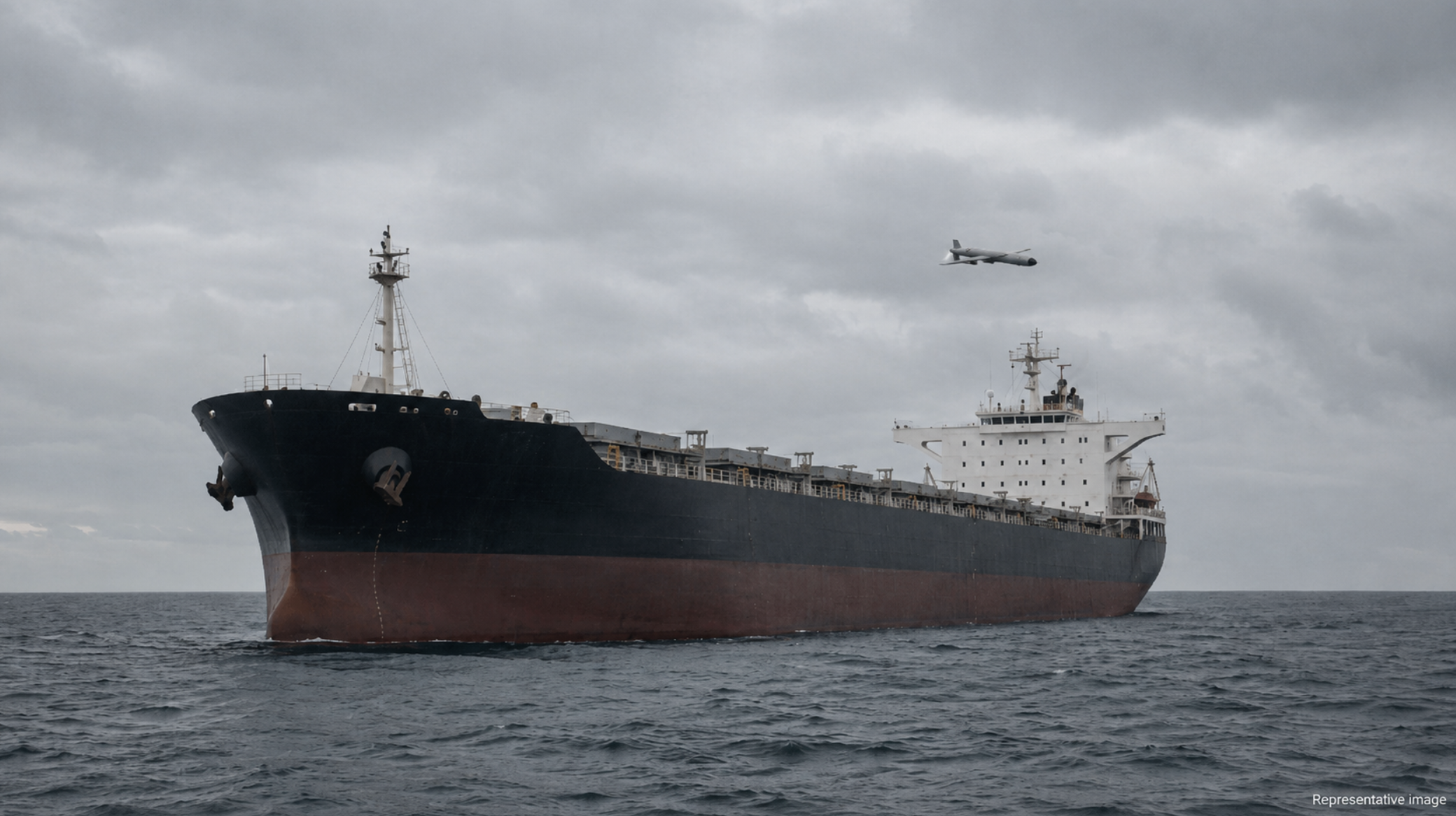
Ukraine has reported a confirmed strike on the sanctioned tanker FINA A in the Black Sea.
The same cycle keeps Hormuz reopening political, not operational, while shadow-fleet flag status now carries direct detention risk.
1. Black Sea Strike: Sanctioned Tanker FINA A Hit
• Ukraine’s General Staff reported that the tanker FINA A was struck in the Black Sea during operations on June 16 and overnight into June 17.
• The vessel is identified as FINA A, IMO 9283306, a 244.6-metre tanker with gross tonnage of 62,002.
• Ukrainian reporting says the tanker is sanctioned by the EU, Switzerland, the UK, Canada and Ukraine, and was used to transport Russian oil and petroleum products outside sanctions controls.
• The extent of damage remains under assessment, but the confirmed strike turns shadow-fleet exposure from detention and sanctions risk into direct kinetic risk inside the Black Sea operating picture.
2. Hormuz Reopening Signal Remains Conditional
• The U.S.-Iran memorandum framework includes immediate waivers for Iranian crude exports and associated shipping, banking and logistics services.
• Reporting on the deal states that Iran is expected to restore free commercial traffic through the Strait of Hormuz, with toll-free access for a limited period.
• Maersk has kept Gulf restrictions and emergency surcharges in place, showing that carrier routing, cargo acceptance and crew-risk decisions are not moving at the same speed as political announcements.
• Operators should treat the Gulf as a controlled reopening environment until naval, insurance, mine-clearance and carrier-service instructions confirm actual operational normalization.
3. Commercial / Market Impact: U.S. Import Pull-Forward Meets Fuel-Cost Pressure
• The Port of Los Angeles handled 840,165 TEU in May, up 17% year on year.
• Loaded imports reached 449,370 TEU, up 26% year on year, as importers accelerated cargo before expected July fuel-cost pressure.
• Reuters linked the pull-forward to rising marine fuel costs and uncertainty created by Middle East disruption.
• Charterers, liner customers and forwarders should expect scheduling pressure, early peak-season cargo behaviour and fuel-cost pass-through risk to remain active through June and July.
4. Shadow-Fleet Enforcement Layer: SMYRTOS Flag Status Now Matters
• Lloyd’s List reporting states that Cameroon removed SMYRTOS and 35 other shadow-fleet vessels from its registry earlier this month after diplomatic pressure.
• The UK seizure and subsequent prosecution of the SMYRTOS master show that flag status, registry removal and sanctions listing now form a direct enforcement chain.
• Guardian reporting says the tanker was treated as effectively stateless after allegedly flying the Cameroon flag despite registry removal.
• Compliance teams should verify flag certificates, registry validity, sanctions listings, cargo origin, bills of lading, ownership chain and P&I status before allowing any shadow-fleet-linked voyage to proceed.
5. Gulf of Aden Security Watch: Skiff and RPG Reports Continue
• JMIC Update 059 recorded two Gulf of Aden incidents on June 15 under UKMTO references 069-26 and 070-26.
• One container vessel reported a skiff approach; a separate tanker incident involved a skiff with four armed personnel and an RPG.
• The events did not create a Red Sea closure signal, but they confirm that Gulf of Aden bridge teams still require BMP-level watchkeeping, early CPA management and rapid reporting discipline.
• Masters transiting the Gulf of Aden should maintain hard-lookout routines, citadel readiness checks, VHF discipline and immediate UKMTO reporting for suspicious craft.
Strategic Summary & Actions Required
• Masters in the Black Sea should treat sanctioned or Russia-linked tanker traffic as a higher-risk operating environment and preserve AIS, VDR, passage-plan and security communications for post-incident review.
• Ship managers handling shadow-fleet-adjacent cargoes should re-check vessel sanctions status, registry validity, flag certificates, P&I cover and cargo-document chains before approving voyage authority.
• Charterers and operators should not price Hormuz as fully normalized until carrier restrictions, war-risk terms, mine-clearance confidence and port/terminal acceptance are confirmed in writing.
• Liner, NVOCC and forwarding desks should review U.S. import windows, July fuel-cost exposure, detention/demurrage clauses and customer delivery commitments against the Port of LA cargo surge.
• DPA/CSO teams should brief Gulf of Aden transits on skiff-approach response, RPG proximity risk, BMP watchkeeping, citadel readiness and UKMTO/JMIC reporting triggers.
Operational Status
CRITICAL RED — Black Sea Shadow-Fleet Strike / Conditional Hormuz Reopening / Flag-Status Enforcement Risk / Fuel-Cost and Gulf of Aden Security Exposure
Latest DeepDraft Analysis
Settebello Was Not Sacrifice. It Was a Recruitment Failure
https://thedeepdraft.com/2026/06/15/settebello-was-not-sacrifice-it-was-a-recruitment-failure/
Excerpt: Three Indian seafarers died on MT Settebello. The analysis turns the casualty into a recruitment, deployment, sanctions-screening and voyage-authority failure.
Related DeepDraft Articles & Analysis
Sources
Ukraine General Staff, Kyiv Independent, Maritime Executive, Reuters, UKMTO/JMIC, Lloyd’s List, Guardian, Maersk, Port of Los Angeles, The DeepDraft
This update is part of the DeepDraft SITREP series covering developing maritime operational situations.

Leave a Reply