

Indonesia’s mass-casualty SAR operation has intensified after Virgo Transport 8 capsized in the Java Sea, with 128 people still missing.
The same operating cycle brings a prolonged Saudi pipeline outage, expanding Red Sea control risk, new Hormuz sanctions exposure and another major Suez routing shift.
1. Virgo Transport 8 Capsize: 128 Remain Missing
• The 8,540-GT Indonesian passenger/ro-ro vessel Virgo Transport 8 was carrying 243 people and 89 vehicles on a Surabaya-Banjarmasin voyage when it capsized in the Masalembo waters of the Java Sea.
• Basarnas’ latest reported tally at 15:30 WITA on September 14 was 115 people found, comprising 109 survivors and six confirmed fatalities. A further 128 people remained unaccounted for.
• The latest survivor was evacuated by a Basarnas Dauphin helicopter. Basarnas said survivor accounts described waves exceeding three metres around the casualty, while difficult sea conditions affected search and underwater operations.
• Indonesia’s transport minister said the vessel was not overloaded, with 243 people aboard against a stated passenger capacity of 500. KNKT has joined the investigation, and the exact cause remains under investigation rather than established as weather, technical failure or human error.
2. Saudi Hormuz Bypass Faces Weeks-Long Outage as Houthi Red Sea Control Expands
• Saudi Arabia’s East-West Pipeline, a critical crude-export bypass linking eastern production areas with Yanbu on the Red Sea, is expected to remain substantially out of service for approximately three to five weeks following attack damage.
• The prolonged outage materially weakens Saudi Arabia’s principal overland alternative to Strait of Hormuz export exposure during an already disrupted Gulf operating period.
• Houthi forces have separately seized Greater and Lesser Hanish islands in the Red Sea, expanding their territorial position along shipping routes after earlier advances around Mokha and Bab el-Mandeb.
• Operators relying on Yanbu or Red Sea contingency routing should revalidate loading assumptions, security routing, war-risk cover, bunker planning, deviation authority and cargo-delivery commitments before treating the western export corridor as a straightforward Hormuz substitute.
3. Iran Blacklists 77 Vessels as Tanker Economics Cross USD 1 Million Per Day
• Iran’s Persian Gulf Strait Authority issued an updated blacklist covering 77 vessels accused of violating its Strait of Hormuz protocols. Reuters reports listed ships face potential fines, detention or confiscation.
• The authority also called on insurers, P&I clubs and classification societies to stop servicing listed vessels and warned that entities continuing to cooperate with them could face repercussions.
• Preliminary tracking cited by Reuters showed visible commodity-vessel transits through Hormuz falling to single digits per day over the weekend, against a recent 10-day average of around 14, although dark or AIS-silent movements may not be captured.
• Commercial pressure has intensified alongside the security and insurance constraint. The cost of hiring an oil tanker on the industry’s benchmark crude trade exceeded USD 1 million per day for the first time as Middle East disruption reduced available tonnage willing to enter the Hormuz risk envelope.
4. Gemini Adds Four Suez Services as Gulf Container Costs Rise
• Maersk and Hapag-Lloyd are returning four additional Gemini Cooperation services, AE5, AE11, AE12 and ME2, to the Suez Canal route rather than sailing around the Cape of Good Hope.
• The move extends the carriers’ gradual return to the shorter Asia-Europe corridor even as Red Sea security conditions remain subject to rapid change and further routing decisions remain dependent on regional stability.
• Separately, Maersk’s new USD 500 per-container Emergency Operational Cost Recovery surcharge for contract cargo from most origins to the UAE becomes effective September 15. Bahrain, Qatar, Kuwait and Iraq follow from September 17 for non-regulated origins.
• Cargo owners and liner desks should therefore separate the transit-time benefit of renewed Suez routing from continuing Middle East security, insurance, surcharge and contingency-routing costs.
Strategic Summary & Actions Required
• Passenger and ro-ro operators should treat Virgo Transport 8 as an immediate fleet-review trigger for severe-weather operating limits, stability monitoring, vehicle and cargo securing, alarm effectiveness, passenger accounting, muster control and abandon-ship readiness, without pre-judging the casualty investigation.
• Masters operating comparable passenger routes should ensure weather deterioration, list development, stability concerns and passenger movement trigger clearly defined bridge escalation and company-notification thresholds before conditions become unrecoverable.
• Saudi, Red Sea and Gulf voyage desks should revalidate Yanbu assumptions, Bab el-Mandeb exposure and Hormuz alternatives together. The East-West Pipeline outage means the land bypass and the western maritime route now sit inside the same security-planning file.
• Owners, managers, charterers and compliance teams should check whether vessels, counterparties, insurers or class relationships intersect Iran’s 77-vessel list before Hormuz commitment, while routing any coastal-state demand through flag, legal, P&I and company-security channels.
• Chartering and liner desks should reprice voyage economics against record tanker costs, Suez-versus-Cape changes and newly effective Gulf container surcharges rather than assuming improved Suez access represents normalization of Middle East shipping conditions.
Operational Status
CRITICAL RED – Virgo Transport 8 mass-casualty SAR / 128 people missing / Saudi bypass-route disruption / Red Sea and Hormuz security pressure / tanker, insurance and liner-cost escalation
Latest DeepDraft Analysis
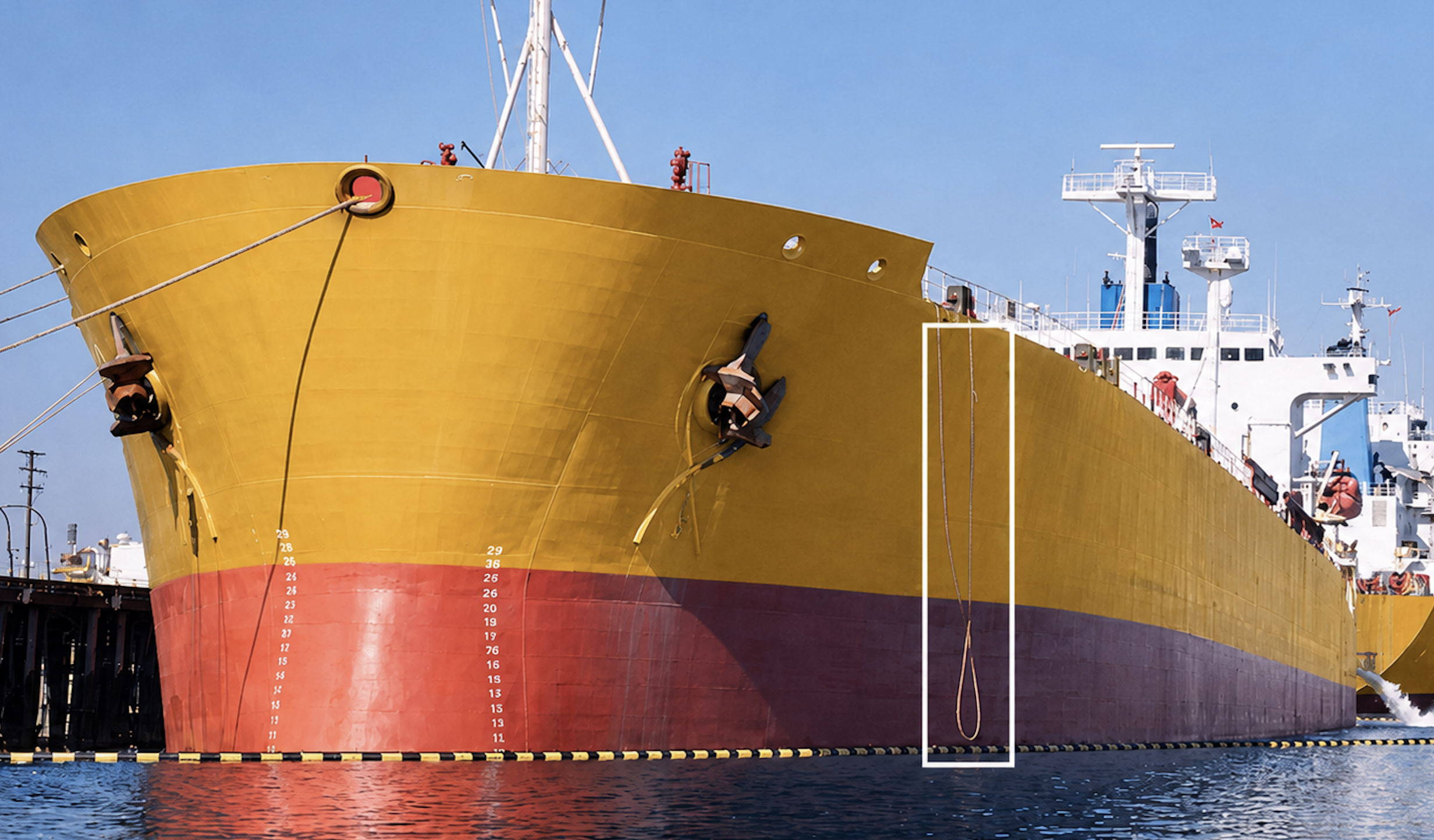
A familiar deck-seal casing can hide a different operating principle. DeepDraft examines how misclassification can expose tanker crews to vetting findings and misunderstanding of a primary inert-gas safety barrier.
Related DeepDraft Articles & Analysis
DeepDraft Weekly Maritime Brief | September 13, 2026: Bab el-Mandeb Foothold Meets Gulf Tanker Risk
Sources
Basarnas / ANTARA, Reuters, Associated Press, Bloomberg, Maersk
This update is part of the DeepDraft SITREP series covering developing maritime operational situations.

Leave a Reply