

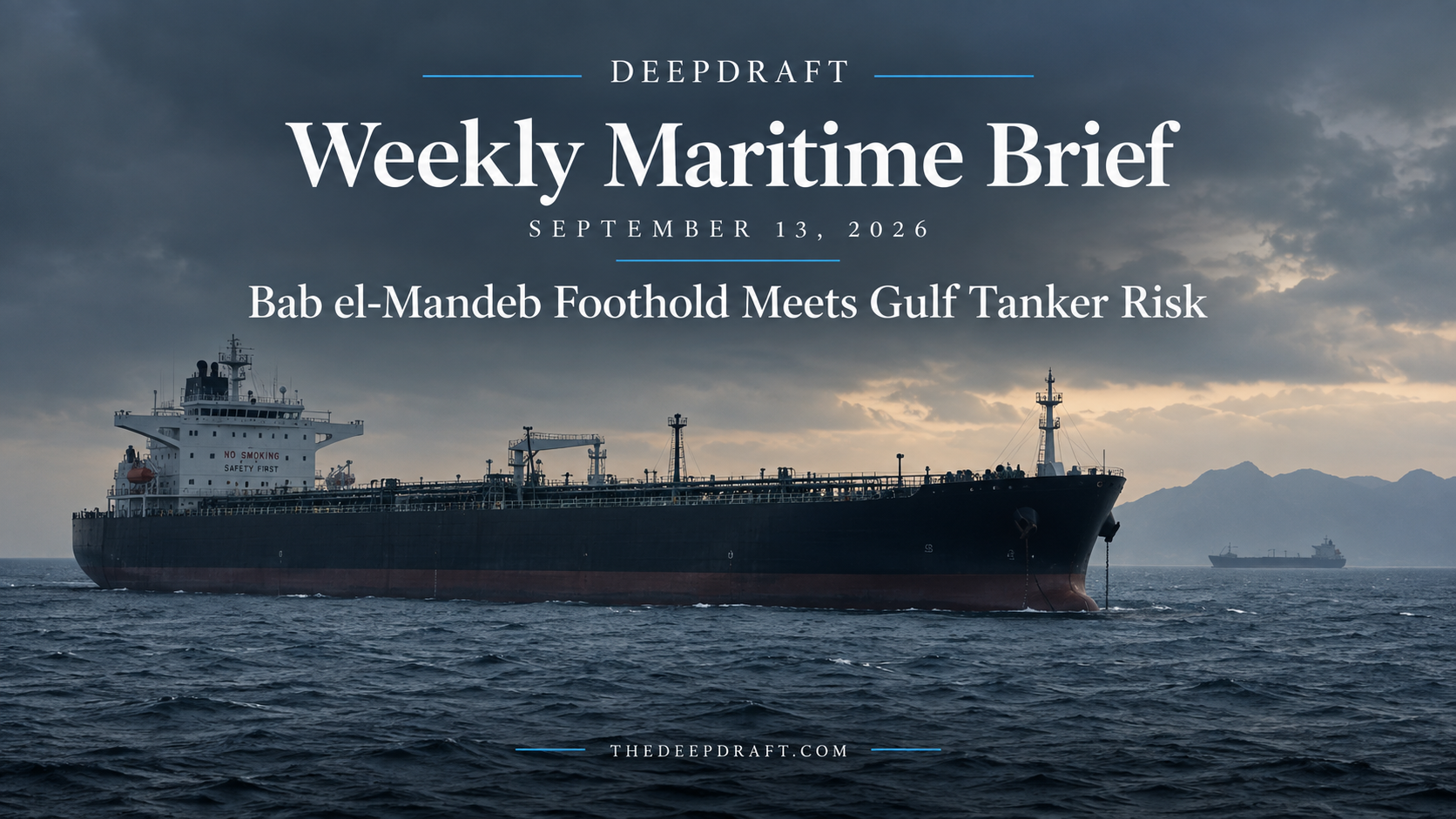
MT EL GAIA was named in a NAVAREA IX warning after a Strait of Hormuz security incident caused fire, drift and an oil spill.
The same 24-hour cycle brought a separate Qeshm casualty report, postponed Hormuz corridor talks and record tanker-rate pressure.
1. MT EL GAIA Named in Hormuz Security Incident
• PN NAVAREA IX 319/26 named oil tanker EL GAIA as involved in a Strait of Hormuz security incident on September 13.
• The warning reported fire, drift and an oil spill at 26-26.50N, 056-30.10E, approximately 3.6 nautical miles northwest of Jazirat Musandam.
• Indian reporting citing the Ministry of External Affairs identified the vessel as Panama-flagged MT EL GAIA and said 13 of 14 Indian crew members had been rescued, with one Indian seafarer still missing.
• ClassNK lists EL GAIA as a Panama-flagged oil carrier, IMO 9325336, 47,999 DWT, owned by EL GAIA SHIPPING INC and managed by Elsey Ship Management LLC.
2. Qeshm / Hengam Strike Report Adds Separate Crew-Casualty Signal
• Iranian local authorities reported that a merchant vessel was struck off Hengam and Qeshm islands around 0500 on September 13.
• Initial casualty reporting differs, with one person killed and three to four wounded depending on the source.
• Public reporting has not yet fully reconciled whether the Qeshm / Hengam casualty report and the EL GAIA incident refer to the same vessel or separate attacks.
• Masters and CSO teams should treat Qeshm, Hengam, Musandam and the Omani-side transit lane as a live threat area until official incident mapping is clarified.
Reading this as a maritime insider, seafarer, or enthusiast?
Subscribe to The DeepDraft for maritime analysis, daily SITREP updates, weekly briefings, and operational signals worth watching.
3. Tanker Freight Spike Turns Security Risk Into Voyage Economics
• S&P Global reported that the 80,000-mt Vancouver-China Aframax route hit a record-high USD 7.5 million on September 10.
• Platts assessed the benchmark Vancouver-China run at USD 7.5 million, the highest level since the assessment began on February 2, 2026.
• Reuters reported VLCC Gulf of Oman-China rates around Worldscale 450, equivalent to roughly USD 11.50 per barrel, also a record for the assessment series.
• Tanker desks should reprice Gulf exposure, ballast economics, fixture validity, demurrage and substitution risk where Middle East attacks thin available tonnage and pull freight higher across other basins.
4. Saudi Pipeline Shutdown Narrows the Hormuz Bypass Option
• Saudi Arabia’s East-West pipeline was temporarily shut after drone attacks, removing a key crude-routing alternative to Hormuz.
• The 1,200-km pipeline has served as a main Saudi route for moving crude to the Red Sea port of Yanbu during Gulf disruption.
• SCMP / Reuters reporting says southern Saudi alerts and pipeline damage now sit inside the same escalation chain as renewed ship attacks and Bab el-Mandeb pressure.
• Charterers and operators should verify Yanbu loading assumptions, Red Sea routing, insurance position, cargo substitution, delay clauses and refinery supply commitments.
5. Hormuz Corridor Talks Postponed as Transit Authority Remains Unsettled
• Iran’s Foreign Ministry confirmed that a planned meeting of Persian Gulf coastal-state foreign ministers was postponed at the request of some regional countries.
• The meeting had been expected to address maritime arrangements and potential shipping routes through the Strait of Hormuz.
• IRNA reported that the delay was agreed between Oman and Iran, with a new date to be arranged.
• Operators should not treat any proposed Hormuz corridor, fee regime, entry route or exit route as operationally valid until confirmed by official maritime notices, flag guidance, insurers and company security channels.
Strategic Summary & Actions Required
• Masters approaching Hormuz should update passage plans against NAVAREA IX 319/26, keep fire-response and abandon-ship readiness live, and preserve AIS, VDR, bridge logs and security communications.
• Ship managers should escalate EL GAIA exposure through CSO, DPA, P&I, H&M, flag and chartering channels, especially where crew nationality, war-risk cover or oil-spill liability may trigger reporting duties.
• Charterers should recheck laycans, deviation rights, demurrage exposure and substitution language where Hormuz transit, Yanbu routing or tanker availability affects cargo performance.
• Tanker desks should treat the rate surge as a direct consequence of security risk, not a detached market move, with Gulf of Oman-China and Vancouver-China fixtures now showing cross-basin pressure.
• Fleet security teams should separate verified EL GAIA facts from still-uncertain Qeshm casualty reporting while maintaining heightened threat assumptions across Musandam, Qeshm, Hengam and Omani-side transit lanes.
Operational Status
CRITICAL RED — MT EL GAIA Security Incident / Fire and Oil Spill / Crew SAR / Hormuz Transit and Tanker Freight Risk
Latest DeepDraft Analysis
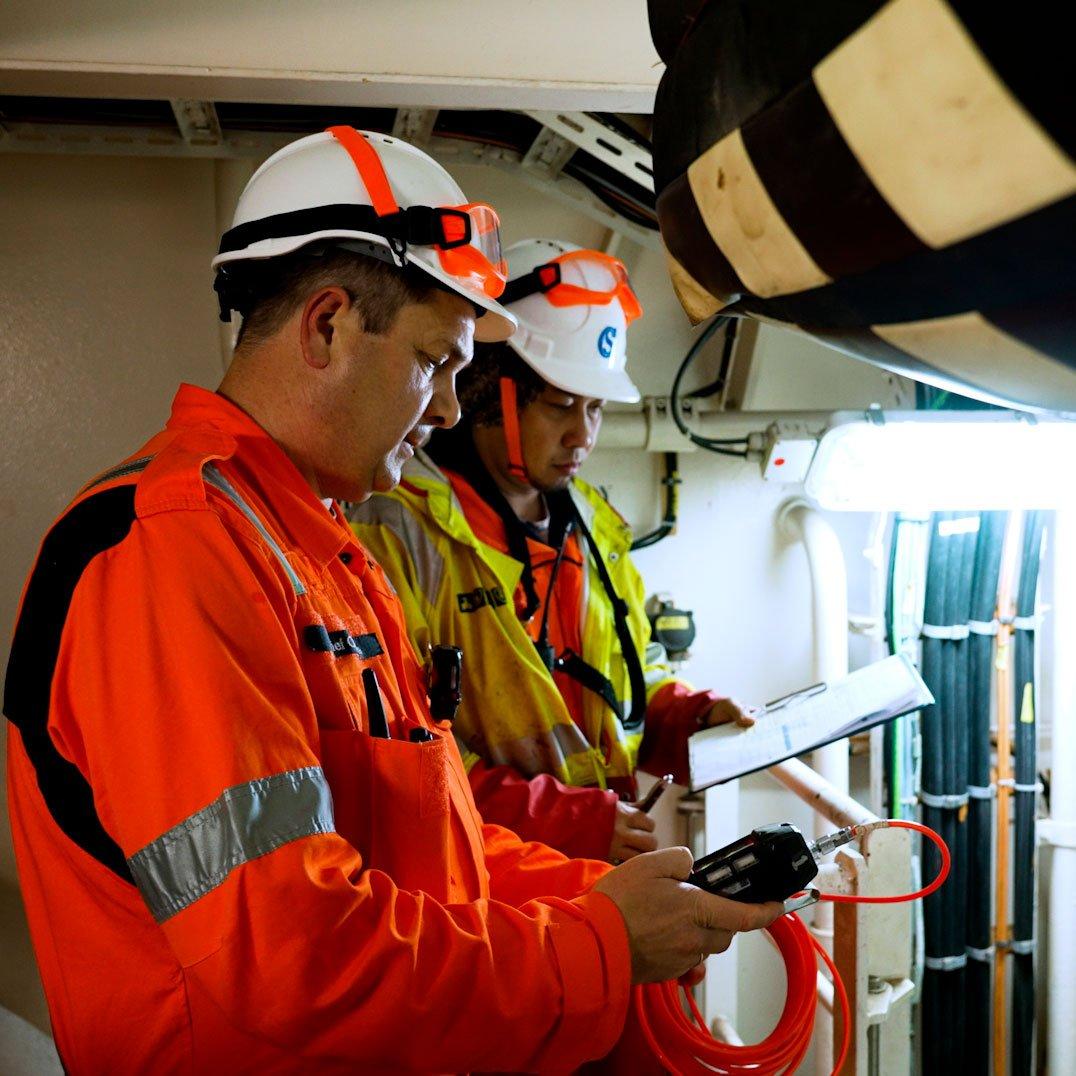
CO₂ on Oil Tanker Entry Permits: Safety Requirement or Checklist Overreach?
Tanker entry permits must link gas testing to credible hazards, not checklist expansion. CO₂ measurement belongs where risk assessment identifies a source, pathway and operational condition.
Related DeepDraft Articles & Analysis
Sources
PN NAVAREA IX, India Ministry of External Affairs, ClassNK, Reuters, S&P Global
This update is part of the DeepDraft SITREP series covering developing maritime operational situations.

Leave a Reply