
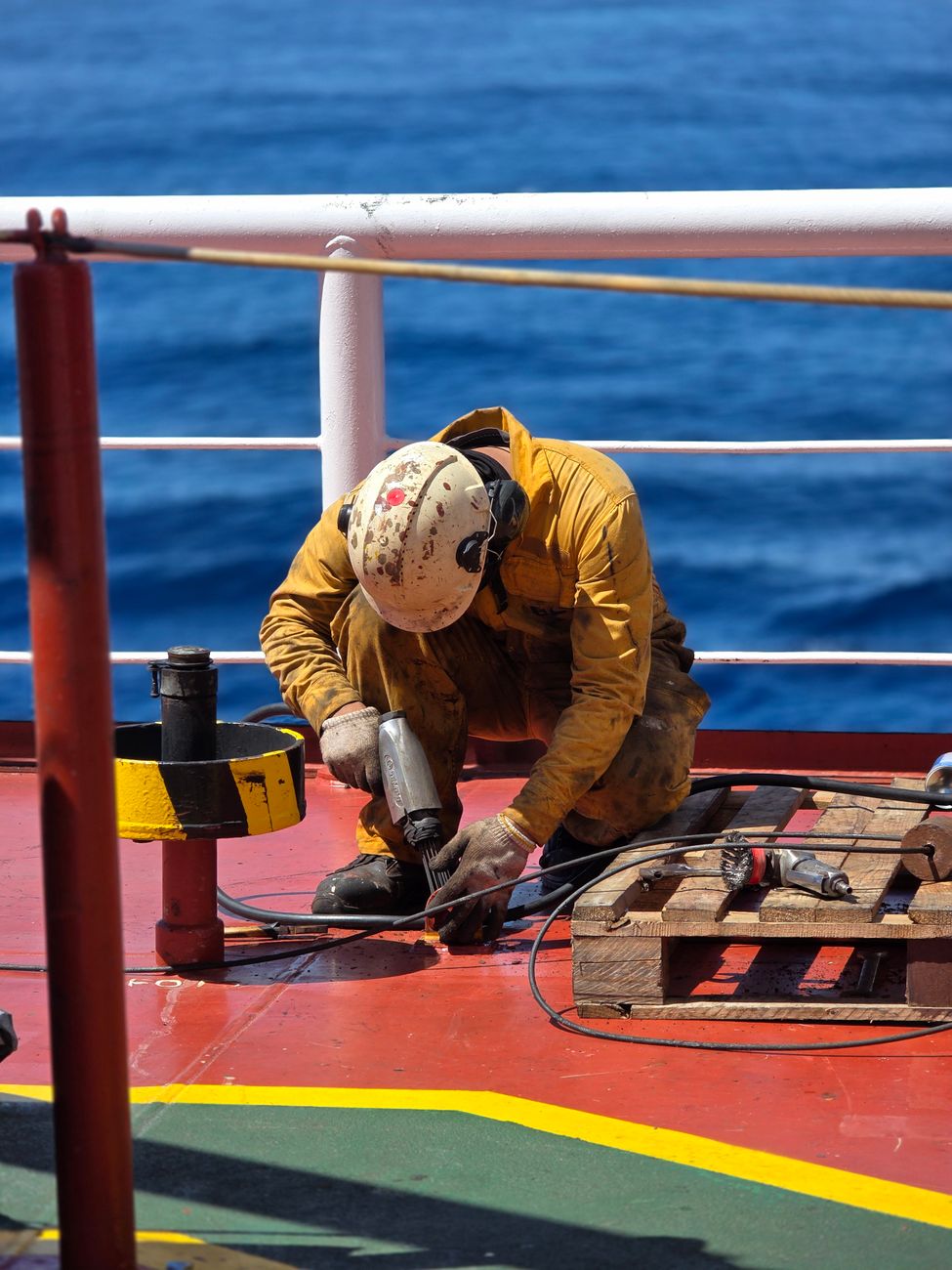
GYRO Team, part of The DeepDraft Network, has introduced a free mobile route to CHIRP Maritime, allowing seafarers to submit confidential safety concerns in about one minute.
TheDeepDraft is pleased to highlight a practical safety initiative from GYRO Team.
According to GYRO, seafarers can now use its mobile app to submit reports about near misses, unsafe conditions and other safety concerns directly to CHIRP Maritime. The reporting feature on the Gyro is free and the initial submission can be completed in under one minute.
The idea is straightforward – make it easier to record a concern before the moment passes.

When a concern remains unreported
Many well-run companies already maintain effective reporting systems and encourage their crews to raise concerns without fear of blame.
But that standard is not universal across the fleet.
Even on a well-managed ship, watches, maintenance, cargo operations and port calls can work against documentation. A sticking valve, unsafe access arrangement, rushed procedure or narrowly avoided incident may be discussed onboard, corrected temporarily and then forgotten.
The problem is not always that nobody noticed the risk. Sometimes the effort required to formally record it is enough for the report to be postponed.
A reporting route available directly through a mobile phone can reduce that delay. It allows the first details to be recorded while the circumstances are still fresh, leaving CHIRP to seek clarification where necessary.
Confidential, not public
Reports submitted through the GYRO feature are sent to CHIRP, the Confidential Human Factors Incident Reporting Programme.
CHIRP accepts reports from across the international maritime sector, including commercial seafarers, fishers, port personnel and members of the public with maritime safety concerns. Its reporting system covers incidents and human-factor issues involving equipment, communication, procedures, training, workplace culture and management.
The process is confidential rather than anonymous. CHIRP requires a personal email address so its team can communicate privately with the reporter and clarify important details.

CHIRP states that identifiable information is not shared with other organisations. Reports are de-identified before analysis, and any lessons later shared with the maritime community are anonymised and made untraceable.
This matters because a short initial report may not contain enough detail to understand what happened. Confidential communication allows CHIRP to ask further questions without publicly exposing the reporter, vessel or company.
What happens after submission?
Once CHIRP receives a report, it removes identifying information and reviews the safety concern. Its team may contact the reporter privately to clarify points and agree on how the matter should be handled.
The anonymised case can also be considered by CHIRP’s specialist advisory board. Where the report contains a useful wider lesson, CHIRP may publish it through its safety material so others can learn from the circumstances. De-identified reports are also retained for analysing safety trends.
CHIRP says it only follows up with a relevant organisation after agreeing that course of action with the reporter. This gives the reporter a voice in deciding how the concern progresses.
CHIRP reporting does not replace any mandatory report that must be submitted to a company, flag state, coastal authority or another responsible body. It provides an additional confidential route for concerns that may otherwise remain unheard.

Making CHIRP easier to reach
CHIRP already receives reports through its own website and mobile application. The value of the GYRO initiative lies in extending its reach through another platform built around seafarers.
GYRO already offers maritime testing, learning resources and vessel reviews through its app. Adding direct access to confidential reporting introduces CHIRP to users who may not previously have known that such an independent channel was available.
No app can replace good leadership, an open safety culture or a responsible onboard reporting system. But making the first step easier still matters.
A concern that remains only in someone’s mind cannot help another ship avoid the same hazard. By providing a quick mobile route into CHIRP’s established confidential process, GYRO Team has given seafarers another practical way to ensure that an important warning is heard.
Network note: GYRO Team is part of The DeepDraft Network. TheDeepDraft supports awareness of this free confidential reporting initiative with CHIRP Maritime.


Leave a Reply