
MEPC 84 will be remembered publicly for the carbon framework it did not finalise, but for ships the more immediate result is simpler. The 84th session of IMO’s Marine Environment Protection Committee met in London from 27 April to 1 May 2026 and did not approve a final IMO Net-Zero Framework.
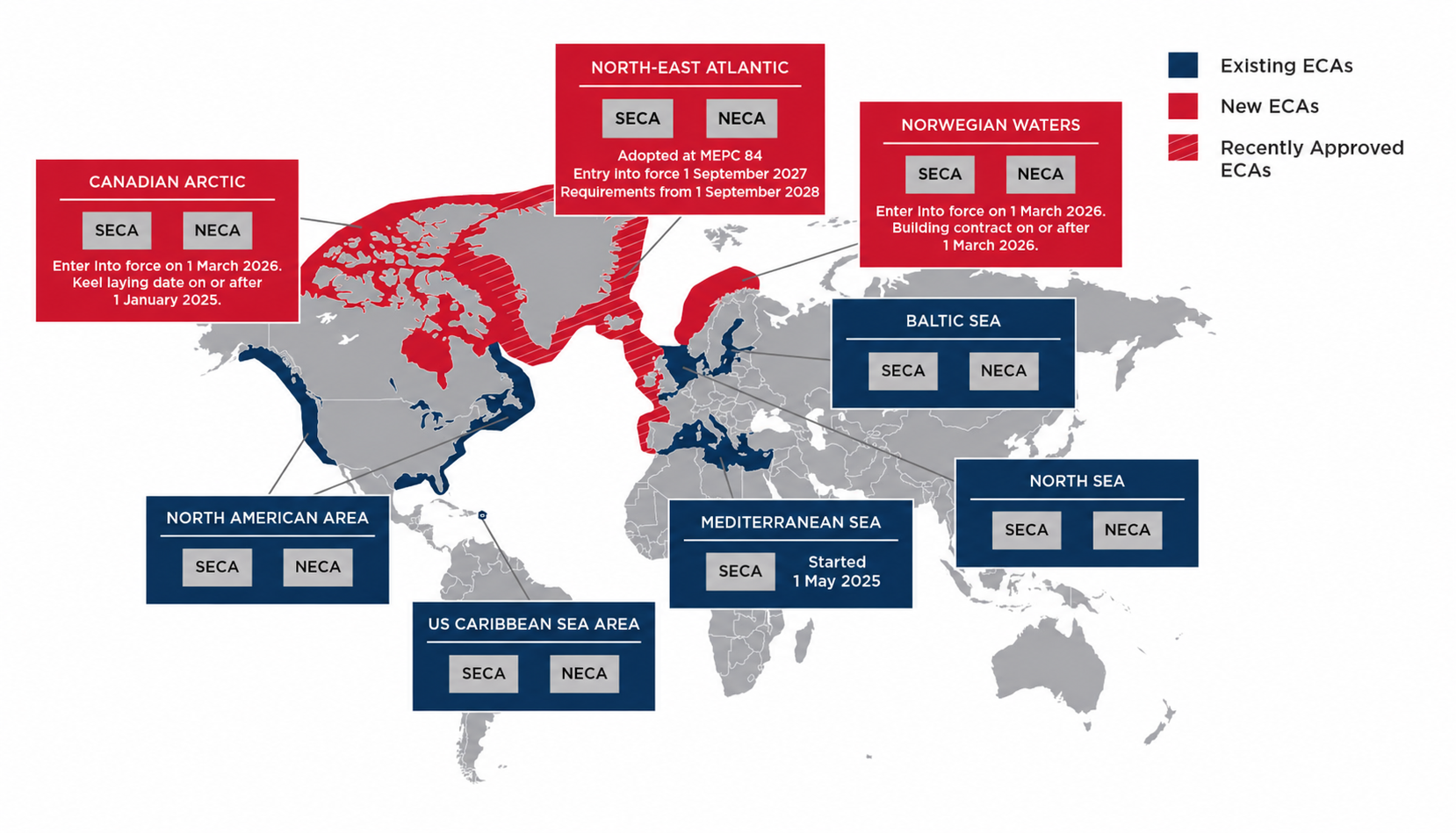
The concrete operational outcome was the adoption of the North-East Atlantic Emission Control Area under MARPOL Annex VI. The ECA enters into force on 1 September 2027, with operational requirements taking effect from 1 September 2028. It covers the territorial seas and Exclusive Economic Zones of Greenland, Iceland, the Faroe Islands, Ireland, the United Kingdom, France, Spain and Portugal.
The important point is that MEPC 84 did not create a new sulphur limit, and it did not create NOx Tier III from scratch. It expanded the sea area where existing ECA requirements apply. For Masters, Chief Engineers, ship managers and chartering teams, that still matters because a line on the chart becomes a fuel calculation, a changeover time, an engine-room record, a bunker document, a Port State Control question and eventually a commercial cost.
The Net-Zero Framework: Ambition Deferred
MEPC 84 did not adopt a final Net-Zero Framework. The framework remains the IMO’s main attempt to regulate greenhouse gas emissions from international shipping through fuel-intensity requirements, economic measures, fuel accounting and possible pricing or fund mechanisms. At MEPC 84, member states could not agree on its final shape, deferring work to December 2026.
The gridlock is both political & operational. To decarbonise ship needs fuel, engines, tanks, bunkering infrastructure, class approval, safety procedures, crew training, insurance acceptance and commercial contracts that can carry the cost. Methanol, ammonia, hydrogen, LNG, biofuels and onboard carbon capture all carry different limitations. Some create safety risks, some are not available globally, and some work better on fixed routes than on tramp trades.
This does not make decarbonisation wrong. It makes regulatory realism essential. Shipping should not be treated as the convenient villain of the climate debate when fuel infrastructure, safety and cost allocation remain unresolved.
The Net-Zero Framework is unfinished, but still important. Without it, shipping faces more regional schemes such as EU ETS, FuelEU Maritime and port-by-port rules.
The North-East Atlantic ECA: Geography Is the Operation
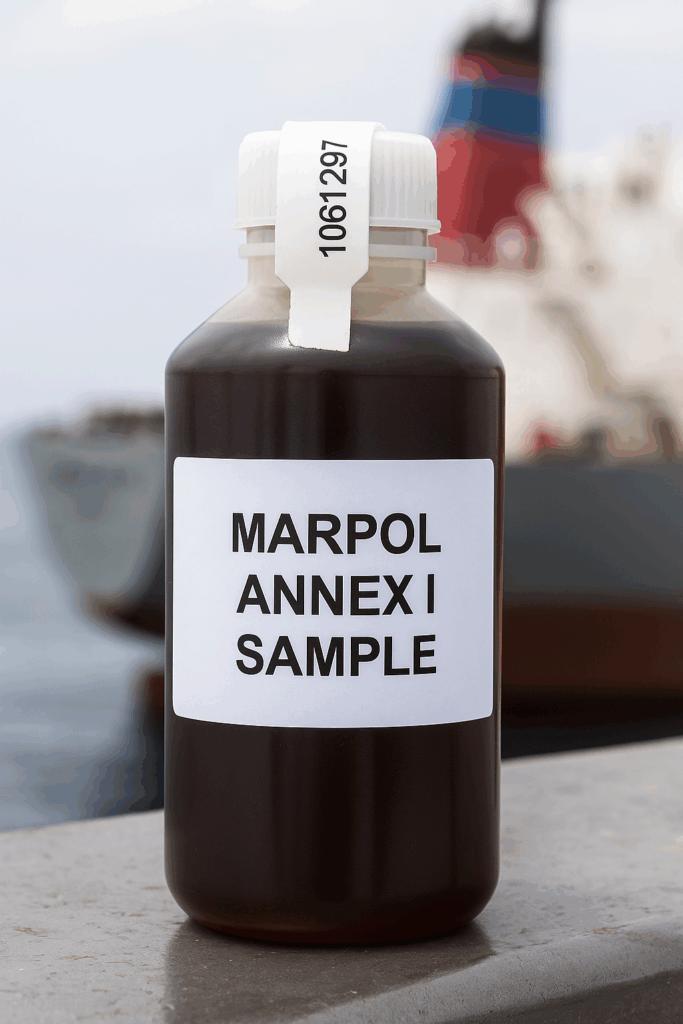
While carbon stalled, the North-East Atlantic ECA moved forward. This decision reaches the ship first because the compliance machinery already exists: the 0.10% sulphur limit, fuel-changeover procedures, Bunker Delivery Notes, MARPOL samples, engine-room logs and PSC checks.
What MEPC 84 changed is the area of exposure. From September 2028, ships operating inside the North-East Atlantic ECA must use fuel with sulphur content not exceeding 0.10% m/m, or use an approved equivalent arrangement where permitted and properly operated. Particulate matter is addressed through the same air-pollution framework. NOx Tier III relevance applies according to the vessel’s construction dates, certification and the applicable NOx ECA rules.
The ECA is new, but the compliance logic is not. Outside an ECA, the global sulphur limit remains 0.50% m/m. Inside an ECA, the sulphur limit remains 0.10% m/m. MEPC 84 did not change those numbers. It changed where those numbers apply. For junior officers and cadets, that is the core lesson. We are not learning a new sulphur rule but a new map.

Why a Map Change Still Matters
It is tempting to dismiss the ECA expansion because the numerical limits are unchanged, but at sea the boundary is what drives the operation. Once the line moves, the passage plan, bunker calculation, fuel-changeover timing and inspection exposure move with it. Crossing an ECA line on ECDIS is the point by which the ship must already be compliant: enough compliant fuel onboard, changeover completed before entry, service system flushed, and Bunker Delivery Notes, MARPOL samples and engine-room entries matching the ship’s position.
This is where records matter. In MARPOL matters, the record often becomes the case itself, as seen in routine compliance areas such as oil record book entries and crude oil washing documentation. The Master does not need drama here. He needs a clean boundary, a clean changeover and a clean record trail.

NOx Tier III: An Engine Rule, Not a Fuel Rule
The distinction is simple: sulphur is a fuel-use issue; NOx Tier III is an engine-certification issue tied to construction date and operating area.
Tier III is not new. The North-East Atlantic ECA simply adds a new zone to the map.
For this new ECA, the Tier III requirement applies to ships contracted on or after 1 January 2027, or where there is no building contract, keel-laid on or after 1 July 2027, or delivered on or after 1 January 2031. That does not mean every existing ship must retrofit SCR or EGR simply because the area becomes an ECA.
This creates three practical categories for the fleet.
- Future ships ordered for North Atlantic or European trades will need Tier III capability built into the design, including SCR or equivalent arrangements where required.
- Existing non-Tier III ships are generally grandfathered under their existing engine tier for this new ECA and are not forced into retrofit by the North-East Atlantic designation alone.
- Existing Tier III-capable ships built before the North-East Atlantic cut-off dates are not newly captured by this ECA’s Tier III trigger, although actual SCR operation should still follow the vessel’s EIAPP certificate, NOx Technical File, flag/class requirements and company procedure.
Operational Realities: Weather and the Tank Trap
The North-East Atlantic ECA creates an operational reality that looks simple on paper and much harder at sea. Unlike a short coastal ECA entry, this will often be an open-ocean execution. From 2028, ships may have to carry out fuel transitions in North Atlantic weather systems, with rolling, pitching, speed changes, machinery limitations and heavy-weather route adjustments all affecting timing. A late changeover becomes a compliance failure. A rushed changeover can become an engineering hazard.
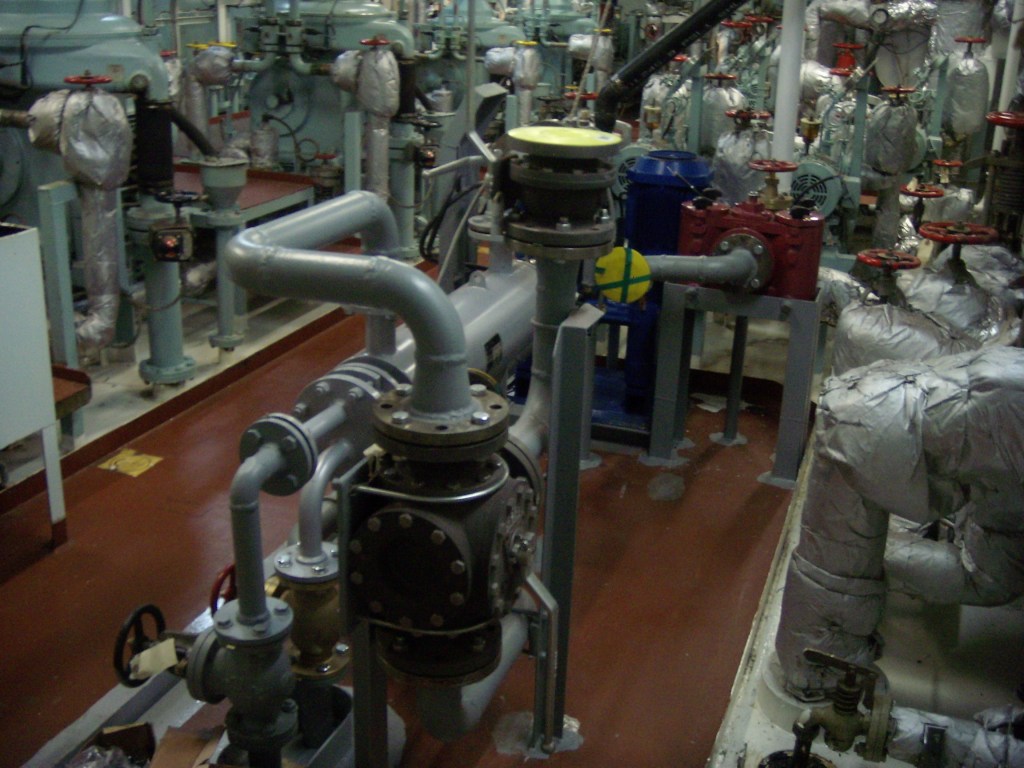
The expanded map also creates a tank trap. Existing low-sulphur tanks may be too small for multi-day open-ocean transits. Converting a heavy fuel tank to carry clean distillate requires cleaning and sludge removal. Poor preparation can let residual high-sulphur sludge contaminate the receiving fuel and push it over the 0.10% limit during PSC sampling.
The regulation says 0.10%. The ship has to make that number true inside a real fuel system, in real weather, with real tanks, real sludge and real records.
Shipboard and Commercial Impact
For deck officers, the boundary must be built into passage planning, and entry times must be communicated early to the engine room. For Chief Engineers, temperature, viscosity, and tank segregation are critical. A rushed changeover is an engineering hazard.
For ship managers and superintendents, this becomes an SMS and assurance issue. Fleet circulars, passage planning guidance, fuel changeover procedures, audit checklists, superintendent instructions and crew briefings should be updated before 2028. The company should not wait for the first PSC observation before realising that the chart has changed.
Commercially, a larger ECA leg increases the volume of 0.10% fuel required, affecting voyage estimates, bunker stems, route assumptions and possible off-hire arguments. The familiar questions will return: who supplies compliant fuel, who pays for the additional cost, whether voyage orders allowed safe compliance, and whether the vessel carried records strong enough to survive inspection. ECA compliance starts in the engine room, but the cost lands in the charterparty.
MEPC 84 also fits into a wider pattern. Ships now move through overlapping regimes: MARPOL Annex VI, ECAs, NOx Tier rules, EEXI, CII, EU ETS, FuelEU Maritime, scrubber restrictions and port-specific requirements. A scrubber may be accepted under MARPOL but still face local discharge restrictions. That same gap appears in exhaust gas cleaning system compliance, where regulatory wording and shipboard execution do not always align neatly.
The same gap between regulatory wording and shipboard execution appears in exhaust gas cleaning system compliance, where MARPOL acceptance, local restrictions and real operating conditions do not always align neatly.
Key Misunderstandings to Avoid
The first misunderstanding is that MEPC 84 created a new sulphur limit. It did not. The global sulphur cap remains 0.50% m/m outside ECAs, and the ECA sulphur limit remains 0.10% m/m.
The second misunderstanding is that the North-East Atlantic ECA is a carbon rule. It is not primarily a CO₂ measure. It is an air-pollution control measure for SOx, NOx and particulate matter under MARPOL Annex VI. The greenhouse gas discussion sits under the separate Net-Zero Framework debate.
The third misunderstanding is that NOx Tier III now applies to every existing ship. It does not. Tier III already exists, and the North-East Atlantic adds a new area of relevance with specific application dates for future ships. Existing ships are not automatically forced into retrofit simply because the area becomes an ECA.
The fourth misunderstanding is that a map change is minor. It is not minor for ships trading through the area. A map change becomes a passage-plan change, a fuel-planning change, a recordkeeping change, a PSC exposure change and a commercial-cost change.
The final misunderstanding is that Net-Zero delay means no regulatory movement. That is wrong. The carbon framework remains unresolved, but conventional air-pollution regulation advanced. EU and regional measures also continue. The ship still faces a growing layered compliance environment.
Where This Leaves the Fleet
The industry must not panic, but it cannot ignore the chart.
- Existing Ships: Focus on tank segregation, compatibility, and inspection readiness.
- Newbuildings: Focus on Tier III capability and future trading flexibility.
- Charterers: Focus on risk allocation and fuel responsibility.
- Masters/Chiefs: Plan the changeover and keep the record trail clean.
DeepDraft View: The Need for Regulatory Realism
MEPC 84 gave ships a larger compliance map, which is more immediate for the vessel than a global carbon price. Shipping complies when rules are clear and the technology is available. The ECA moved because the pathway is known; the carbon framework stalled because the pathway is still under construction.
For ships, the lesson is simple: the rule is old, the map is new, and from 2028 that map becomes part of the voyage.
Media Section
Sources
- International Maritime Organization, MEPC 84 press briefing on ship emissions, pollution and ocean protection
- International Maritime Organization, Circular Letter No. 5085 on amendments to MARPOL Annex VI
- International Maritime Organization, Circular Letter No. 5005 on draft revised MARPOL Annex VI
- International Maritime Organization, MEPC 83 meeting summary
- DNV, MEPC 84 regulatory update
- ClassNK, Preliminary Report of IMO MEPC 84
- Lloyd’s Register, MEPC 84 Summary Report
- BIMCO, MEPC 84 update
- Britannia P&I, IMO MEPC latest update
- International Chamber of Shipping statements on IMO Net-Zero Framework discussions
- European Parliament briefing on shipping greenhouse-gas regulation and regional measures
- DeepDraft previous analysis: Shipping Is Not the Villain! It’s the Scapegoat of the Climate Debate



Leave a Reply