
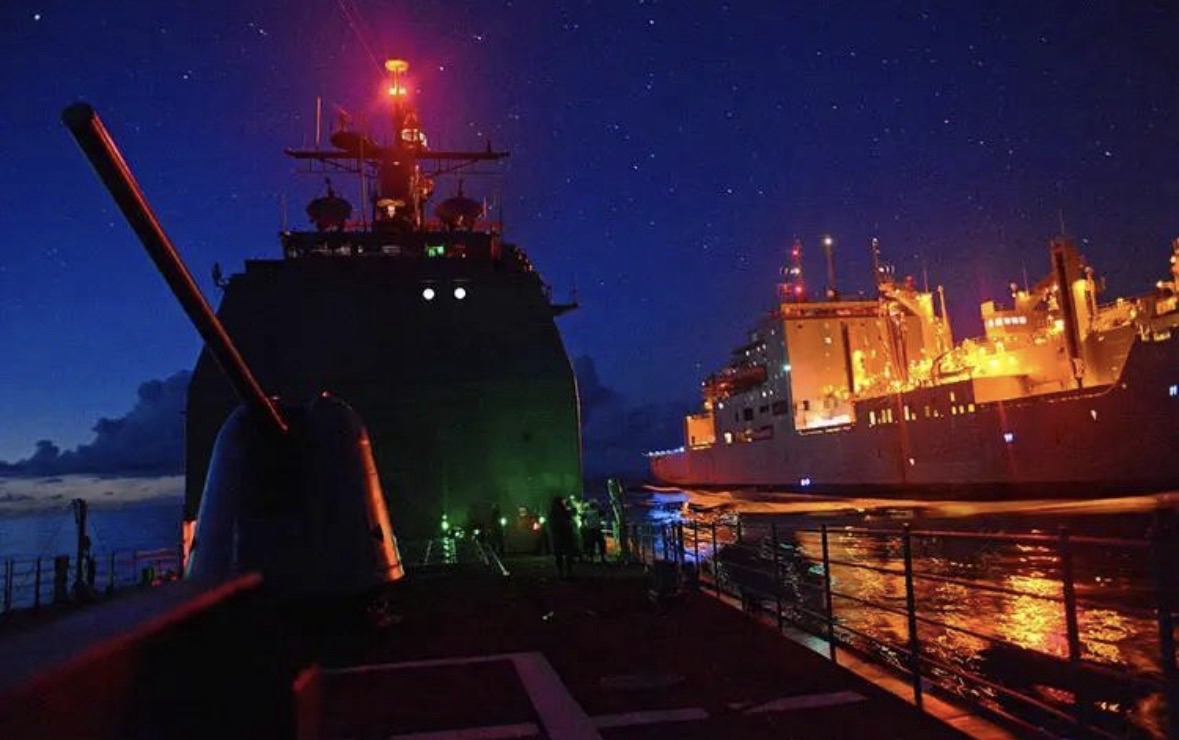
The “Fragile Opening” of the Strait has broken down at the operational level. Direct engagement with Indian-flagged vessels has shifted the environment from controlled congestion to active interdiction risk.
1. Kinetic Incident: Indian Vessels Fired Upon
- On April 18, VLCC Sanmar Herald and bulk carrier Jag Arnav were fired upon by Iranian gunboats northeast of Oman.
- Both vessels aborted transit and reversed course. No damage reported.
- Total Indian-flagged vessels stalled in the region now stands at 14.
- In contrast, tanker Desh Garima cleared the Strait under a controlled naval window, indicating selective and manual enforcement.
2. Naval Response: Operation Sankalp Escalation
- Indian Navy has shifted to active escort posture under Operation Sankalp.
- Mandatory 15 nm standoff from Larak Island designated as high-risk zone.
- Indian warships now coordinating convoy-based or direct-clearance transit.
- In case of conflicting instructions, follow Indian Naval command over regional VTS.
3. Operational Risk: Larak Corridor and Identity Threat
- Larak sector now combining kinetic threat + electronic warfare exposure.
- Vetting delays remain elevated (~52 hours) under multi-layer verification.
- Surge in AIS identity cloning of Indian-flagged vessels leading to false interdictions.
- Maintain manual visual vs AIS verification log for all close-range contacts.
Strategic Summary (For Masters & Ship Managers)
- Indian flag is no longer a passive safety shield. Transit requires naval coordination.
- Do not approach Larak without clearance. Maintain 15 nm exclusion.
- Identity integrity is operational risk. Be prepared to prove vessel authenticity in real time.
Operational Status
RED – Kinetic Risk Active / Indian Escorts: Active / Transit: Controlled / Larak Zone: High Risk
This update is part of the DeepDraft Live Wire series covering developing maritime operational situations.
DeepDraft Analysis (Latest):
Unlimited Internet, Limited Attention: The Operational Risk on Modern Ships



Leave a Reply