
The maritime security environment in the Strait of Hormuz has entered a new phase of volatility. U.S. forces have degraded Iranian mine-laying capabilities, but a subsequent wave of projectile strikes on commercial shipping demonstrates that land-based “area denial” capabilities remain active across the Strait.
1. Kinetic Breakthrough: US Destroys 16 Iranian Mine-Layers
U.S. Central Command (CENTCOM) confirmed that U.S. forces destroyed 16 Iranian vessels involved in mine-laying operations near the Strait of Hormuz.
• Operation details: Video released by CENTCOM showed precision strikes against several vessels positioned near key navigation approaches.
• Operational impact: The removal of mine-laying assets reduces the immediate threat of underwater hazards that had stalled salvage and commercial shipping operations.
• Residual threat: According to the Institute for the Study of War (ISW), Iran is believed to retain 5,000–6,000 naval mines in reserve.
2. Triple Projectile Strike on Commercial Shipping
A series of projectile strikes on merchant vessels marked one of the most violent 24-hour periods for commercial shipping during the crisis.
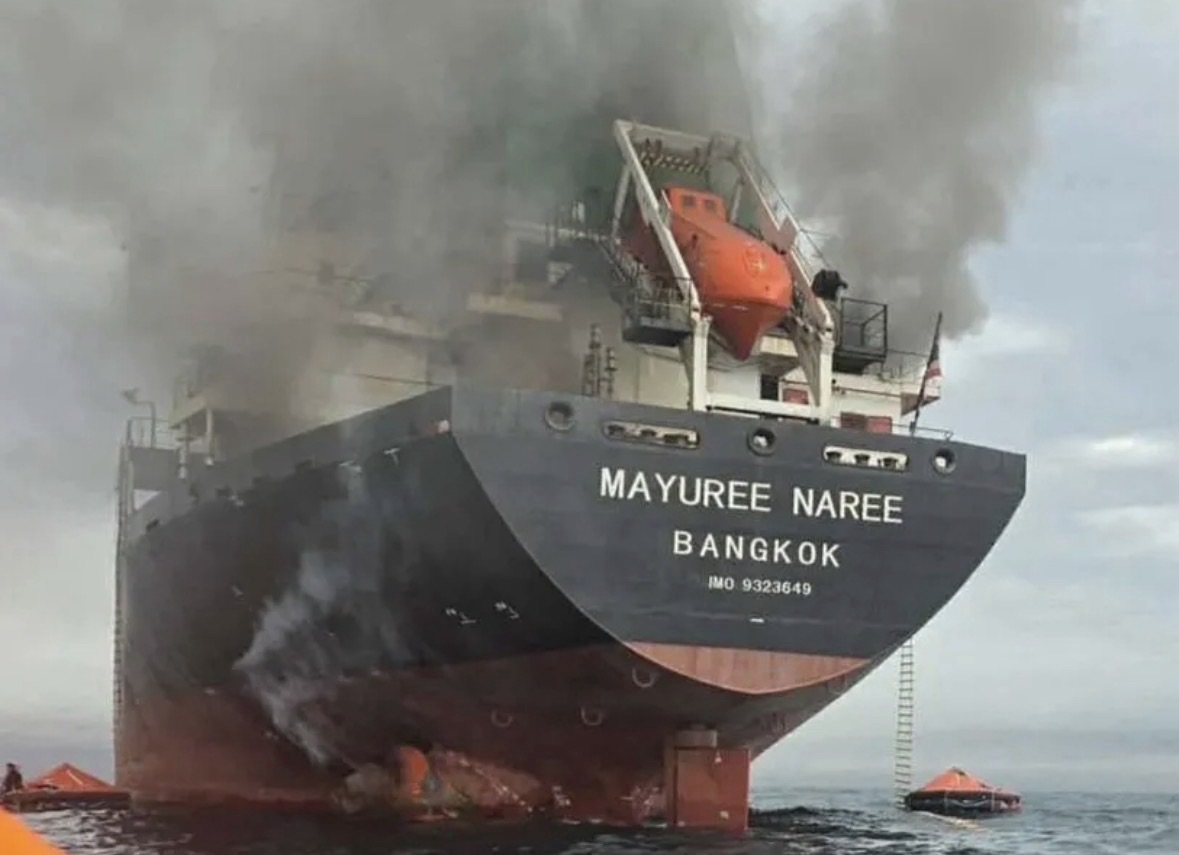
• Mayuree Naree (Thailand-flagged bulker): Struck north of Oman, resulting in a severe engine-room fire. Twenty crew members were evacuated while several remained onboard during recovery operations.
• One Majesty (Japan-flagged container vessel): Sustained a hull breach northwest of Ras Al Khaimah in UAE waters.
• Star Gwyneth (Marshall Islands-flagged Kamsarmax bulker): Reported hull damage following a strike northwest of Dubai.
Iranian sources have continued to describe Marshall Islands–flagged vessels as linked to U.S. shipping interests.
3. Operation Sankalp: 28 Indian Vessels Stranded
India’s Directorate General of Shipping (DGS) confirmed that 28 Indian-linked vessels carrying 778 seafarers remain delayed in the region.
• Operational posture: Indian Navy warships remain on standby for potential escort or humanitarian support operations under Operation Sankalp.
• Repatriation: India has evacuated tens of thousands of citizens from the wider region, though maritime crews remain exposed due to vessel immobilization.
4. Market and Insurance Shock
• Oil markets: Brent crude rebounded to approximately $114 per barrel following renewed attacks on shipping.
• Insurance crisis: The U.S. Development Finance Corporation (DFC) has designated Chubb as lead underwriter for the $20 billion maritime reinsurance program intended to restore tanker transits.
• Private market collapse: Commercial war-risk premiums have surged to roughly $7.5 million per voyage, effectively pricing most private operators out of Gulf transits.
5. Sector Breakdown: Global Shipping Impact
• Tanker sector: Transit activity through the Strait has fallen dramatically, with only limited movements reported.
• Container shipping: Major carriers continue routing Asia–Europe services around the Cape of Good Hope, adding significant transit time.
• Navigation risk: Maritime intelligence providers report a sharp increase in GPS jamming and navigation interference, complicating operations for vessels without advanced positioning systems.
Strategic Summary for Maritime Stakeholders
Neutral flag protection is eroding, as strikes have affected vessels from multiple flag states. Search-and-rescue and salvage operations now carry elevated operational risk, complicating recovery of damaged vessels.
Operational Status:
EXTREME RISK / ESCORT OPERATIONS UNDER REVIEW
Sources:
Lloyd’s List Intelligence / Windward AI / US CENTCOM / Institute for the Study of War / Directorate General of Shipping India (12 March 2026)



Leave a Reply