
There is a familiar sequence in shipping whenever a new system enters the bridge environment. The technology is positioned as a solution, the regulatory framework follows, and equipment begins to appear onboard. Only after that do we start to understand what the system actually does to operations.
VDES, the VHF Data Exchange System is now entering that phase.
It is technically mature and regulatorily aligned. But operationally, it is stepping into a bridge ecosystem that is already saturated with inputs, alerts, overlays, and expectations. That context matters more than the technology itself.
The AIS Correction That Sets the Stage
The starting point is AIS.
AIS is a system built for identification, position reporting and situational awareness. In practice, its role onboard has extended beyond that baseline into wider use within traffic assessment and decision support. Originally designed for identification, position reporting, and basic situational awareness, AIS gradually expanded in practice into something far more influential. On many bridges, it became an informal decision-support layer for CPA assessment, a shortcut for traffic interpretation, and in some cases, a proxy for intent.
That drift is now being corrected. Inspection regimes, training emphasis, and guidance across the industry are aligning toward a clear position – AIS supports awareness. It does not replace radar plotting, visual assessment, or COLREG-based decision-making. This correction is not a downgrade, but a recalibration. And it is into this recalibrated environment that VDES is being introduced.

What VDES Actually Changes
At its core, VDES does not attempt to reinvent navigation. It restructures how data is handled. AIS remains the broadcast layer for identification and safety visibility. VDES separates and expands the data exchange function that AIS was never designed to carry at scale.
The system operates through two distinct layers:
- VDE-TER provides terrestrial communication within coastal and VTS coverage.
- VDE-SAT extends limited data exchange beyond line-of-sight through satellite links.
This separation relieves congestion on critical AIS channels and allows structured, higher-capacity information to move without compromising safety broadcasts.

The change is architectural. Where AIS broadcasts indiscriminately, VDES enables addressed, managed communication. Information can be directed, prioritised, and structured in ways that were not previously possible within the VHF domain.
But its function remains strictly aligned with awareness and information exchange. It is not a substitute for primary navigation. Radar and ARPA continue to provide sensor-based tracking, and visual lookout remains the ultimate reference for confirmation. The fundamental framework of collision avoidance remains unchanged. VDES simply sits alongside these established systems as a highly capable, supplementary information layer.
A simplified system-level explanation of VDES operation is included below for context.
The Regulatory Direction
There is a growing perception that VDES is positioned to replace AIS or elements of GMDSS. The regulatory direction indicates a more structured transition.
Recent IMO discussions at the sub-committee and Maritime Safety Committee level have moved VDES from concept into the formal regulatory pathway. Draft amendments to SOLAS Chapter V have been developed to introduce VDES as an alternative means of compliance for existing AIS carriage requirements, alongside the development of performance standards and operational guidance for shipborne equipment.
It is not an in-force mandatory requirement today and its implementation will depend on formal adoption, entry into force, and the readiness of supporting infrastructure across the fleet.
VDES does not form part of the GMDSS architecture under SOLAS Chapter IV. Maritime Safety Information, distress communication, and associated obligations continue to be governed through established GMDSS systems.
In parallel, system development is moving toward integrated transponders that combine AIS and VDES functionality within a single unit, leading to its description in industry as a next-generation or “AIS 2.0” platform. In practice, this reflects system convergence within equipment design rather than immediate regulatory replacement.
From an operational perspective, this results in a mixed environment. Ships with different levels of equipment capability will operate within the same traffic space, under the same COLREG framework, and without recognition of transmitted intent or system-derived routing information within the rules of the road.
From Information Delivery to Decision Influence
Bridge teams today receive information in multiple forms that require active processing. NAVTEX messages are read and interpreted, VHF communications are heard and clarified, and data is assessed before it becomes actionable within the navigational context.
VDES alters this flow by introducing information that arrives in a structured and system-ready form. Navigational warnings, service messages, and route-related inputs are delivered directly into ECDIS and associated displays, already formatted and positioned for immediate visibility within the navigation interface.
The relationship between information availability and attention on the bridge has already begun to shift in recent years.

Operational Value Without Role Confusion
VDES introduces a shift in how information is perceived onboard.
When systems begin to display traffic information, route-related inputs, and structured advisories within the navigation interface, there is a natural tendency to treat that information as current, complete, and reliable within the operating picture.
At the same time, vessel movement, intent, and relative situation continue to evolve, data transmission remains subject to timing and system conditions, and participation across traffic is not uniform. Data integrity improves with system design, but remains dependent on the wider network and its inputs.
Within this environment, transmitted information can begin to shape interpretation earlier in the decision cycle.
COLREGs continue to operate on a different basis. They recognise what is observed, what is assessed, and what is acted upon in real time. That framework remains unchanged, regardless of how information is delivered to the bridge.

The Expanding Complexity of the Bridge
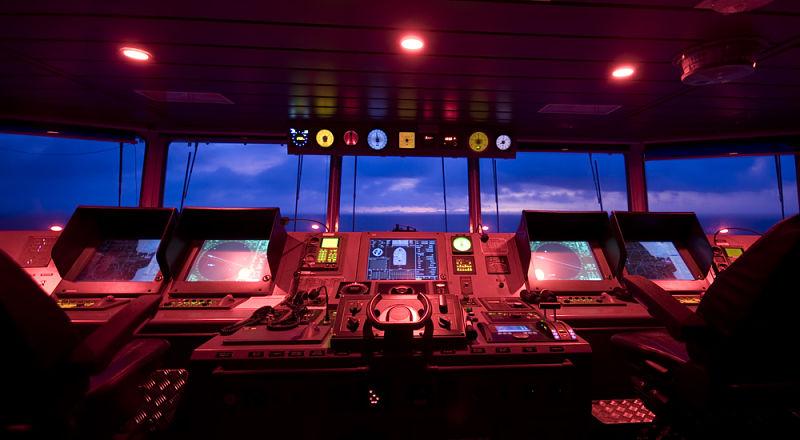
Modern bridges already operate within a dense information environment. Radar overlays, AIS targets, ECDIS layers, weather routing inputs, and various advisory systems compete for attention. VDES adds another structured layer to this ecosystem.
The challenge is prioritisation.
The ability to distinguish between critical and supplementary information becomes the defining skill of effective watchkeeping. The addition of structured data feeds requires careful management within existing alarm hierarchies. Without clear procedural discipline, additional data does not enhance safety. It dilutes focus.

The Implementation Gap
While VDES is progressing at the regulatory and technical level, its practical implementation faces several constraints. Infrastructure, equipment availability, and authentication frameworks are still developing, while crew familiarity remains inconsistent.
Furthermore, there is a dangerous assumption that because VDES operates over VHF radio frequencies, it is isolated from cyber threats.
It is not.
While ECDIS already faces risks from USB updates or VSAT connections, those vectors are typically guarded by human procedures or shipboard IT firewalls. VDES introduces a fundamentally different threat – RF data injection. The vulnerability of navigation systems to externally influenced data is already visible in other domains.
Because VDES acts as a sensor rather than an IT network node, it feeds high-capacity, structured data directly into the ECDIS, bypassing traditional IT firewalls. If a shore-side network is compromised and broadcasts a corrupted data packet, the onboard system ingests it automatically with no human in the loop. Until global data authentication protocols are fully mature, VDES represents a direct, automated backdoor to the bridge screens.
These gaps reinforce a key point: operational integration will lag significantly behind technical capability.

Adapting Bridge Procedures
The conversation now moves from systems to procedures.
VDES cannot be absorbed informally into existing bridge routines. Its integration requires definition within Bridge Procedures Guides and Safety Management Systems, particularly in how inputs are filtered, prioritised, and acted upon within different phases of navigation.
That includes:
- Layer Discipline: Defining exactly which data layers are permitted during different phases of navigation (e.g., disabling non-critical overlays during pilotage).
- Verification Protocols: Establishing mandatory cross-checks between VDES inputs and primary sensors before action is taken.
- Alarm Prioritisation: Ensuring core navigational warnings (CPA/TCPA, safety contours) are never masked by VDES data notifications.
- Fallback Drills: Conducting routine drills with VDES inputs disabled to maintain baseline competence and reliance on primary sensors.
The industry has seen similar transitions before. ECDIS began as a support tool and became a dependency. Integrated bridge systems introduced additional layers of complexity while promising simplification. VDES follows the same trajectory. Its effectiveness will be determined less by its technical capability and more by how it is structured into onboard practice.
The Master’s Position
From a command perspective, the fundamental principles of navigation remain unchanged. VDES enters the bridge as an additional input, while decision-making continues to rest on radar, visual observation, and established practice.
The presence of more information does not in itself improve safety; it is the control, prioritisation, and interpretation of that information that determines its value. In that context, VDES represents a massive progression in how maritime communication is structured, addressing the long-standing limitations of AIS. At the same time, it introduces another complex layer to an already demanding environment.

The direction is clear. AIS made ships visible. VDES will make ships informed. Whether that improves safety will depend less on the system itself and entirely on how the bridge manages what it receives.
Media Section
Sources
Sources
- IMO Resolution A.1106(29) – AIS Operational Guidelines
- SOLAS Chapter V – Regulation 19
- SOLAS Chapter IV – GMDSS
- IMO e-Navigation Strategy Implementation Plan (MSC.1/Circ.1595)
- IMO NCSR and MSC discussions on VDES integration into SOLAS
- ITU-R M.2092 – VDES Technical Standard
- IALA VDES Overview and Maritime Service Portfolio Documentation
- IALA Guideline 1117 – Maritime Service Portfolios
- IHO S-100 Universal Hydrographic Data Model
- MSC.302(87) – Bridge Alert Management
- IMO MSC-FAL.1/Circ.3 – Maritime Cyber Risk Management


Leave a Reply