

Many Clubs have observed a negative trend in loss of anchors and chains
and associated costs. A study into the root causes has revealed that a majority of these losses could be avoided by increased awareness of the environmental limitations, more attention to some key technical issues and general good seamanship. This blog is a brief summary of the technical issues related to anchor losses.
Root Cause Analysis
There is a general lack of awareness of the environmental loads for which anchoring equipment is designed. Class societies have unified rules for the design of anchoring equipment.
The maximum environmental loads are:
■■Current velocity: max. 2.5m/s
■■Wind velocity: max. 25m/s.
■■No waves (sheltered waters)
The investigation of the root cause of loss of anchor has shown that in a majority of the cases, the environmental conditions exceeded those stated above. Many anchoring locations are outside sheltered waters, and an equivalent environmental
envelope was found as given by:
■■Current velocity: max. 1.5m/s
■■Wind velocity: max. 11m/s
■■Significant wave height: max. 2m
In order to achieve the necessary anchor holding power, it is essential that the anchor chain and the fore-runner remain horizontal on the seabed and that good holding ground is available. The ratio between water depth and the length of the chain – the
scope number – is a key factor in ensuring this, and class guidance
is 6 to 10 scopes. Further, the anchor winch motor is typically designed to lift the
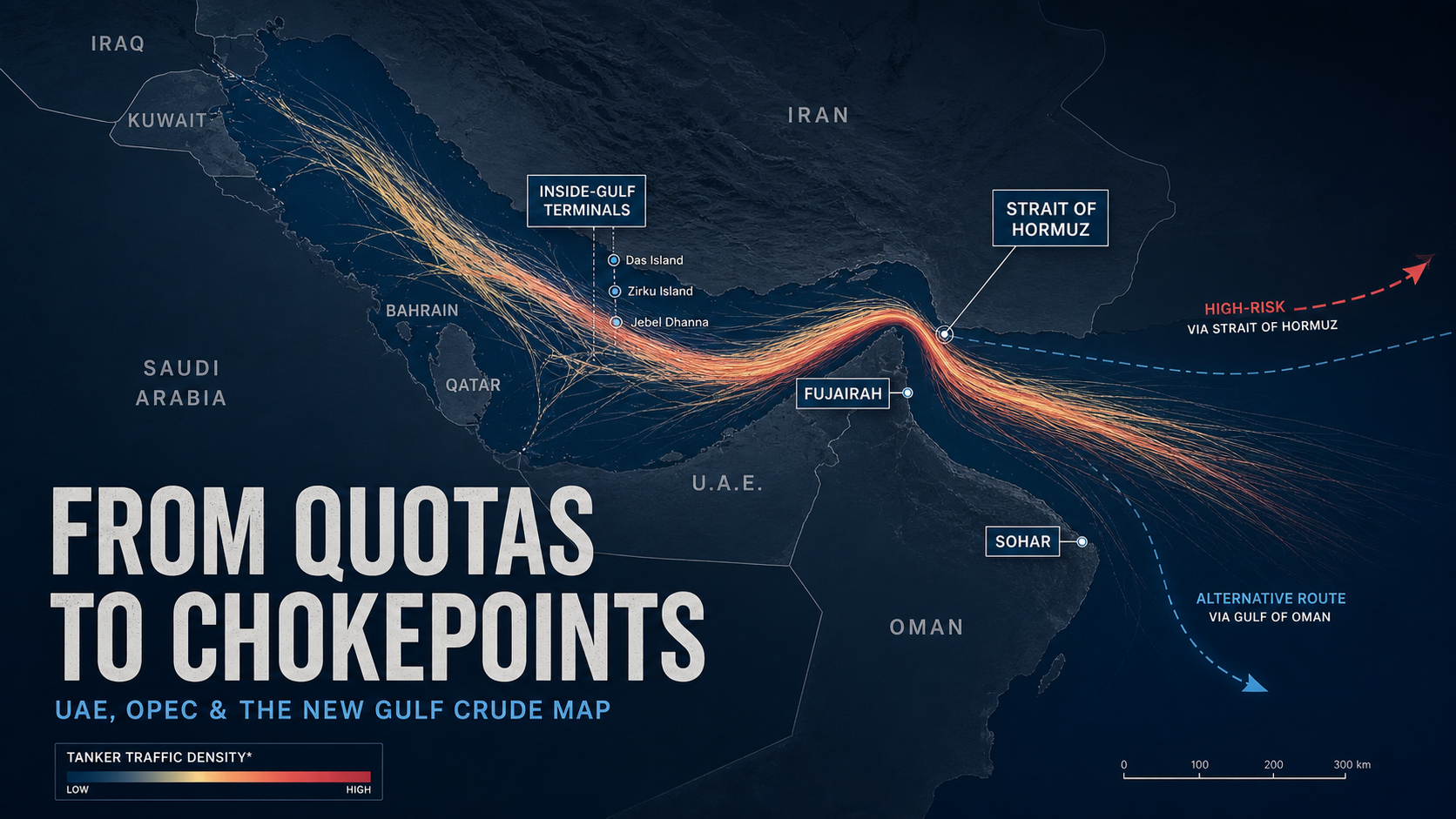
anchor and three lengths of chain (82.5m). The study revealed that there have been a number of cases in which the anchor winch was not able to recover the weight of the anchor and the chain due to anchoring in waters that were too deep. Many of us must have experienced the same at deep water anchorages like Fujairah.

Technical Analysis
In the study, by a class the most typical technical failures, and this is discussed in depth in the “Anchor loss – Technical and operational challenges and recommendations” report presentation. However, two of the main issues are highlighted below. The D-shackle is the single technical component which has the highest failure rate causing anchor losses. Typically, the D-shackle bolt comes loose due to a detached securing pin.
The conventional way of assembling the D-shackle is to lock the tapered pin in place by hammering in a lead pellet, a small but essential element in the anchoring equipment. This connection is not easily accessible for inspection. However, special attention
should be paid to this detail whenever possible – when heaving the anchor or when the ship is in port – and, of course, when the ship is in dry-dock. Furthermore, tight securing of the anchor in the hawse pipe during voyage is recommended to avoid excessive vibrations, which again can cause the pin to come loose.
Then there is the issue of anchor winch brake bands:
The windlass brake is essential to control the pay-out of the chain, and many anchor losses are reported due to loss of brake power and uncontrolled release of chain. Corrosion of the drum and wear of the brake band lining reduces the brake capacity,
and the main problem is that the brakes are not adjusted according to makers’ recommendations.

Recommendations
1. Make sure that the master know the maximum environmental envelope the equipment can hold, and make sure this is reflected in the shipboard anchoring procedures.
2. Properly implement routine inspections and maintenance of essential components of the anchoring equipment. Class should always be contacted when repairs are to be carried out on the anchor and chain.
3. When ordering new ships, evaluate the possible need for increasing the anchoring equipment beyond minimum IACS class requirements especially if you will be anchoring
in deep waters. 4. In wind conditions exceeding Beaufort Force 7 and in poor anchor holding conditions, where sea room permits, Masters’ are advised to use their full discretion to weigh the anchor and proceed to sea. Masters are encouraged to consider weighing anchor whilst conditions are still safe and proceeding to sea. This should be done in consultation with Company / Charterers and the Port control, but in all cases the Master has over riding authority to avoid damage to the vessel and provide for her safety. 5. Masters’ are to plan a gradual decrease in speed in order to attain “Zero” ground speed prior to lowering the anchor. Note: When anchoring in an area with strong current, it must be confirmed by GPS and/or Doppler or other means that the vessel is not making speed over the ground. In order to ensure that the ship has stopped moving completely, the master should check with following signs, even if no landmarks and signals are available to use.

With this I wish all the fellow seafarers bon voyage and safe anchoring.


Leave a Reply