

Hormuz remains a permissioned transit zone, while MEPC 84 has added a new compliance map for ships trading the North-East Atlantic.
That is the week’s operating signal.
The Gulf picture is still defined by controlled routing, clearance friction, sanctions exposure, boarding risk, GNSS degradation and selective vessel movement. At the same time, the latest DeepDraft analysis shows that regulation has also moved: the IMO Net-Zero Framework was deferred, but the North-East Atlantic ECA was adopted, turning a chart boundary into fuel planning, recordkeeping, PSC exposure and commercial cost.
For masters, ship managers, charterers, insurers and bridge teams, this week was not about one risk category. It was about operational control from two directions: security control in Hormuz and regulatory control through the ECA map.
Weekly Analysis
MEPC 84 Outcomes: New ECA and Carbon Framework Delays
DeepDraft’s latest flagship analysis explains why MEPC 84 matters more at ship level than the public carbon-policy headline suggests. The IMO Net-Zero Framework was not finalised, with work deferred to December 2026. But the North-East Atlantic Emission Control Area was adopted under MARPOL Annex VI, entering into force on 1 September 2027, with operational requirements applying from 1 September 2028.
The operational point is clear: MEPC 84 did not create a new sulphur limit. It changed where existing ECA requirements apply. From 2028, ships operating inside the North-East Atlantic ECA will need to comply with the 0.10% sulphur limit, manage fuel changeover timing, maintain bunker documentation, preserve MARPOL samples, and ensure engine-room records match the vessel’s position.
This matters to masters, chief engineers, ship managers, charterers and superintendents because the boundary becomes an operation. A line on ECDIS becomes a bunker plan, a tank-preparation issue, a changeover window, a logbook trail and a Port State Control exposure. For commercial teams, the expanded ECA leg affects voyage estimates, bunker stems, charterparty responsibility and possible off-hire arguments.
The DeepDraft view is practical: the rule is old, the map is new, and from 2028 that map becomes part of the voyage. Regulatory delay on carbon does not mean regulatory stillness. It means conventional air-pollution compliance has moved while the global carbon mechanism remains unresolved.
Full analysis available on DeepDraft:
https://thedeepdraft.com/2026/05/18/mepc-84-outcomes-new-eca-and-carbon-framework-delays/
This Week in Maritime: Timeline of Escalation
May 19 — Hormuz Remains Permissioned, Not Normalized
The reported movement of VLCC Agios Fanourios I showed that some crude traffic could pass through the current Hormuz control environment, but the movement did not indicate a return to open transit. DeepDraft identified clearance, naval posture, fee exposure and weak shipping confidence as the operating issues for owners, charterers and insurers.
May 20 — Skywave Seizure Extends Hormuz Risk Into the Indian Ocean
The reported U.S. seizure of the Iran-linked tanker Skywave shifted the enforcement picture beyond the Strait itself. Indian Ocean routing, STS activity, AIS history, ownership screening and Iran-linked crude chains now carry direct interdiction exposure for tanker desks and ship managers.
May 21 — Six Million Barrels Clear Under Iran-Directed Routing
Three supertankers carrying a combined 6 million barrels of Middle Eastern crude crossed the Strait after prolonged delay, but DeepDraft assessed the movement as controlled passage rather than restored free transit. The operational triggers remain routing authority, checkpoint contact, sanctions-payment exposure, insurance clearance and company approval.
May 22 — Celestial Sea Boarding Extends Gulf of Oman Enforcement
U.S. forces boarded and redirected the Iranian-flagged tanker Celestial Sea in the Gulf of Oman, while the same cycle produced a separate Bonny / Onne collision involving two grounded vessels and five injured crew. The combined signal is boarding-readiness in Iran-linked trades and renewed local casualty awareness for Nigerian port calls.
May 23 — Iran-Permitted Ships Clear Hormuz as Socotra Tanker Reports Warning Shots
DeepDraft’s latest SITREP reported that 35 Iran-permitted commercial vessels cleared Hormuz while a tanker north of Socotra reported suspicious activity and warning shots. The operational picture remained split between selective Gulf passage and wider regional security exposure affecting bridge teams, routing desks and insurers.
Full Live Wire coverage for the week:
https://thedeepdraft.com/category/wire/
Strategic Summary
The main operational implication is that ships are now being controlled by both security and compliance systems. In Hormuz, passage depends on permission, routing, clearance, naval posture and sanctions exposure. In the North-East Atlantic, the ECA decision means future compliance will depend on whether passage planning, fuel changeover, tank preparation, documentation and commercial instructions align before entry.
Ship managers should watch three items next: whether Hormuz controlled passage widens or remains selective, whether boarding and enforcement activity expands beyond Iran-linked tankers, and whether companies begin preparing SMS, bunker planning and charterparty guidance for the North-East Atlantic ECA before the 2028 operational start.
The risk likely to carry into next week is fragmentation. Some vessels may move, but not all vessels will be commercially, legally or operationally clear to move. Some regulations may remain delayed, but the compliance map has already changed. Masters and managers should treat partial movement as a signal to verify authority, not as evidence of normalization.
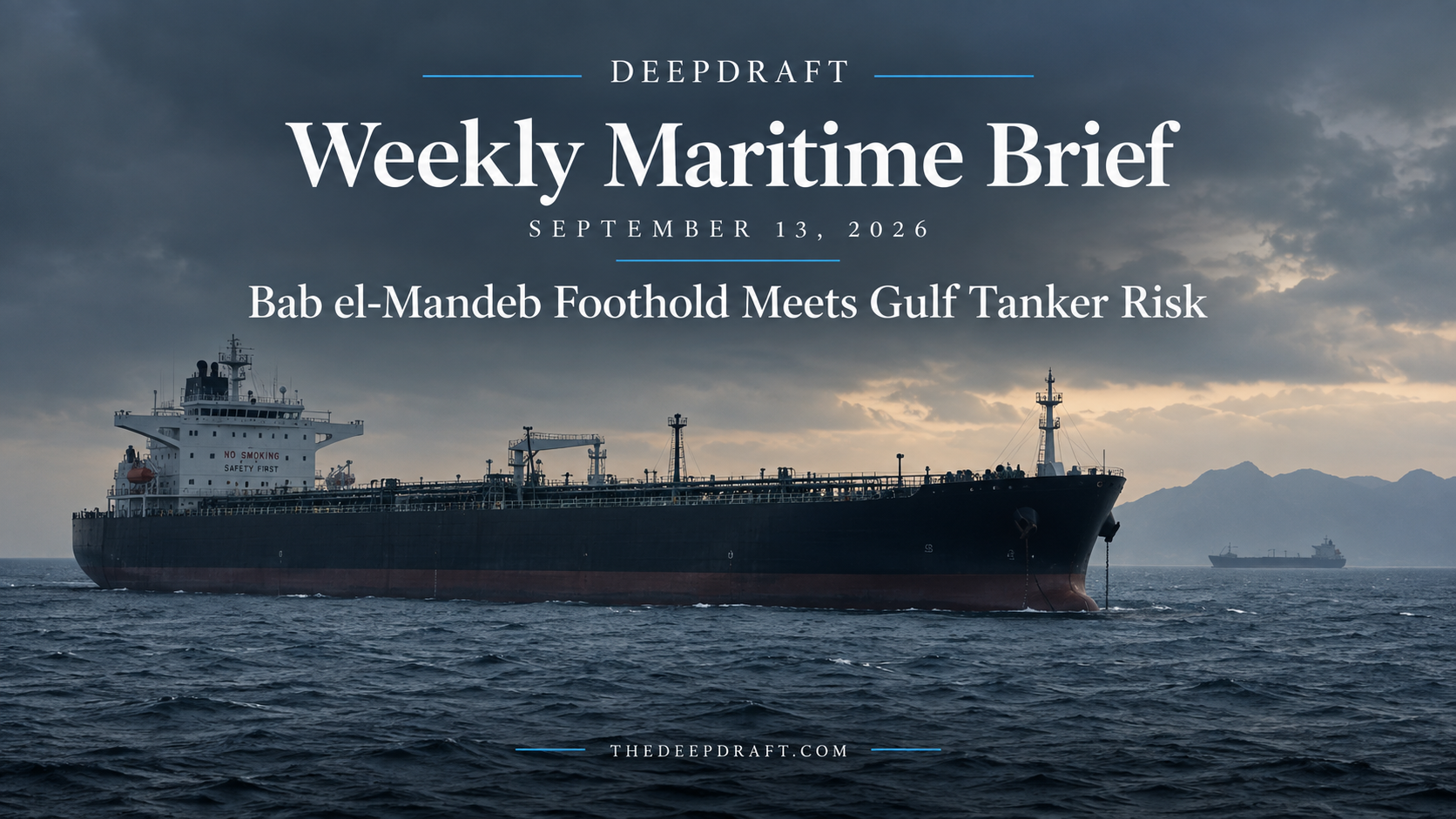
This report is part of the DeepDraft Weekly Maritime Brief series tracking operational, regulatory, and security developments across global shipping.



Leave a Reply