

A tanker has been struck by two unidentified projectiles in its engine room near the Strait of Hormuz. The latest incident follows a fatal attack on an Indian-crewed cargo dhow in the same wider area, as Gulf shipping continues to face serious security disruption.
1. Tanker engine room struck by two projectiles off Oman
- UKMTO Incident 195-26 records a tanker attack at approximately 19:00 UTC on November 3, about 14 nautical miles northeast of Limah (Lima), Oman.
- The vessel’s Company Security Officer reported that two unidentified projectiles struck the engine room. UKMTO reported no casualties or environmental impact at the time of its warning.
- The tanker’s identity, IMO number, flag, cargo and extent of machinery damage remain unconfirmed. UKMTO has not identified the attacker or weapon type.
- A separate UKMTO warning, 193-26, recorded a projectile strike approximately nine nautical miles northeast of Limah on November 2. The Master reported a hole in the vessel’s starboard side, with crew safe.
- Separately, Iran’s Revolutionary Guard claimed on November 4 that four tankers had been destroyed by naval mines and two vessels seized. These claims have not been independently established and cannot be equated with the UKMTO reports.
2. Indian seafarer killed in attack on MSV AL JUSUFI
- India’s Ministry of External Affairs confirmed on November 3 that MSV AL JUSUFI was attacked near Limah, Oman, on the evening of November 2.
- Fourteen Indian nationals were aboard. One seafarer died from injuries, while the remaining 13 were rescued.
- UKMTO Warning 194-26 describes an attack on an Indian-crewed dhow sailing outbound through the Strait of Hormuz. The Royal Navy of Oman rescued the surviving crew.
- UKMTO said the vessel’s subsequent condition was unknown. Indian authorities are coordinating with Oman for repatriation of the survivors and the deceased seafarer’s remains.
3. Gulf oil exports decline as tanker tracking becomes less reliable
- Reuters reported on November 3 that Vortexa estimated October Gulf crude, condensate and refined-product exports, excluding LPG, at 17.1 million barrels per day, down from 18.9 million in September.
- Crude and condensate exports averaged 14 million barrels per day, approximately 86% of pre-war levels.
- Refined-product exports reached only 3.1 million barrels per day, slightly above half their pre-war volume.
- Kpler independently indicated a decline of approximately one million barrels per day in crude and condensate flows compared with September.
- Both analysts cautioned that October estimates could be revised upward. Vessels switching off AIS transmissions and delays in satellite-based verification are complicating the measurement of tanker movements.
4. Middle East container ports report record congestion
- Linerlytica’s latest weekly assessment, reported November 3, describes record container congestion across Middle Eastern gateways handling diverted cargo.
- Kuehne+Nagel figures measured as of October 30 put average vessel waiting times at 7.25 days at Khor Fakkan and 8.86 days at Fujairah.
- Container transfers from these gateways to Jebel Ali, Sharjah and Abu Dhabi are taking approximately 12–15 days, compared with around five days previously.
- At Salalah, Hapag-Lloyd reports yard density of 84%, with berthing delays reaching 36 hours. Sohar is experiencing waits of two to three days. The disruption is concentrated at affected gateways rather than uniformly across the region.
5. Australia bans WOOYANG VENUS after repeated falsification of rest records
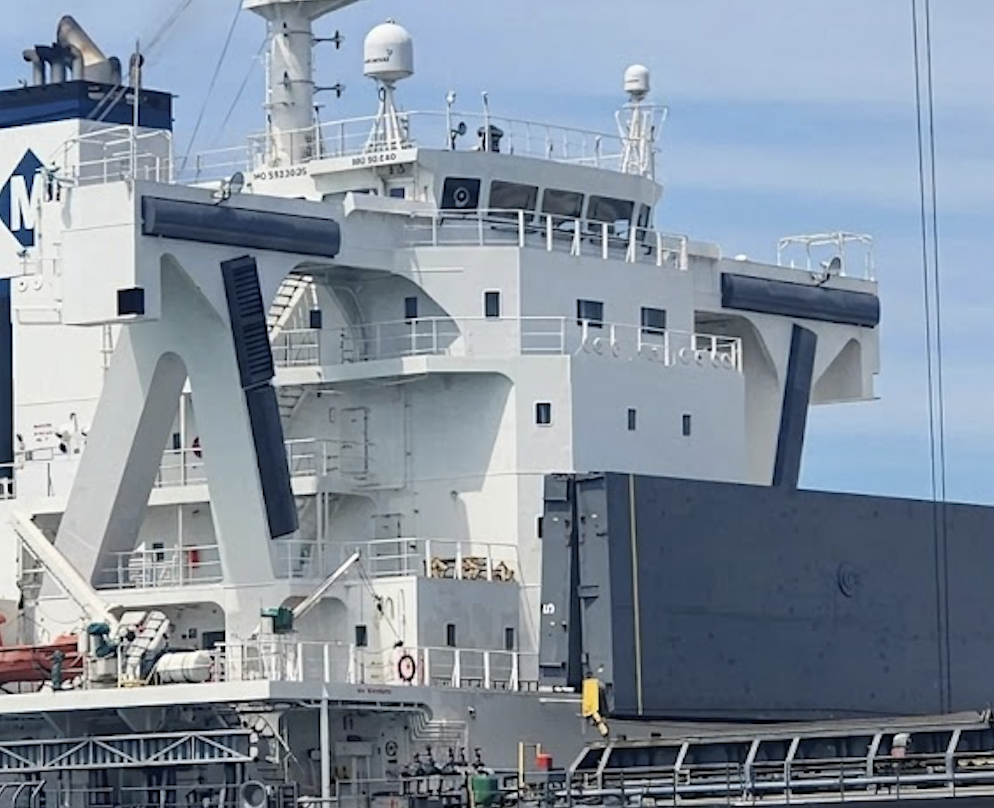
- The Australian Maritime Safety Authority announced on November 3 a 90-day Australian port ban on the Marshall Islands-flagged bulk carrier WOOYANG VENUS.
- A port State control inspection at Newcastle on October 29, following a Maritime Labour Convention complaint, established that work and rest-hour records had been deliberately falsified to conceal excessive working hours.
- The vessel had previously been detained in December 2023 and August 2026 for deficiencies involving work and rest records.
- AMSA imposed the ban under Section 246 of Australia’s Navigation Act 2012, citing repeated failures and concerns over the effectiveness of the owner’s and operator’s safety management arrangements.
Latest DeepDraft Analysis
Atmospheric Pressure and UKC: Is the Calculated Clearance Still Valid at Arrival?
A SIRE 2.0 observation raises a practical UKC problem: changes in atmospheric pressure and wind can alter water levels, requiring clearance calculations to be reassessed before arrival.
Related DeepDraft SITREPs
Tanker Hit by Two Projectiles Near Saudi Arabia as Gulf Attacks Spread (November 2, 2026)
LNG Carrier AL MAYEDA Struck by Projectile in Arabian Gulf; 25 Crew Safe (November 1, 2026)
Related DeepDraft Articles & Analysis
The Mercenary Master: Shipping’s New Hormuz Reality
The Return of Armed Merchant Shipping
Sources
UK Maritime Trade Operations (UKMTO), Ministry of External Affairs (India), Reuters, Kuehne+Nagel, Australian Maritime Safety Authority (AMSA).
DeepDraft Security Desk | Maritime security reports and official-source links
This update is part of the DeepDraft SITREP series covering developing maritime operational situations.



Leave a Reply