
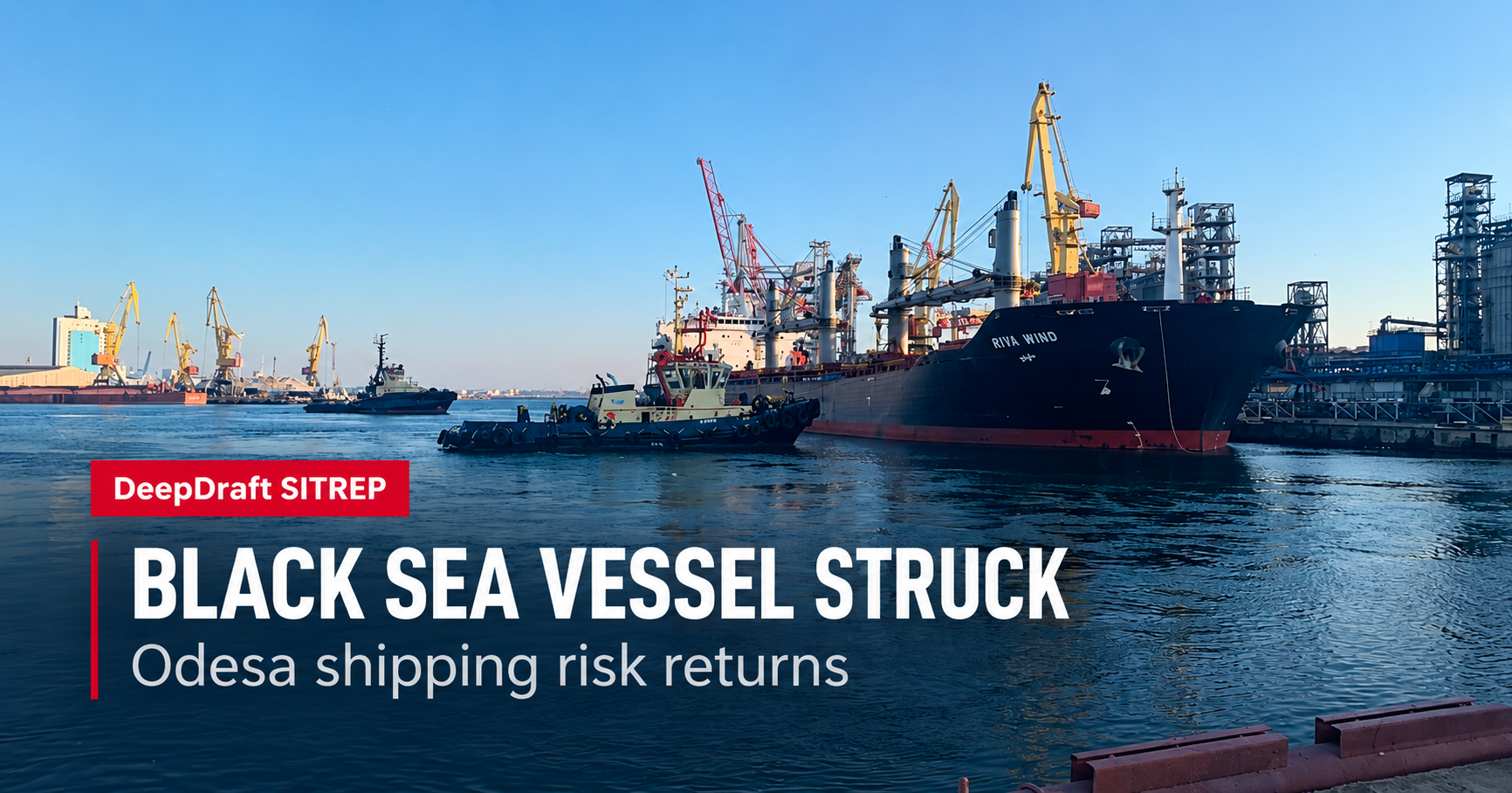
A Palau-flagged vessel was struck in Ukraine’s Odesa region on September 28, while Indian Coast Guard teams stabilised MT SEAGULL 9 after engine failure and ballast-tank flooding off Paradip.
The same operating cycle brought increased Panama Canal draft and transit capacity, extended Qatar LNG force majeure and fresh Gulf crude-pricing pressure.
1. Palau-Flagged Vessel Struck in Odesa Region
• Ukrainian President Volodymyr Zelenskyy reported that Russian forces struck a vessel flying the Palau flag in the Odesa region during overnight and morning attacks on September 28.
• Crew condition and the extent of vessel damage also remained unreported, preventing a confirmed casualty assessment beyond the strike itself.
• The incident puts third-country merchant shipping back at the centre of the Black Sea security file and requires fresh voyage-authorisation, war-risk, port-call and crew-exposure review for vessels operating around Ukrainian Black Sea ports.
2. SEAGULL 9 Flooding Controlled off Paradip
• Belize-flagged chemical tanker MT SEAGULL 9 issued a distress call at approximately 0730 on September 27 about 37 nautical miles east-southeast of Paradip, Odisha, after main-engine failure and rapid ballast-tank flooding caused a dangerous list.
• The vessel was carrying 9,000 metric tonnes of palm oil with 23 crew members onboard.
• An Indian Coast Guard damage-control team boarded the tanker, deployed submersible de-flooding pumps, blanked two damaged seawater pipelines and contained a third fractured line, eliminating the immediate capsizing threat.
• A minor palm-oil sheen observed on September 27 had fully dissipated by September 28. Paradip Port Authority tug Dolphin subsequently took SEAGULL 9 under tow toward the Paradip anchorage while Coast Guard assets maintained operational and pollution-response cover.
3. Panama Canal Raises Neopanamax Draft and Transit Capacity
• The Panama Canal Authority increased the maximum authorised Neopanamax draft to 14.94 metres, or 49.0 feet, effective immediately and until further notice.
• From October 15, Neopanamax capacity will increase to 10 daily transits, bringing combined Panamax and Neopanamax capacity to 33 daily slots.
• The adjustment follows improved watershed conditions, close-to-average rainfall and water-saving measures at the locks.
• The Transit Reservation System remains the only mechanism guaranteeing a transit date. The Canal has warned that vessels arriving without reservations may still face indefinite delays.
4. Qatar LNG Force Majeure Extends as Gulf Freight Costs Reshape Crude Pricing
• QatarEnergy has extended force majeure affecting LNG deliveries to Italian utility Edison and some Asian customers as Hormuz disruption continues to constrain normal cargo execution.
• Edison said Qatar LNG deliveries will remain suspended until early December, while Bangladesh and Pakistan are among Asian markets affected by extended notices.
• At the same time, vessel-tracking data shows some Qatar-linked LNG carrier movements through Hormuz returning, including laden and ballast transits, creating a split between physical vessel movement and contractual cargo availability.
• Separately, Saudi Aramco is considering discounts of up to approximately USD 9 per barrel for second-half October crude cargoes transferred off Oman, according to Reuters sources, as exceptional tanker freight costs weigh on buyers using the Gulf of Oman STS chain.
Strategic Summary & Actions Required
• Masters and ship managers considering Ukrainian Black Sea employment should obtain current port, route, security and company voyage authority before commitment, with war-risk cover and crew exposure reviewed against the latest operating picture.
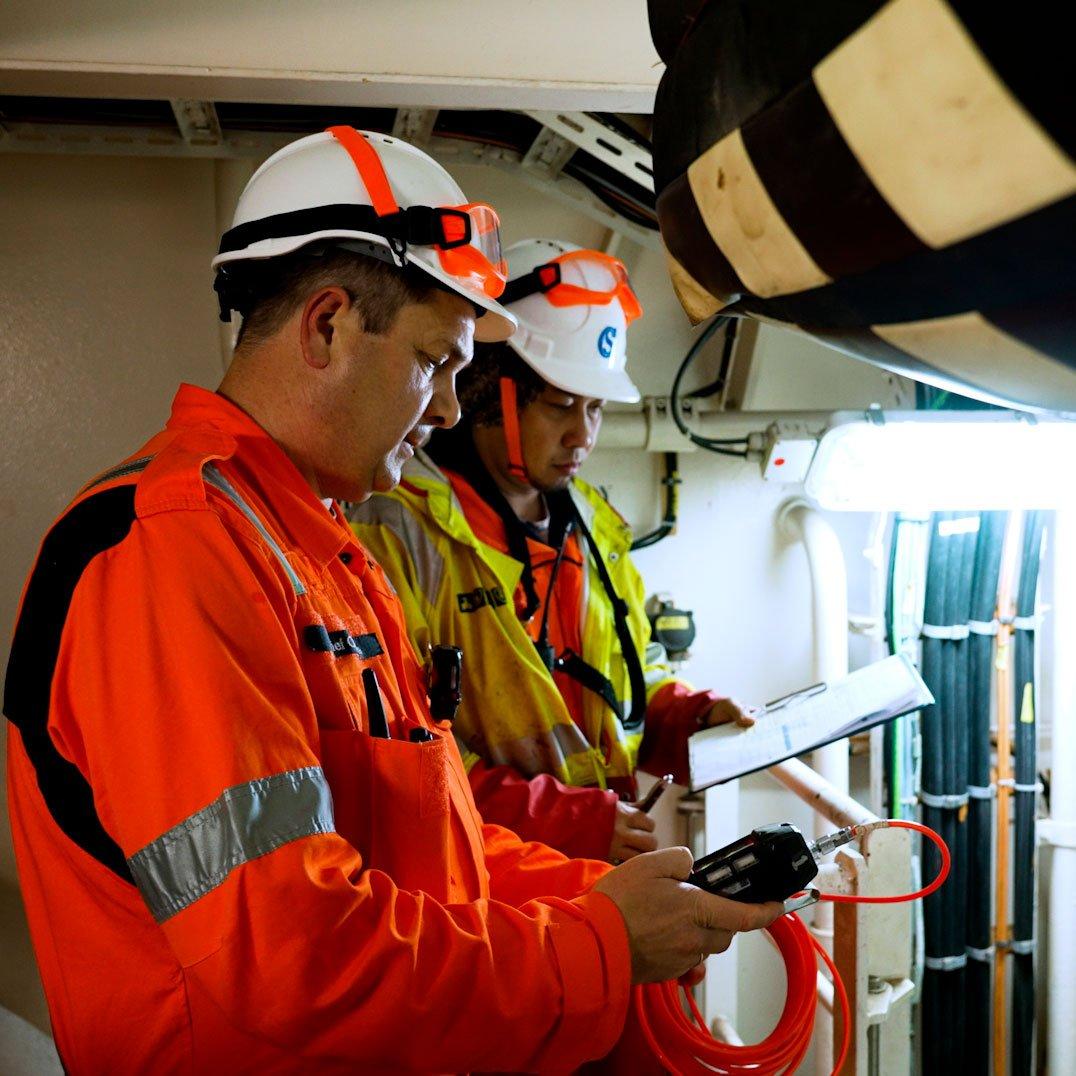
• Fleet technical teams should use the SEAGULL 9 casualty as a trigger to verify ballast flooding alarms, seawater-line integrity, emergency dewatering capability, damage-control equipment and pollution-response readiness where comparable machinery arrangements exist.
• Panama-linked voyage planners should recalculate arrival draft, cargo intake and booking strategy against the immediate 49.0-foot Neopanamax allowance and the October 15 increase to 33 daily Canal transits.
• LNG and tanker desks should separate physical Hormuz vessel movement from contractual cargo availability. Force majeure, replacement LNG, laycan exposure, STS availability, freight and Oman transfer economics require individual review before fixing or nomination.
Operational Status
RED – Black Sea merchant-vessel strike / active casualty-response off Paradip / Panama Canal capacity easing / Gulf LNG and STS commercial pressure
Latest DeepDraft Analysis
Rumpon and Rope: Indonesia’s Hidden Propeller Fouling Hazard
A drifting ship off Indonesia encountered a floating rumpon marker whose submerged rope fouled the propeller, turning an apparently harmless float into an immediate propulsion and manoeuvring hazard.
Sources
Reuters, Ukrainian Shipping Magazine, Indian Coast Guard / PIB, Panama Canal Authority, The DeepDraft
This update is part of the DeepDraft SITREP series covering developing maritime operational situations.


Leave a Reply