
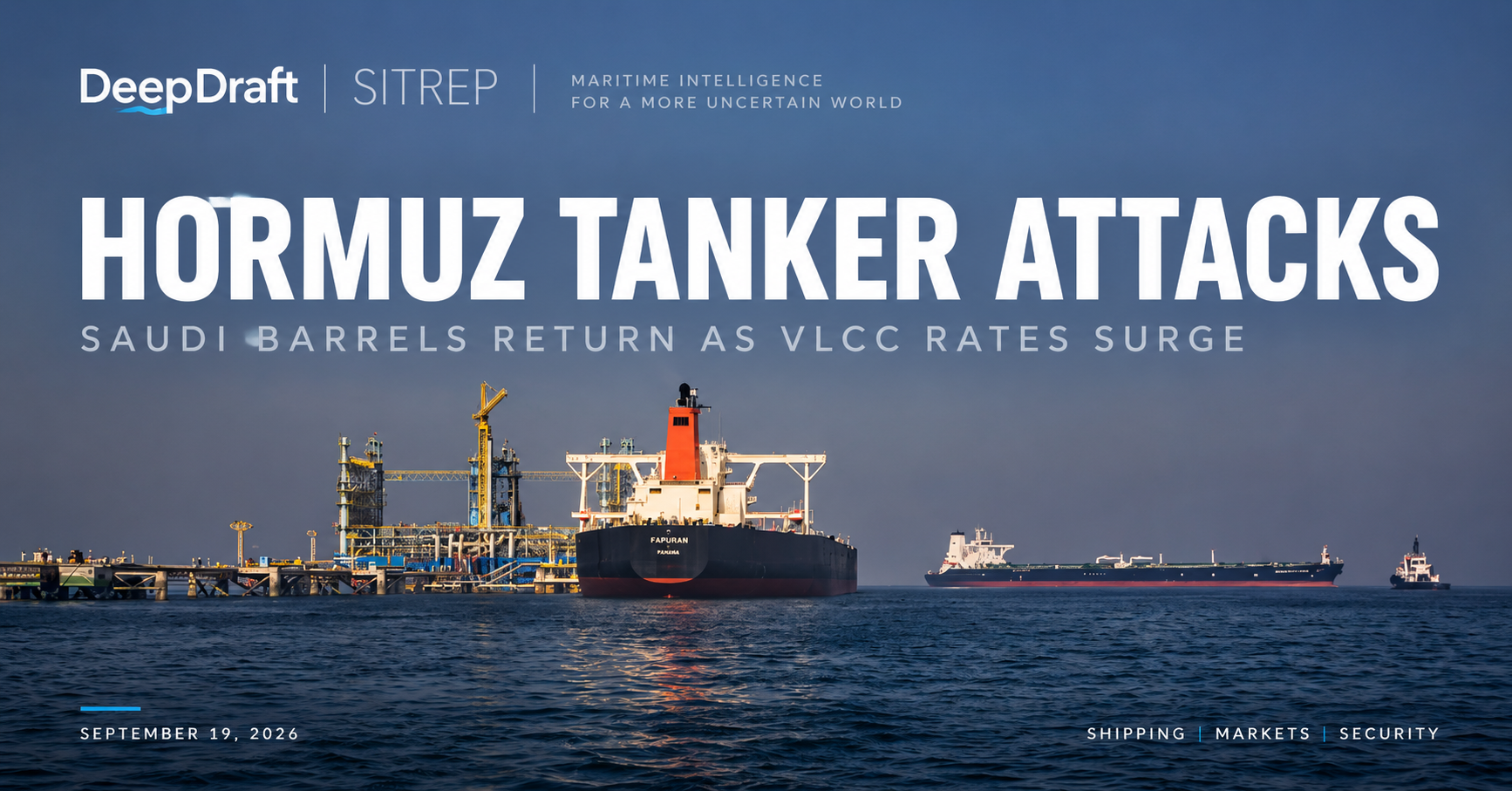
Three tanker attack/security incidents have hit the Strait of Hormuz since September 16, including Iran’s claimed strike on Togo-flagged TREND. Saudi crude is simultaneously being pushed back through the strait as VLCC economics reach exceptional levels.
1. Three Tanker Incidents Put Hormuz Back Into Vessel-Level Attack Risk
• UKMTO-linked reporting records three attack/security warnings covering incidents in the Strait since September 16, including two tankers struck by unidentified projectiles and the separate TREND incident.
• Iran’s IRGC Navy said it struck the Togo-flagged product tanker TREND, accusing the vessel of attempting an unauthorized passage through Hormuz. Iran claimed the vessel was stopped after a fire developed. AP independently reported Iran’s claim.
• Maritime Executive identifies TREND as a 7,119 dwt product tanker built in 2008 and managed from the UAE. The vessel had previously been showing at anchor off the UAE.
• UKMTO reporting on the other incidents described projectile strikes, including one tanker where a resulting fire was extinguished. Crews were reported safe. Those attacks had not been attributed to Iran at the time of reporting.
2. Saudi Crude Returns Through Hormuz as Yanbu Bypass Capacity Is Disrupted
• Saudi Aramco has sold about 60 million barrels of crude from Ras Tanura for September and October loading, according to traders cited by Reuters.
• The programme is expected to average roughly 1 million to 1.5 million barrels per day, with some cargoes moving through Hormuz for ship-to-ship transfer near Sohar, Oman.
• The additional Gulf exports follow disruption to Saudi Arabia’s East-West pipeline system and reduced Yanbu loading capacity, increasing reliance on a chokepoint already carrying active projectile and security exposure.
• Asian refiners in China, South Korea, India and Japan are among the principal buyers, making Hormuz transit reliability directly relevant to October crude programmes and downstream supply planning.
3. VLCC Earnings Reach $870,947/Day as Transit Data Shows Uneven Recovery
• Lloyd’s List Intelligence data cited by USNI News recorded 97 non-Iranian-linked Hormuz transits during the week ending September 13, the highest preliminary weekly level in three weeks.
• The increase does not represent normalisation. Reuters/Kpler data recorded only four commodity-vessel transits on Thursday, against a 10-day average of 16, while AIS-dark movements continue to complicate visible traffic counts.
• The Baltic Exchange Oman-China VLCC index reached $870,947 per day, according to Lloyd’s List data reported by USNI News.
• Reuters separately reported early-October Gulf VLCC freight around Worldscale 800, showing that security exposure, tonnage positioning and Saudi export requirements are now directly feeding voyage economics.
4. Black Sea War-Risk Zone Expands After Commercial Shipping Attacks
• London’s Joint War Committee has expanded its listed high-risk area to encompass the entire Black Sea, following an increase in attacks affecting commercial shipping.
• The previous designation concentrated more heavily on Russian and Ukrainian coastal waters. The wider listing strengthens the notification, underwriting and premium review required for Black Sea voyages.
• Reuters reports war-risk costs have risen sharply as the conflict increasingly affects merchant vessels carrying grain, crude and refined products.
• Territorial waters of Bulgaria, Georgia, Romania and Turkey retain separate treatment under the updated reporting arrangement, making voyage-specific coordinates material to insurance notification.
5. U.S. Signs Expanded Russia and Iran Sanctions Authority
• The White House confirmed that H.R. 5334, the Lindsey O. Graham Sanctioning Russia and Iran Act of 2026, was signed into law on September 18.
• The law expands statutory sanctions, tariffs and prohibitions relating to Russia and extends existing sanctions authorities concerning Iran.
• AP reports the legislation includes measures affecting Russian officials, financial institutions and the shadow tanker system supporting Russian energy exports, while providing authority for tariffs against major purchasers of Russian oil and gas.
• Owners, charterers, traders, banks and insurers should treat the signature as a compliance trigger for reviewing counterparties and vessel exposure while watching subsequent designations and implementing measures rather than assuming every Russia-linked voyage became prohibited immediately.
Strategic Summary & Actions Required
• Masters and CSOs planning Hormuz passage should work from current UKMTO/NAVAREA warnings, company route authorization and insurer instructions, with projectile/fire response readiness and clear bridge reporting procedures before entering the exposed Omani corridor.
• Charterers and tanker desks should price Hormuz security exposure together with current VLCC economics. Rates near $870,947/day materially change ballast decisions, cargo substitution, laycan exposure and voyage profitability.
• Operators involved in Ras Tanura-Sohar movements should confirm STS location, receiving-vessel acceptance, war-risk cover, transfer warranties and contractual responsibility for delay before fixing cargoes through the current Saudi export programme.
• Black Sea operators should confirm whether planned coordinates trigger the expanded JWC notification area and obtain underwriter terms before voyage commencement.
• Compliance teams should map H.R. 5334 against Russian-energy counterparties, shadow-fleet exposure, banks and cargo interests as implementing sanctions develop.
Operational Status
CRITICAL RED — Hormuz Tanker Attacks / Saudi Crude Returning Through Strait / Extreme VLCC Pricing / Active Route, War-Risk and Crew-Safety Exposure
Latest DeepDraft Analysis
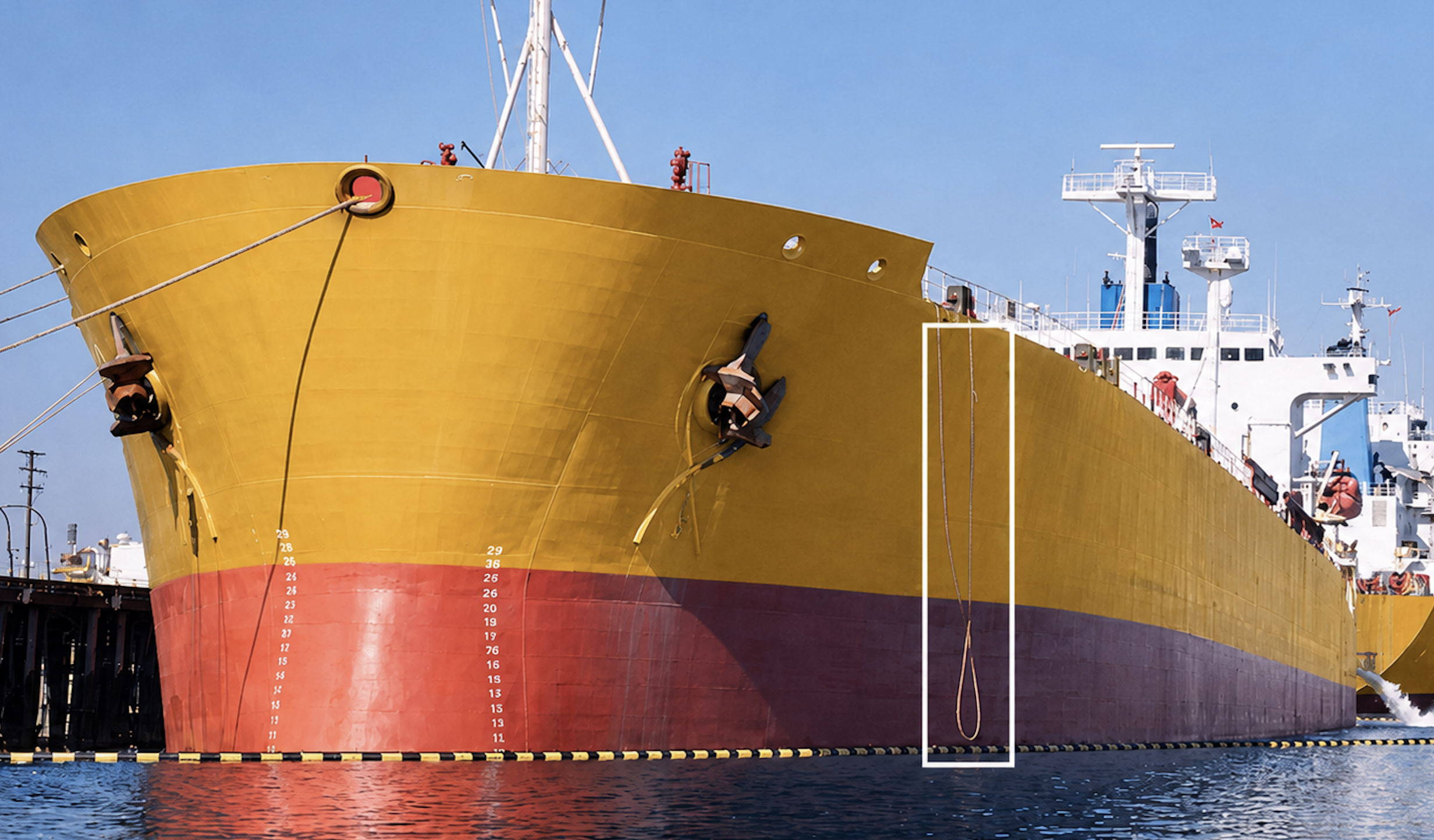
A tanker deck seal misidentified from appearance exposes a wider SIRE 2.0 problem: questionnaire accuracy means little unless officers understand the safety barrier actually fitted onboard.
Related DeepDraft Articles & Analysis
Sources
UKMTO, Reuters, Associated Press, USNI News, White House
This update is part of the DeepDraft SITREP series covering developing maritime operational situations.


Leave a Reply