

U.S. forces disabled the Curaçao-flagged VLCC M/T Belma after it attempted to sail toward Kharg Island under renewed blockade enforcement.
The same 24-hour cycle cut Hormuz traffic to nine visible crossings and triggered India’s no-deployment order for Indian seafarers on Hormuz voyages.
1. Belma Disabled Under U.S. Blockade Enforcement
• U.S. Central Command said U.S. forces observed the Curaçao-flagged M/T Belma transiting international waters toward Kharg Island.
• CENTCOM said the vessel ignored multiple warnings while attempting to violate the U.S. blockade.
• A U.S. aircraft fired Hellfire missiles into the ship’s smokestack, disabling the vessel without reporting a sinking.
• Reuters identified Belma as an unladen VLCC and reported that the ship was no longer transiting to Iran after the strike.
• Since the blockade resumed on Tuesday, U.S. forces have redirected two ships and disabled one vessel.
2. India Stops New Seafarer Deployment Through Hormuz
• India ordered shipowners, ship managers and recruitment companies not to deploy Indian seafarers on vessels undertaking voyages through the Strait of Hormuz until further orders.
• The Directorate General of Shipping issued the order after two Indian seafarers were killed in attacks on vessels in the region over the previous three days.
• India is the world’s third-largest seafarer supplier, with more than 300,000 sailors working across global shipping fleets.
• The order directs Masters to maintain heightened vigilance across the Persian Gulf, Strait of Hormuz and adjoining waters, with continuous monitoring of navigational warnings.
• More than 15,000 Indian seafarers remain west of the Strait, according to the Forward Seamen’s Union of India.
3. Hormuz Traffic Falls as VLCC and LNG Movements Thin Out
• Kpler data cited by Reuters showed nine vessels crossed the Strait of Hormuz on Wednesday, down from 13 the previous day.
• No VLCC or LNG tanker was visibly observed passing through the Strait on Wednesday.
• Five empty vessels entered the Gulf, including three small oil tankers and two dry bulk carriers for grain.
• Four vessels exited carrying LPG, coal, fuel oil and fertilizer.
• A Suezmax tanker carrying 1 million barrels of Saudi crude exited the Strait on Tuesday with its transponder switched off.
4. IMO Reaffirms Free Passage and Rejects Strait Tolls
• The IMO Council reaffirmed that transit passage through the Strait of Hormuz must remain non-discriminatory and unimpeded.
• The Council said passage through the Strait should remain free of tolls and charges under international law.
• The IMO position directly affects voyage authorization, coastal-state communication, fee exposure, charterparty wording and legal review for Gulf-linked cargoes.
• Masters should treat any demand for clearance, fee payment, route authorization or security communication as a controlled exchange requiring company, legal and P&I approval.
Strategic Summary & Actions Required
• Masters approaching Hormuz should treat Belma as a confirmed vessel-level enforcement precedent and maintain full logs of warnings, VHF exchanges, AIS status, voyage orders and company instructions.
• Ship managers should issue written Hormuz transit authority covering crew-risk acceptance, emergency response, damage control, security communication, evidence preservation and post-incident reporting.
• Crewing teams must review Indian seafarer deployment exposure immediately, including crew-change plans, relief timing, contract continuity and vessels already west of the Strait.
• Charterers and operators should reassess unsafe-port arguments, war-risk clauses, deviation rights, off-hire exposure, sanctions warranties, force majeure language and cargo-delay liability.
• Compliance and legal teams should separate IMO free-passage principles from actual enforcement reality, because toll rejection does not remove the immediate risk of interdiction, delay or disabling action.
Operational Status
CRITICAL RED — Hormuz Blockade Enforcement / VLCC Disabled / Seafarer Deployment Halt / Reduced Tanker and LNG Transit Visibility
Latest DeepDraft Analysis
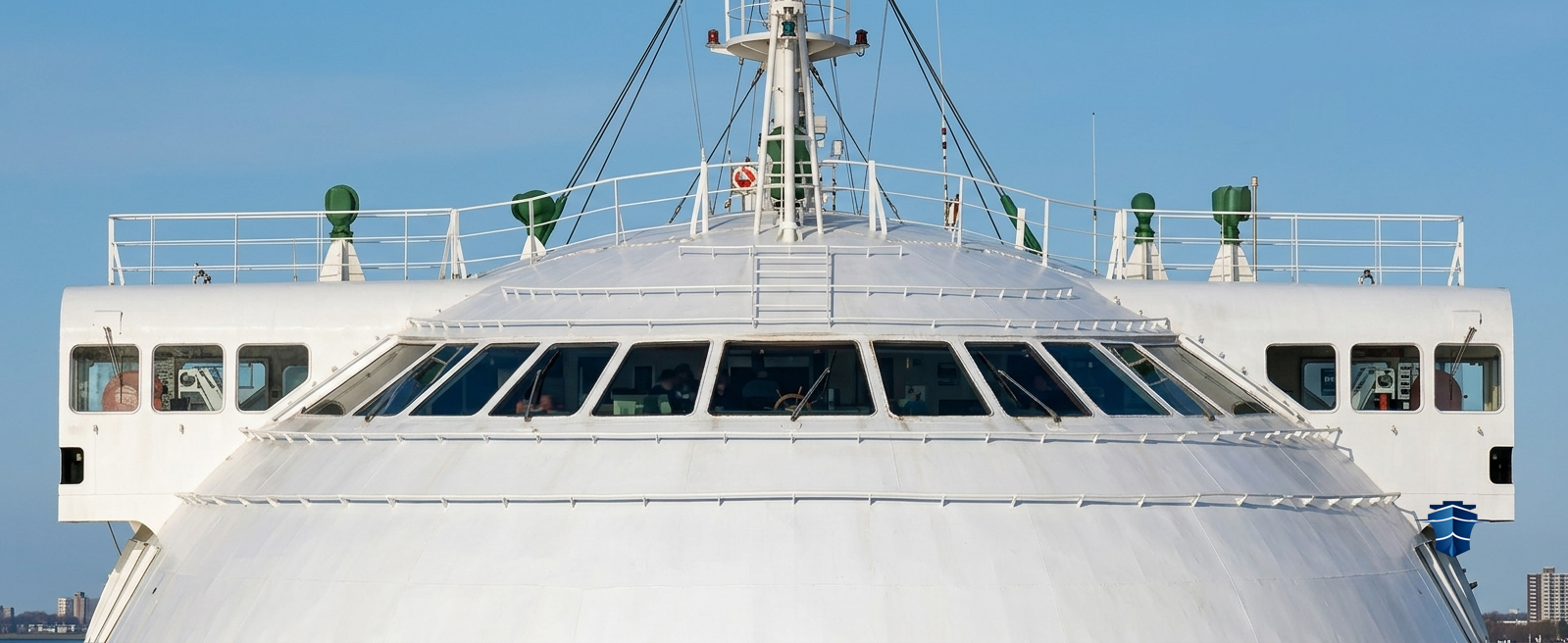
When Bridge Windows Look the Wrong Way
City of Rotterdam’s SSS-BOW case shows how off-axis bridge windows can corrupt visual reference, turning design approval into pilotage, VTS and bridge-team risk.
Related DeepDraft Articles & Analysis
Sources
U.S. Central Command, Reuters, India Directorate General of Shipping, IMO, The DeepDraft
This update is part of the DeepDraft SITREP series covering developing maritime operational situations.


Leave a Reply