

Opening
Hormuz is now a live test of voyage control, crew safety, insurance appetite, and routing discipline.
The week’s operating signal is not one event. It is the loss of margin across several maritime systems at once: tanker attacks near the Strait of Hormuz, war-risk hesitation, AIS-dark movement, trapped crews, selective Red Sea route restoration, and a Don-Azov shipping halt affecting Kerch-linked cargo flow.
For ships, this means routing decisions now depend on more than distance and weather. Masters, operators, insurers and charterers are being forced to judge whether a voyage, passage, or ship-to-ship operation remains a controlled system.
That same question sits at the centre of this week’s DeepDraft analysis: when two similar-size VLCCs are all fast alongside, the operation is safe only while the two ships continue moving as one controlled unit.
Weekly Analysis
This week’s flagship analysis is Similar-Size VLCC STS: The Risk After All Fast. The article examines why similar-size VLCC ship-to-ship transfer is operationally less forgiving than it appears once the vessels are alongside. The central issue is not whether VLCC-to-VLCC STS is unsafe by default. It is that similar hull length removes much of the geometric advantage normally available when a smaller tanker lies alongside a larger mother vessel.
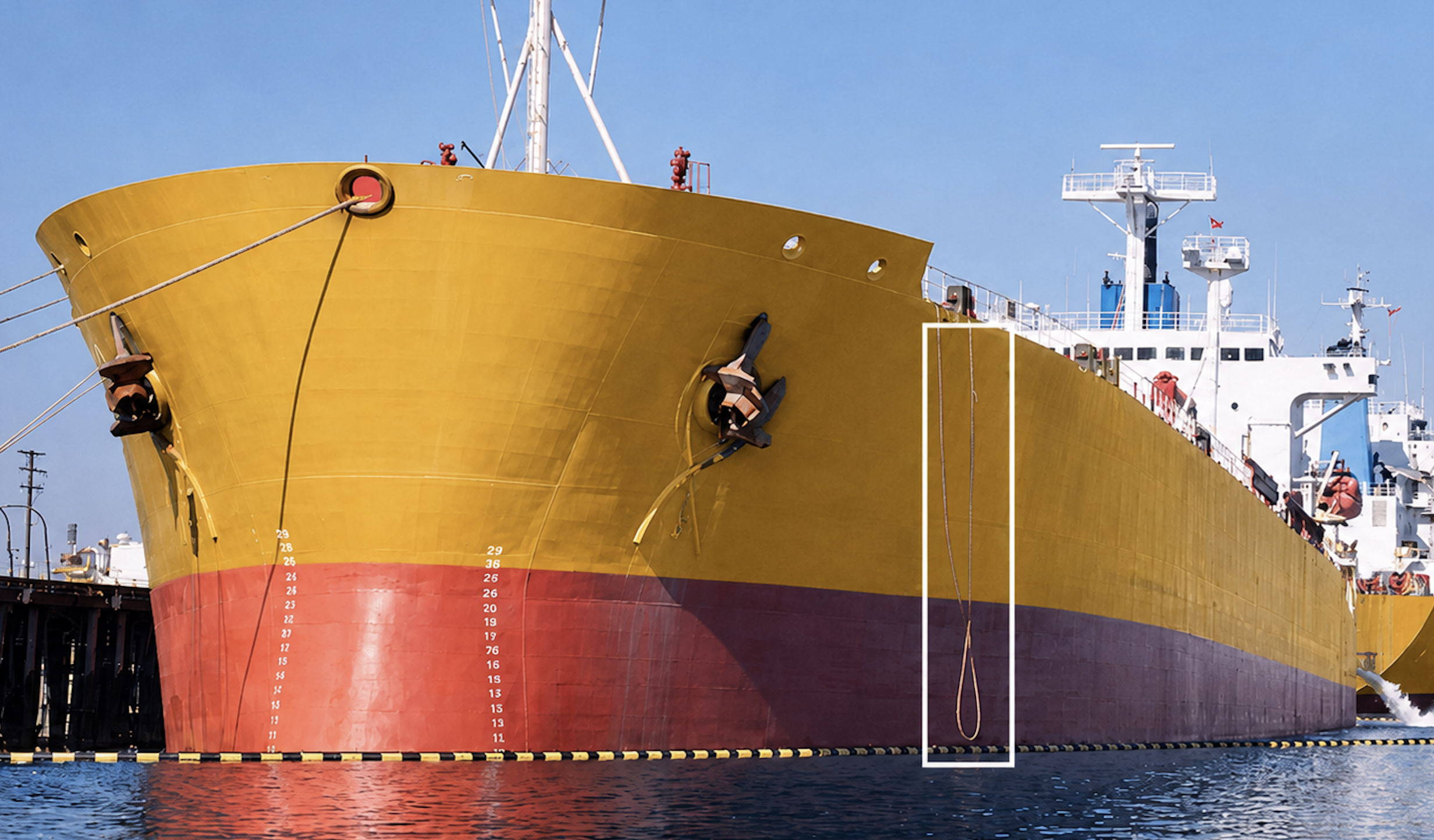
The analysis reconstructs the risk path from an STS incident where deteriorating weather, differential vessel response, parted moorings, bow opening and hose failure followed in sequence. The important point is that the visible failure began before the hose parted. It began when the two ships no longer responded as one system. Draft, windage, anchor-cable restraint, freeboard change, breast-line geometry and uneven mooring tension all became part of the same load path.
Operationally, this matters to masters, POACs, ship managers, STS providers, insurers and charterers because the risk develops while the operation still looks controlled. A tight line may no longer be sharing load correctly. A stable fender gap may be hiding an emerging response difference. The article’s strongest command lesson is that similar-size VLCC STS must be read as a live control system, not as a static mooring arrangement.
Full analysis available on DeepDraft:
Reading this as a maritime insider, seafarer, or enthusiast?
Subscribe to The DeepDraft for maritime analysis, daily SITREP updates, weekly briefings, and operational signals worth watching.
This Week in Maritime: Timeline of Escalation
July 7 — AE15 Suez Return Tests Red Sea Risk
Maersk and Hapag-Lloyd began restoring the AE15 service through Suez under the Gemini Cooperation network, shifting selected Asia–Europe passage away from Cape of Good Hope routing. The operational point is restraint: this is a controlled service restoration, not a general Red Sea normalization signal, and it still requires current threat assessment, company route authority and clear diversion triggers.
July 8 — Hormuz Tanker Attacks Reset Gulf Transit Risk
Three tanker attacks near the Strait of Hormuz moved Gulf transit risk back into active hostile-action exposure. Al Rekayyat, Wedyan and a third tanker shifted the picture for LNG, crude and Gulf exit planning, while JMIC raised the Hormuz shipping threat level to severe.
July 9 — Tanker U-Turns Turn Attacks Into Voyage Disruption
Four oil and gas tankers turned back from the Strait of Hormuz after the attacks, marking the first clear operating consequence beyond the casualties themselves. War-risk underwriters advised some owners to delay or suspend Hormuz transits, pushing charterers and operators into fresh review of laycans, deviation rights, off-hire exposure and voyage economics.
July 10 — Hormuz Traffic Collapse Becomes a Crew-Safety Constraint
Hormuz moved toward near-standstill tanker traffic, with only two tankers reported through the Strait in early Thursday trade and more vessels reportedly switching off public AIS during passage. The IMO warning that around 6,000 seafarers remained stranded in the Persian Gulf turned the issue from routing disruption into a human-element operating constraint.
July 11 — Don-Azov Halt Hits Kerch Passage and Russian Export Flow
Russia temporarily stopped Don-Azov Channel shipping after attacks on 13 Russian vessels in the Sea of Azov, including 10 tankers. The halt suspended Kerch Strait passage requests and moved the risk into grain stems, tanker routing, port-access planning, charterparty timing and Black Sea documentation exposure.
Full Live Wire coverage for the week
https://thedeepdraft.com/category/wire/
Strategic Summary
The main operational implication is control margin. This week showed that maritime risk is not confined to headline security events. It appears when voyage authorization, insurance appetite, crew safety, AIS visibility, port access, route selection and vessel interaction all begin moving faster than standard operating assumptions.
Ship managers and masters should watch three areas next: Hormuz transit permission and war-risk appetite, selective Red Sea route restoration under controlled conditions, and Kerch / Sea of Azov passage status. Charterers and insurers should avoid treating cheaper freight, restored service strings or “all fast” vessel conditions as evidence that operational risk has normalized.
The risk likely to carry into next week is decision compression. Masters may face late route instructions, insurers may revise conditions during the voyage window, and STS or chokepoint operations may reach their real risk point while they still appear stable on paper.
This report is part of the DeepDraft Weekly Maritime Brief series tracking operational, regulatory, and security developments across global shipping.

Leave a Reply