
Hormuz has reopened into a controlled-risk operating environment, not a clean commercial reset.
Traffic is moving again, but the week’s signals point in three directions at once – route authority remains contested, casualty consequences are becoming measurable, and vessels delayed in warm Gulf waters may return with hidden performance penalties below the waterline.
For masters and ship managers, the immediate issue is evidence. For insurers and charterers, it is exposure. For technical managers, it is hull condition. The week’s flagship DeepDraft analysis connects directly to that operating reality: two ships can wait in the same anchorage and leave with very different underwater conditions.
Weekly Analysis
Slime or Barnacles? Why Ships Foul Differently in Hormuz
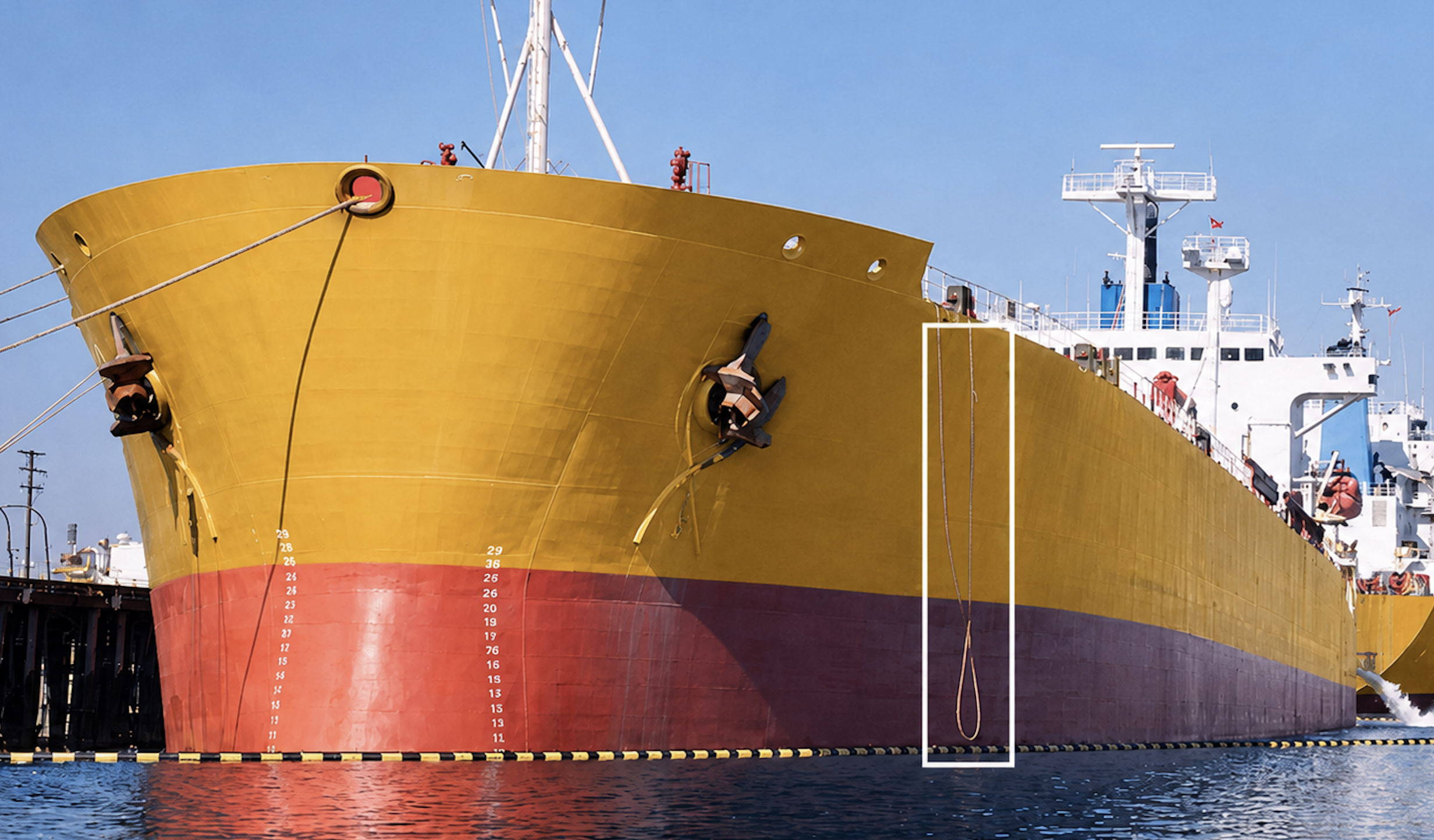
DeepDraft’s latest flagship analysis explains why vessels delayed around Hormuz cannot be assessed by location and idle days alone. Coating age, cleaning history, static exposure, antifouling margin, mechanical damage, water temperature and localized growth pressure can produce very different hull outcomes between vessels that waited in the same general area.
The operational point is direct. A slimed hull is not a clean hull. Even before hard barnacle growth appears, microfouling can increase drag, reduce expected speed for ordered RPM, raise bunker consumption and create performance disputes. The first warning may appear in seawater temperatures, clogged strainers, cooling margins, propeller response or a vessel failing to hold expected speed.
For masters and bridge teams, the relevance is felt during departure and sea passage. For chief engineers, it sits in cooling water, strainers, propeller load and machinery margin. For ship managers, insurers and charterers, it becomes a question of evidence: coating certificates, diver reports, hull history, idle pattern, cleaning method, speed loss and charterparty defensibility.
The analysis also warns against treating underwater cleaning as a simple reset. Cleaning at the slime stage is different from reactive scraping after macrofouling has established. Aggressive cleaning may solve an immediate commercial dispute while damaging the coating system and creating faster fouling later.
This Week in Maritime: Timeline of Escalation
June 30 — Armed Russian LNG Carrier Raises Baltic Boarding Risk
A Russian LNG carrier was reported in the Baltic with heavy weapons visible near the bridge, changing the close-approach and boarding calculus around Russian-linked energy tonnage. For masters, CSOs and coastal authorities, the issue is wider CPA, VHF discipline, record preservation and a clearer distinction between ordinary commercial traffic and military-adjacent risk.
July 1 — Hormuz Reopens Unevenly as Route-Control Fight Continues
Hormuz traffic began rebuilding, with tankers and commodity vessels returning through the Strait, but route authority, coastal-state instructions and charterparty exposure remained unsettled. The operating signal is that visible traffic recovery should not be treated as full normalization until route clearance, insurance appetite and loading reliability are confirmed.
July 2 — ARITA Grounding Turns Route Control Into Casualty Risk
The AIS-indicated ARITA grounding near Hormuz Island moved the route-control dispute from paper instructions into casualty, evidence and claims territory. Masters transiting Hormuz should preserve passage plans, ECDIS tracks, AIS/LRIT data, VHF logs, company instructions and route-authority records before any post-incident dispute develops.
July 3 — Golden Arsenal Piracy Attempt Puts Citadel Readiness Back on Watch
MV Golden Arsenal resumed voyage after Indian Navy boarding and sanitisation following a Gulf of Aden piracy attempt. The wider Balhaf and Gulf of Aden corridor remains operationally live for citadel readiness, enhanced lookout, vessel hardening, rapid reporting and bridge damage response.
July 4 — CMA CGM San Antonio Damage Pushes Hormuz Risk Toward Fleet Loss
CMA CGM’s missile-damaged San Antonio may be sent for scrapping, turning a Hormuz casualty into a possible fleet-availability, insurance and charterparty benchmark. The case gives owners, charterers and insurers a hard operating reference for Gulf exposure: one strike can move beyond voyage delay into constructive fleet exit.
Full Live Wire coverage for the week:
https://thedeepdraft.com/category/wire/
Reading this as a maritime insider, seafarer, or enthusiast?
Subscribe to The DeepDraft for maritime analysis, daily SITREP updates, weekly briefings, and operational signals worth watching.
Strategic Summary
The main operational implication is that Gulf movement has resumed before the risk file has closed. Ships are again moving through Hormuz, but masters and managers still face route-control uncertainty, war-risk review, possible casualty claims, evidence-preservation requirements and technical-performance questions after prolonged idle exposure.
Ship managers should watch three indicators next: whether Gulf-bound liner services resume with confidence, whether tanker loadings and insurance appetite stabilize, and whether hull-cleaning, propulsion-performance or sea-chest problems begin appearing as vessels leave anchorage and return to commercial speed.
The risk most likely to carry into next week is layered exposure. Hormuz transit will remain connected to route authority, casualty liability, cyber access-control risk, hull condition, charterparty language and insurance defensibility. The vessel may be clear of the anchorage, but the operational file may stay open long after departure.
This report is part of the DeepDraft Weekly Maritime Brief series tracking operational, regulatory, and security developments across global shipping.

Leave a Reply