

Regulation usually reaches the ship quietly. A circular lands in the office, a class update follows and a fleet instruction is issued. Then, one day, the Chief Officer finds a surveyor asking for something slightly different, the Master sees a revised certificate format, or the technical superintendent discovers that an item once treated as optional now dictates operational readiness. That is exactly how compliance changes usually first appear in practice.
The 111th session of the IMO’s Maritime Safety Committee met in London from 13 to 22 May 2026. The outcomes mostly converge around 1 January 2028: recognized mobile satellite services, remote inspection techniques, free-fall lifeboat testing, industrial personnel weight assumptions, guard rails and IMDG Code 43-26. Alongside these sit alternative fuel guidance, the voluntary VDES framework and the new MASS Code.
Together, they signal a shift: a ship is no longer judged solely by its onboard hardware, but by the credibility of the system surrounding it, namely the data, evidence, crew competence and shore procedures.
MSC 111 also covered wider work on cyber risk, FAL, MODU requirements, software maintenance, alternative fuels and other technical items, but this analysis focuses on the changes most likely to affect shipboard certificates, surveys, procedures, cargo planning and crew competence by 2028.
The 2028 Wave
The preparation window is already open.
- 1 July 2026: The non-mandatory MASS Code takes effect, opening the route to experience-building and defining the language for remote operation, connectivity and shore-based control.
- 1 January 2027: Voluntary early application begins for IMDG Code amendment 43-26. Early alignment is sensible for operators already carrying batteries and electric vehicles.
- 1 January 2028: The main wave hits. Mandatory rules enter into force for recognized mobile satellite services, remote inspection techniques under the ESP Code, free-fall lifeboat testing, industrial personnel weights, Load Lines guard rails, and IMDG Code 43-26 alongside the voluntary VDES regulatory framework.
- 1 July 2028: Consequential IGC and IGF Code amendments are expected to reinforce the “one ship, one code” policy for gas carriers.
For managers ashore, the takeaway is absolute: 2028 compliance is a 2026 preparation problem.

VDES and GMDSS: Better Data Still Needs Verification
MSC 111 adopted amendments to SOLAS Chapters IV and V, bringing VDES into the regulatory framework as a voluntary alternative to AIS. As explored in our analysis on what VDES actually changes on the bridge, this does not mean compulsory carriage for every ship from 2028.
Operationally, a better data channel does not equal verified navigation. AIS is dangerously overloaded with reliance, despite being an identification tool rather than a collision avoidance system. VDES may provide a cleaner digital layer, but it does not solve the Master’s oldest problem: verifying whether the screen data is true.
The same principle applies to the GMDSS amendments, which update SOLAS Chapters IV and V to mandate that Maritime Safety Information MSI and SAR information are disseminated through all operational Recognized Mobile Satellite Services (like Inmarsat and Iridium) in a given area.
Once the GMDSS arrangements change, the ship’s distress alert procedures, and bridge familiarisation should change with them. This is the kind of item that typically surfaces during safety radio surveys, PSC boarding, CIC campaigns, and SIRE inspections. Inspectors may not only look for the equipment on Form R. They may also look for posted procedures, familiarisation records and whether duty officers can explain how a distress alert is sent and acknowledged using the fitted systems.
Remote Inspections and Lifeboat Testing: Safer Methods, Stricter Proof
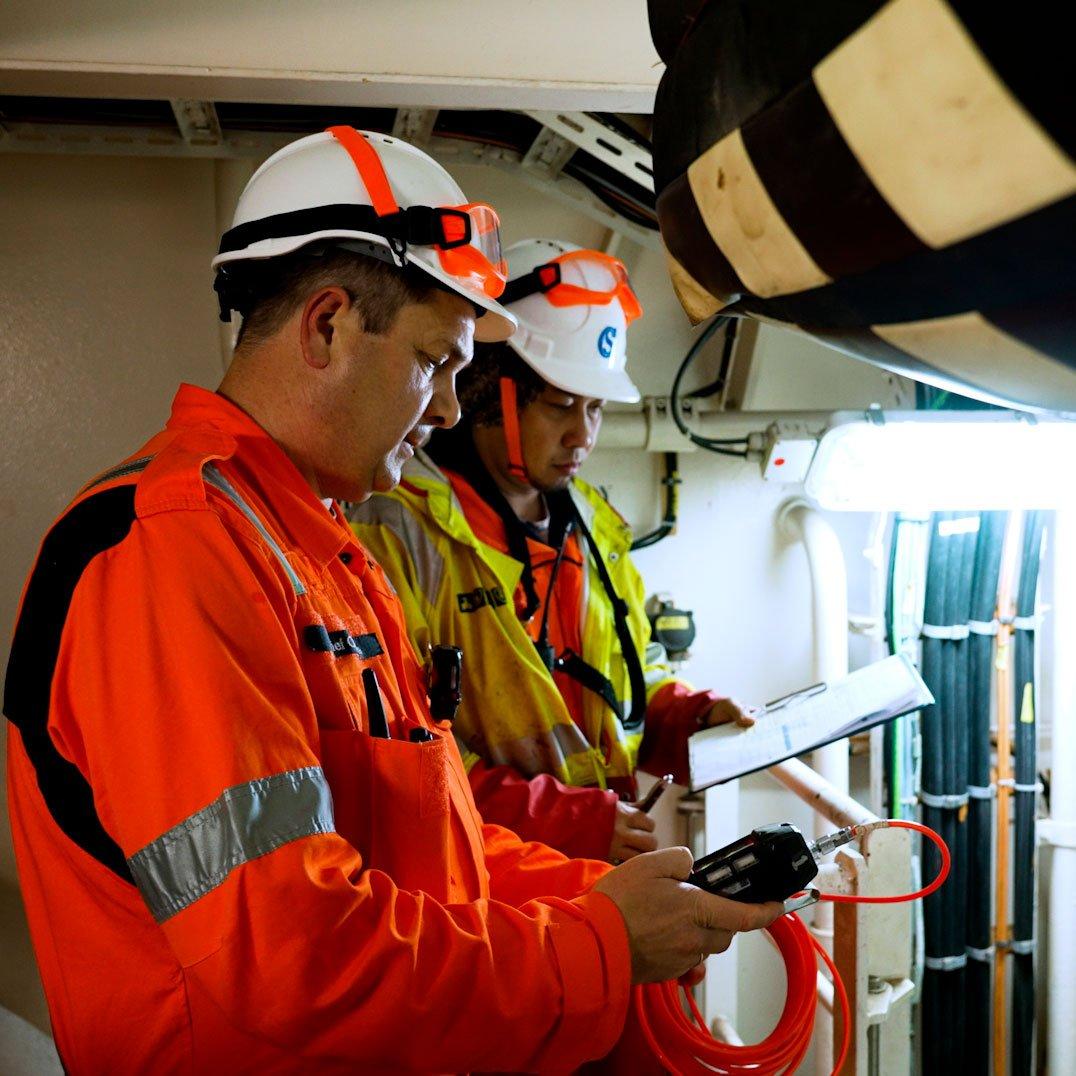
For ships under the ESP Code, mainly bulk carriers and oil tankers, the amendments formalising Remote Inspection Techniques from 1 January 2028 will be deeply practical. RIT allows close-up structural surveys without direct physical access by a surveyor, reducing exposure to staging, rope access and hazardous tank entry.
But remote inspection is not magic. A drone image is not a survey, and a crawler does not replace judgment. Class still requires usable evidence. The ship bears a heavy preparation burden like cleaning, lighting, gas-freeing, access planning, and managing certified service providers. RIT only reduces physical risk if preparation quality improves, otherwise, it simply becomes a delayed conventional survey with additional cost and frustration.

The free-fall lifeboat amendments follow the same logic. MSC 111 brings the simulated release arrangement into the annual thorough examination and operational test discipline already applied to the rest of the lifeboat system. If the ship uses equipment to test the free-fall lifeboat release system under load without launching the boat into the water, that arrangement must be designed and approved for the expected shock loading, carry the required minimum safety factor of 6, and be documented, maintained and available for examination.
Onboard, this matters. The arrangement may involve manufacturer-approved securing equipment, wires, chains, hydraulic systems or another dedicated setup, depending on the lifeboat design. The equipment type is not the main issue. The real question is whether the arrangement is approved, serviceable, supported by records, and understood by the crew and service provider before the test is carried out.
A simulated test is still a load-bearing event. It must not become an improvised collection of shackles, wires and good intentions when the free-fall release system is tested under load.
IP Code and Guard Rails: Regulation Meets the Real Deck
From 1 January 2028, MSC 111 amendments to the IP Code align the dimensioning weight for industrial personnel with the High-Speed Craft Code, setting it at 90 kg including PPE. The IP Code, or International Code of Safety for Ships Carrying Industrial Personnel, applies to cargo ships and high-speed cargo craft of 500 GT and above on international voyages carrying more than 12 persons in total, including industrial personnel, special personnel and passengers.
For offshore wind, oil and gas support vessels, this brings the stability assumption closer to the personnel, protective equipment and mission gear actually being carried. On smaller specialist vessels with tight stability margins, that higher per-person assumption can matter.
IP Code Weight Assumption: Stability Impact Illustration
Move the sliders to see how the shift from the 75 kg industrial personnel assumption to the revised 90 kg assumption can affect the weight and moment picture.
Illustrative Stability Impact
Additional Weight Added
1.50 tonnes
Resulting KG Rise
+2.4 mm
Approximate GM Reduction from KG Rise
-2.4 mm
Awareness illustration only. This is not the regulatory stability calculation. Actual stability remains governed by the approved stability booklet or loading computer, including hydrostatic data, free surface correction, loading condition and applicable flag or class criteria.
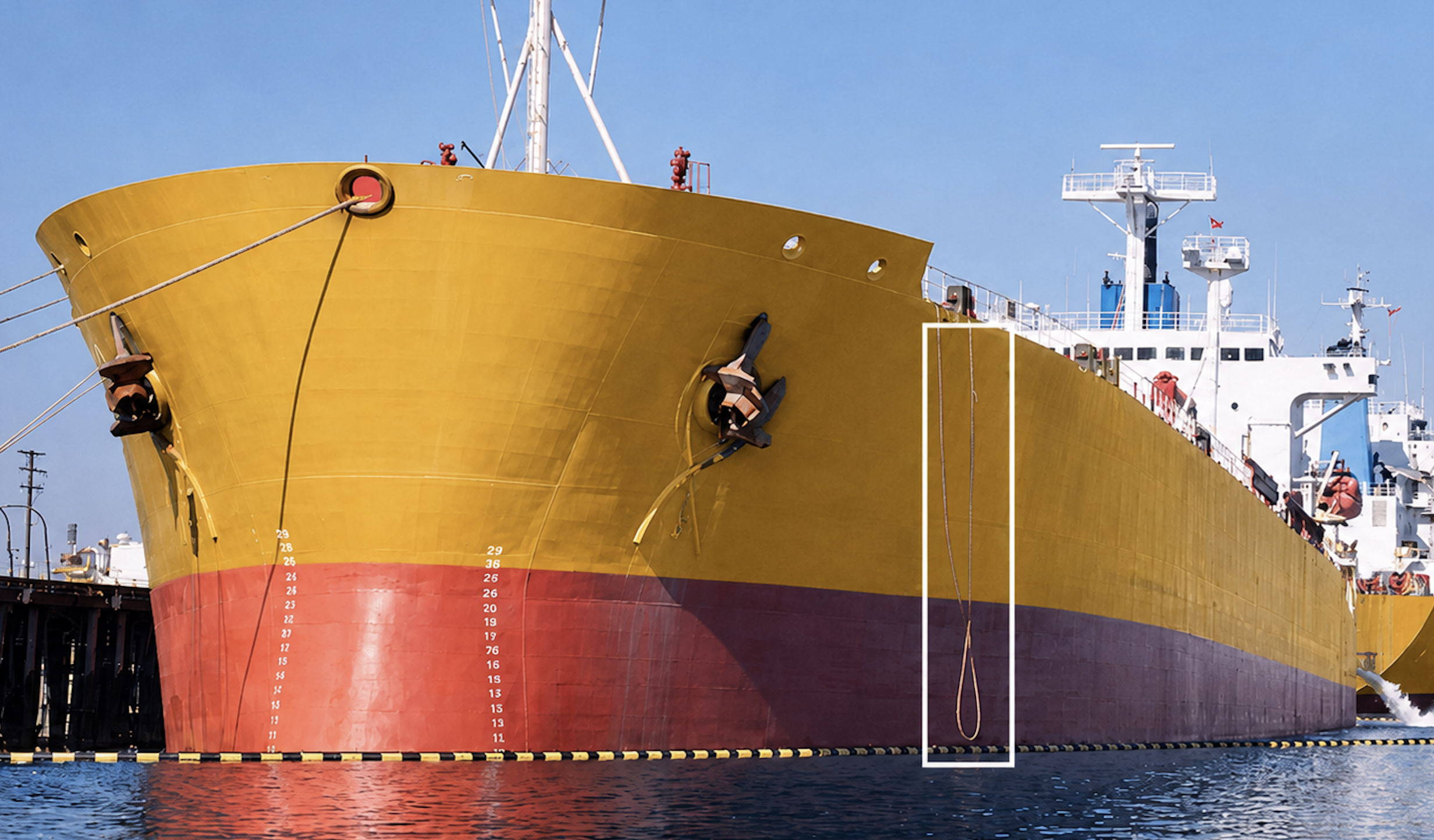
Deck-plate safety is also tightened under the 1988 Load Lines Protocol. From 1 January 2028, the revised Regulation 25 will require guard rails fitted on structures other than superstructures to have at least three courses. Where chains are fitted in lieu of guard rails, they must be detachable and tightened as much as practicable.
This is a small wording change with real deck meaning. Every seafarer knows the difference between a chain properly set across an opening and a loose line hanging there to satisfy the checklist. The amendment does not appear to demand an impossible zero-sag arrangement. It requires a practical, serviceable barrier that can be detached where access is needed and tightened properly when protection is required.
For Masters and technical managers, the lesson is simple. Do not wait for the survey window. Exposed deck structures, access openings and chain arrangements should be checked during routine maintenance so the ship is not relying on a slack temporary barrier when the regulation has already made the standard clearer.
Reading this as a maritime insider, seafarer, or enthusiast?
Subscribe to The DeepDraft for maritime analysis, daily SITREP updates, weekly briefings, and operational signals worth watching.
Batteries, EVs and Alternative Fuels: The New Risk Register
MSC 111 adopted IMDG Code amendment 43-26, entering into force on 1 January 2028, with voluntary early application from 1 January 2027. The amendments introduce updated criteria for the carriage of batteries and clearer rules for transporting vehicles, including electric models.
This simply reflects what ships are already carrying. Lithium batteries, sodium-ion batteries, and electric vehicles are no longer unusual; they are normal cargo with abnormal fire behavior when something goes wrong. For container ships, PCTCs, and ferries, the operational issue extends far beyond classification & documentation. It dictates declaration quality, stowage, segregation, emergency monitoring, and crew confidence when heat or smoke appears.
For the Master, the control point is before loading. Battery and EV cargo needs accurate declaration, disciplined stowage, correct segregation, and a crew that understands the risk before the ship is left to manage it at sea.

In the engine room, alternative fuels face a similar reality check. MSC 111 approved draft amendments reinforcing the “one ship, one code” policy, confirming the IGF Code does not apply to gas carriers & their safety architecture belongs strictly under the IGC Code. The industry cannot tolerate overlapping regulatory frameworks when cargo, fuel systems, and emergency philosophies are linked.
Ammonia as fuel is no longer just a conference slide. Hydrogen is also moving through the regulatory framework, with MSC 111 approving interim guidelines for ships using hydrogen as fuel and specifically for gas carriers using ammonia cargo as fuel. For technical departments, this provides regulatory footing; for shore managers, it introduces a steep operational burden involving toxicity management, advanced ventilation, gas detection, and intensive crew training.
MASS Code: Defining Future Command
The new non-mandatory International Code of Safety for Maritime Autonomous Surface Ships (MASS Code) will feel distant to many Masters, but it should not be ignored.
Applying initially to cargo ships, the Code establishes the language for remote functions, connectivity, risk assessment, cybersecurity and Remote Operations Centres. It will not change the watch tomorrow, but it starts defining the future of ship control.
Autonomy will not arrive as an overnight fleet of unmanned ocean-going ships. It will arrive gradually through functions like decision support, remote assistance, equipment monitoring, and the shifting of tasks once handled exclusively onboard to shore-based centers. This framework will ultimately redefine what “command” means, which is exactly why conventional shipping must pay attention now.

DeepDraft View
MSC 111 is a correction package. It updates GMDSS assumptions, integrates VDES, formalises Remote Inspection Techniques, demands approved free-fall lifeboat test arrangements, mandates realistic personnel weights, tightens guard rails, and codifies battery and alternative fuel risks.
None of this replaces seamanship.
Every amendment improves the regulatory framework, but safety still depends entirely on operational execution. VDES requires verification, RIT demands inspection discipline, and simulated lifeboat testing requires approved arrangements and maintained equipment. Better IMDG wording does not extinguish a battery fire, and alternative fuel guidelines do not neutralize toxicity or crew competence gaps.
MSC 111 changes the standards by which fleets will be audited, surveyed, and questioned from 2028 onwards. Companies that treat this as paperwork will face delays at the survey window; those that treat it as operational preparation will embed it into training, maintenance, and procurement today. That is where compliance actually begins.
Media Section
Sources Reviewed
- IMO: Official MSC 111 meeting summary and MASS Code regulatory releases.
- DNV: Technical updates on RMSS, VDES, RIT, LSA Code, IP Code, Load Lines, IMDG Code, and alternative fuel frameworks.
- Lloyd’s Register: Specialized summaries on IGC/IGF Code alignment, ammonia cargo-as-fuel limits, and the “one ship, one code” policy.
- ClassNK: Preliminary MSC 111 reporting covering VDES, RIT, IP Code, LSA Code, and Load Line provisions.
- Indian Register of Shipping: MSC 111 report covering statutory amendments and implementation dates.

Leave a Reply