
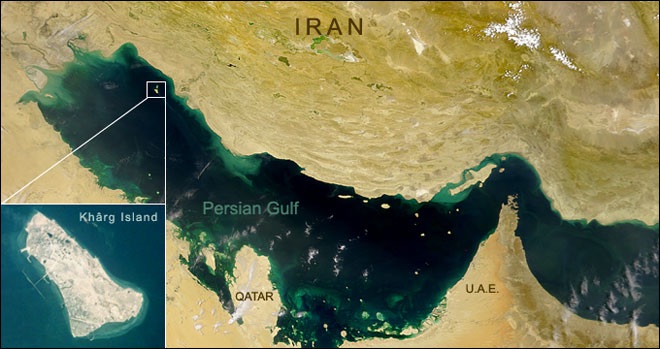
The Gulf maritime crisis remains volatile as military strikes, limited tanker movements, and continuing attacks on merchant vessels reshape the operational environment for global shipping. While the arrival of the first crude tanker into India since the escalation signals that transit is still possible, the Strait of Hormuz remains an active security zone.
1. Kinetic Escalation: US Strikes Kharg Island Military Targets
U.S. forces carried out strikes against military targets on Kharg Island, Iran’s primary oil export hub.
• Targeting: According to U.S. officials, the strikes focused on Iranian military infrastructure located on the island.
• Strategic warning: Washington warned that further interference with international shipping could trigger attacks on Iran’s oil export infrastructure.
• Significance: Kharg Island handles the majority of Iran’s crude exports, making it one of the most strategically sensitive energy nodes in the Gulf.
2. Limited Breakout: First Crude Tanker Reaches India
For the first time since the escalation began in late February, a crude tanker has completed a full Gulf-to-India transit.
• The vessel: The Liberia-flagged Suezmax tanker Shenlong successfully arrived at Mumbai carrying Middle Eastern crude.
• Operational signal: The voyage demonstrates that Hormuz passage remains technically navigable, though only under exceptional security conditions.
• Political backdrop: Diplomatic contacts between regional actors and shipping stakeholders continue as governments attempt to prevent a complete shutdown of the corridor.
3. Fleet Status: Hundreds of Ships Delayed Across the Gulf
Despite limited movement, the broader shipping picture remains heavily constrained.
• Anchored fleets: Hundreds of commercial vessels remain positioned on both sides of the Strait awaiting security clarity.
• Delayed operators: Ships from Asian, European and Middle Eastern owners remain stationary as charterers, insurers and naval forces evaluate safe routing options.
• Operational uncertainty: Many operators continue delaying departures pending insurance availability and naval escort protocols.
4. Merchant Shipping Under Attack
Commercial shipping continues to face direct threats.
• Recent strike: The tanker Safesea Vishnu was reportedly struck near Iraqi waters, resulting in one confirmed crew fatality.
• Multiple incidents: Maritime reporting indicates that numerous merchant ships have sustained damage since the escalation began.
• Regional risk: Attacks have occurred not only in the Strait itself but also in northern Gulf waters near Iraq and Kuwait.
5. Sector Breakdown: The Emerging Structure of Global Shipping
The conflict is forcing structural changes across shipping sectors.
• Tankers: Movements remain limited and highly selective, with transits occurring under elevated military and political risk.
• Container trade: Some liner operators continue rerouting voyages around the Cape of Good Hope to avoid Middle Eastern chokepoints.
• Insurance: War-risk insurance availability remains constrained, forcing governments and shipowners to explore sovereign-backed coverage solutions.
• Navigation: Maritime intelligence firms continue reporting increased GNSS interference across parts of the Gulf and Gulf of Oman.
Strategic Summary for Maritime Stakeholders
Hormuz remains open but unstable. The successful arrival of a crude tanker into India shows transit is possible, but the region remains a high-risk operational environment. Military escalation continues to shape shipping risk. Strikes near Iran’s main oil export hub highlight the strategic stakes surrounding the Gulf’s energy corridor.
Operational Status:
EXTREME RISK / LIMITED TRANSITS UNDER HEIGHTENED SECURITY CONDITIONS
Sources: Reuters / UKMTO / US CENTCOM reporting / maritime intelligence reporting (14 March 2026)



Leave a Reply