
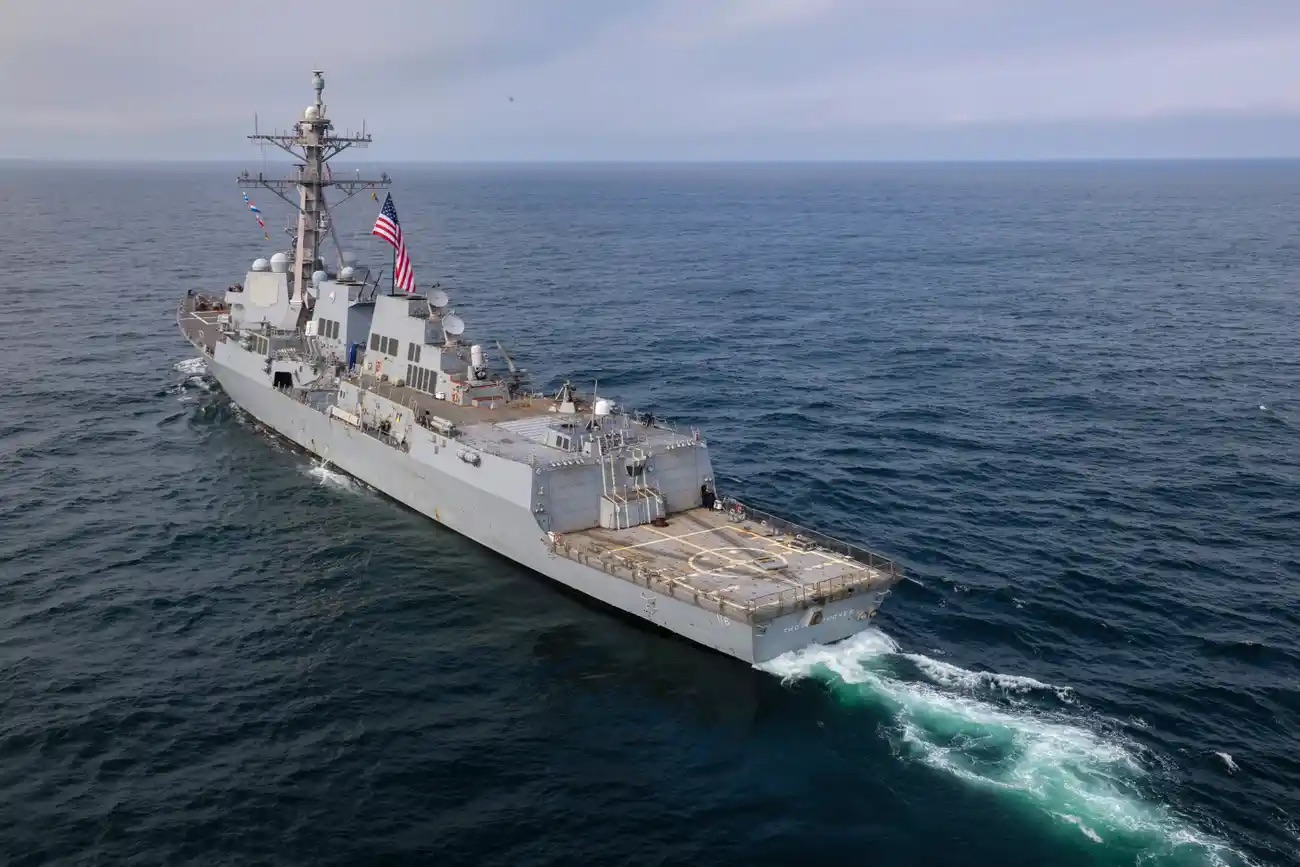
The maritime conflict in the Persian Gulf has entered what U.S. officials are describing as a “restoration phase.” While commercial war-risk insurance markets remain effectively frozen, Washington has moved to bypass private-sector constraints by introducing naval convoy escorts and government-backed insurance guarantees aimed at restoring energy flows through the Strait of Hormuz.
1. The “Blue Corridor” Shift: US Navy to Begin Tanker Escorts
In a major operational shift, the United States has ordered the U.S. Navy to begin escorting commercial tankers through the Strait of Hormuz.
• The Operation: U.S. guided-missile destroyers, including vessels from the Fifth Fleet, will escort merchant convoys through the Strait to protect against missile, drone, and unmanned surface vessel (USV) threats.
• Insurance Backstop: The U.S. government is preparing sovereign financial guarantees and political-risk coverage mechanisms to replace private war-risk insurance that was withdrawn after the escalation.
The objective is to reopen the Gulf’s energy corridor despite the ongoing insurance market freeze.
2. Kinetic Campaign: Iranian Missile Infrastructure Degraded
U.S. and Israeli military officials report that the ongoing strike campaign has significantly degraded Iran’s missile and air-defense capabilities.
• Multiple missile launch sites and air-defense systems have been destroyed in strikes across Iranian territory.
• Military officials say this has reduced the frequency of successful attacks on maritime targets, although drone and asymmetric threats remain active.
For shipping, this means the risk profile is shifting from large missile attacks to smaller, irregular strikes.
3. Regional Targets: Bahrain Incident and Ras Tanura Status
• Bahrain: Authorities in Manama reported projectile impacts affecting civilian buildings in the capital during overnight strikes. No fatalities were reported.
• Ras Tanura: Saudi Aramco’s refinery and loading terminal remain temporarily shut for structural safety inspections following earlier drone-related fires.
Ras Tanura is the world’s largest oil export terminal, making its operational status critical for global crude supply.
4. Seafarer Casualties Confirmed
India’s Directorate General of Shipping has confirmed that two Indian seafarers from the tanker MKD Vyom have died following the earlier attack near Oman.
This brings the confirmed seafarer death toll in the conflict to multiple fatalities across several vessels involved in the first week of strikes.
New Delhi has activated coordination mechanisms to assist Indian nationals working on vessels across the region.
5. LNG Shock and “Shadow Fleet” Reaction
• LNG Supply: With LNG operations across parts of the Gulf disrupted, global gas markets remain volatile.
• Shadow Fleet: Following the destruction of the Russian LNG carrier Arctic Metagaz, sanctioned vessels are reportedly altering routing patterns and reducing AIS visibility in an effort to avoid detection.
Energy shipping linked to sanctions regimes is now considered high-risk operationally and politically.
Why It Matters for Maritime
The conflict is shifting from blockade conditions toward escorted navigation.
If U.S. naval convoy protection succeeds, it could allow hundreds of tankers currently idling outside the Gulf to resume movement.
However, escorted transits also introduce new operational risks:
• Convoys may become priority targets for asymmetric attacks
• War-risk insurance conditions remain uncertain
• Regional energy infrastructure continues to operate under emergency protocols
For Masters and operators, the Strait of Hormuz remains one of the highest-risk shipping corridors in the world.
Operational Status:
TRANSITIONING TOWARD NAVAL-ESCORTED TRANSITS
Sources:
US CENTCOM / UKMTO / Saudi Aramco / Lloyd’s List / Reuters / regional government reporting (6 March 2026)



Leave a Reply