
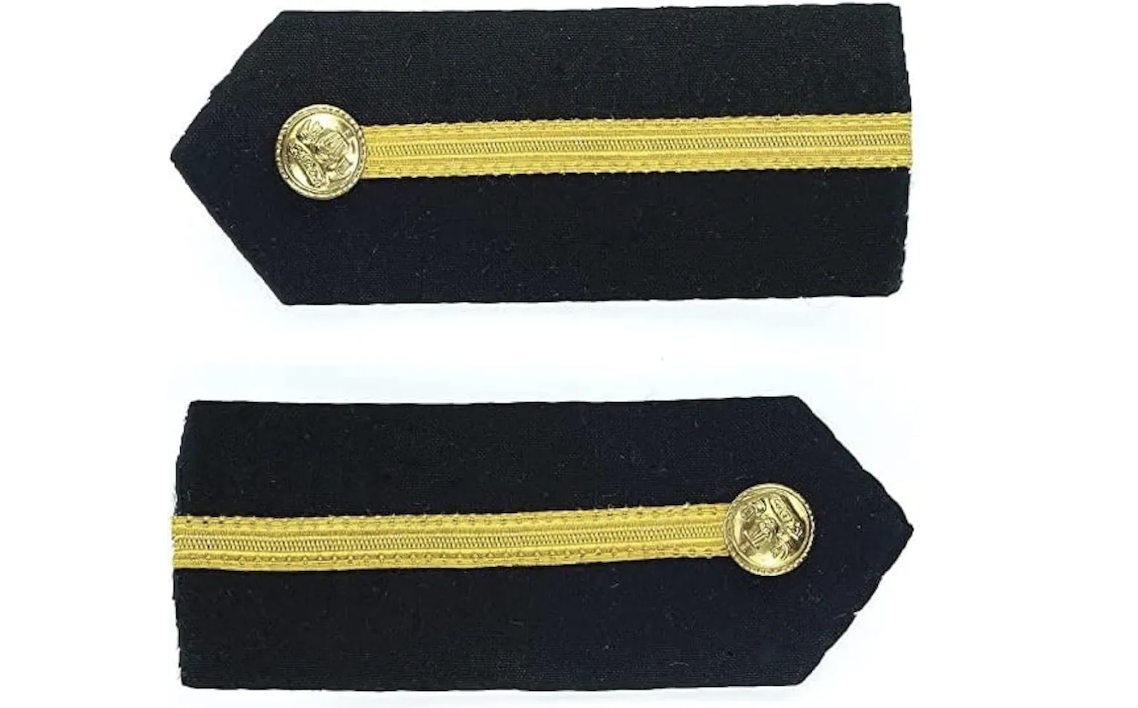
A cadet reported missing at sea triggers a familiar industry response. Search procedures are initiated, distress alerts transmitted, and authorities informed. The machinery of compliance moves quickly and efficiently. On paper, the system performs exactly as designed.
What remains largely unexamined are the failures that occur long before any alarm is raised.
On 3 February 2026, Sarthak Mohapatra, a 22-year-old Indian deck cadet, was reported missing while on board the container vessel M.V. EA Jersey, sailing in the Indian Ocean near Mauritius. Search and rescue operations were initiated and coordinated through MRCC Mauritius under established international procedures. At the time of writing, publicly available information remains limited, and this article does not speculate on the circumstances of his disappearance.
This article is written because reports of missing cadets continue to surface with disturbing regularity. Each case is approached as a standalone tragedy, while the conditions that precede them persist.
Disappearances at sea are not always sudden events. In some cases, they may be the visible end of a process that unfolds quietly over weeks or months. By the time a cadet is reported missing, consequential warning signs or failures may already have occurred. These may be failures of design, supervision, and leadership that have been tolerated long enough to fade into routine.

Uncounted Labour and Load Transfer
While cadets are recognised under STCW as trainees, they are generally not counted toward a vessel’s minimum safe manning requirements and are therefore excluded from the ship’s legally defined operational complement. On paper, they exist outside the vessel’s core manpower. In practice, the opposite is routinely true.
Modern ships are planned, scheduled, and operated on the assumption that trainees will absorb workload that no longer fits within lean-manned professional crews. Maintenance backlogs, administrative tasks, watch assistance during high-tempo operations: all quietly migrate toward the cadet. The cadet functions as load-bearing manpower without being formally recognised as such.
Because cadets are present to learn, almost any assignment can be justified as training, while their exclusion from manning calculations ensures that risk remains formally invisible. The system absorbs their labour without recognising their vulnerability.
An able seaman assigned the same task operates within a framework of defined authority and protection. He can question the assignment, decline it if it falls outside his role or competence, and escalate concerns without immediately jeopardising his career. A cadet does not operate within that framework. Refusal is read as unwillingness. Questioning is interpreted as attitude. Escalation is understood as reputational damage.
This reflects a difference in structural power. Experienced crew operate with role clarity and institutional safeguards, while cadets function within expectations of compliance and endurance. That transfer of risk can begin even before joining, as I later examined in Settebello Was Not Sacrifice. It Was a Recruitment Failure.

The DPA: A Structurally Defunct Safety Valve
As per the ISM code, the Designated Person Ashore exists, in theory, to break precisely this chain of silence. The DPA is meant to provide a bypass around the shipboard hierarchy when internal escalation becomes impossible. For cadets, however, this bypass is largely theoretical.
For a trainee, escalating a concern beyond the vessel can be experienced as a career-ending move. The psychological distance between a first-year cadet and a corporate safety officer is vast. Fear of reputational damage, future employability, lack of anonymity, and the absence of visible protection outcomes combine to make escalation feel terminal rather than protective.
Silence from those most exposed to risk is repeatedly misread as evidence of fleet health. A safety bypass that is not used by those it is meant to protect does not function in practice.
Some companies have introduced formal whistleblowing mechanisms, including dedicated hotlines and posted contact details on board, providing an escalation route beyond the ship’s hierarchy. Outside the tanker sector, however, there is no equivalent industry-wide vetting framework like TMSA that evaluates speak-up culture in the same manner. As a result, such mechanisms reflect individual company governance choices rather than a mandated or consistently audited safeguard. The regulatory position has also moved, with the 2026 STCW amendments bringing violence, harassment and social responsibility into mandatory training.
This failure is not culturally neutral. The global shipping workforce is drawn predominantly from high power-distance regions, the Indian subcontinent, Southeast Asia, the Far East, and parts of Eastern Europe – where questioning authority is socially discouraged long before a cadet ever steps on board. For many trainees from these regions, escalation is not experienced as a safety right but as an act of disobedience with career consequences.
By contrast, cadets from lower power-distance cultures are more likely to treat escalation as procedural. Their willingness to escalate concerns reflects cultural permission to speak rather than individual courage or training.
Having spent a decade at sea in command and sailing with cadets from across these regions, this is not a theoretical observation but repeatedly observed.

Reading this as a maritime insider, seafarer, or enthusiast?
Subscribe to The DeepDraft for maritime analysis, daily SITREP updates, weekly briefings, and operational signals worth watching.
The “Missing” Label as Administrative Risk Mitigation
Mechanical failures are treated as industrial events. Pollution is treated as a crime. Human loss, by contrast, is frequently softened into categories such as “missing” or “suicide.”
This distinction allows investigative thresholds, narrows the scope of inquiry, and allows files to be closed without a deep examination of the vessel’s command structure, supervision practices, or social architecture.
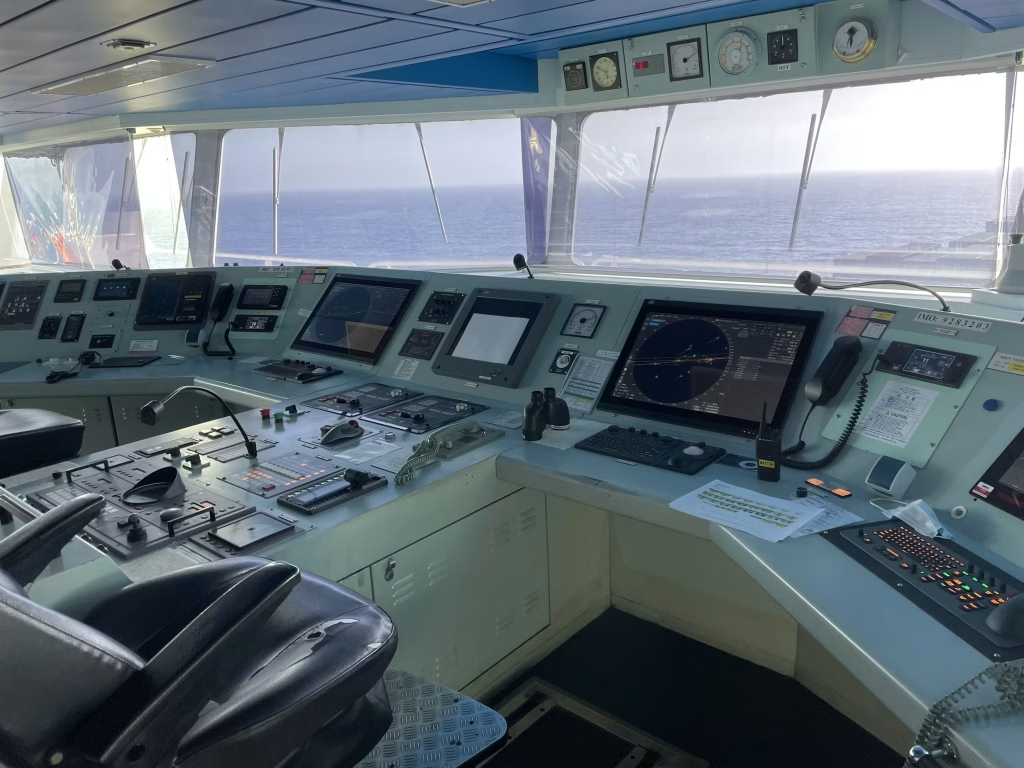
Modern ships accept continuous monitoring of machinery. Engine parameters are logged in fine detail. Navigation and cargo operations are preserved exhaustively. Common human spaces on board, however, are often not subject to equivalent visual recording. When a person disappears, investigations are forced to rely on recollection and testimony rather than objective data.
Human loss becomes the only category of maritime casualty where the absence of evidence is treated as natural rather than as a failure of system design. Mental health at sea deserves serious attention, but it cannot become the default explanation for every unexplained loss.
Audit Liability and the Absence of Product Recall
In cases where cadets are reported missing, investigators often encounter a perfect paper trail with compliant rest hours, completed training records, and unremarkable risk assessments. Such consistency warrants scrutiny. Where operational tempo is sustained without recorded fatigue, the additional labour is absorbed by cadets, whose workload does not distort compliance metrics. Fatigue remains undocumented, training is logged under nominal supervision, and audits assess record completeness rather than plausibility. At that point, documentation ceases to indicate safety and begins to indicate insulation.
Safety certification in shipping operates under two parallel regimes. Hours of rest, welfare provisions, and complaint procedures are verified under MLC and STCW, while the effectiveness of safety management, supervision, and operational control is certified under the ISM Code through the Safety Management Certificate and the company’s Document of Compliance. Together, these certifications assert that both human limits and safety systems are being managed acceptably.
When a cadet disappears, compliance records are examined under MLC and STCW, and the incident is investigated within the ISM framework. What does not occur is any automatic reassessment of the certification itself. A systemic human failure does not trigger suspension of the vessel’s SMC, nor does it mandate a review of the audit that certified the system’s effectiveness shortly before the loss.
ISM audits are sampling exercises that attest to system presence, not outcome. As a result, certification can remain valid even when the human system demonstrably fails. Mechanical failure leading to death would immediately prompt scrutiny of design, approval, and certification. Human-system failure does not. This asymmetry is structural. A safety certificate that survives a disappearance without re-examination does not function as assurance of system integrity. It functions as insulation.

DeepDraft View: The Cost of Ownership
This will not be the last time this subject is addressed here. Each time a cadet is reported missing, the industry searches, notifies, and then returns to silence. That silence is not incidental. It is part of how the system resets itself after loss.
I will continue to write each time a cadet disappears, not to add drama, but to prevent these cases from being absorbed into routine and forgotten. When patterns persist, documenting them is an obligation.
This is not the first time these issues have been examined on The DeepDraft. An earlier analysis, The Silence That Follows a Cadet’s Death at Sea, explored cadet deaths and disappearances through the lens of silence and delayed accountability. That piece remains relevant, not because the argument has changed, but because the conditions that produce these outcomes have not.
Cadets do not disappear because systems are absent. They disappear because systems exist without ownership. The disappearances of Karandeep Singh Rana and Sarthak Mohapatra are not isolated tragedies, but the logical conclusion of a system that prioritises compliant paper over operational reality. The most serious failures occur not at the moment of loss, but in the weeks and months before it, when excessive workload is normalised, fatigue is undocumented, escalation is discouraged, and leadership chooses endurance over intervention.
Until ownership is assigned to those pre-incident decisions, the industry will continue to ritualise response while quietly abandoning prevention.
Media Section
This article examines systemic patterns and does not attribute causation or liability to any specific incident, individual, or organisation.
Updated 9 September 2026: Minor editorial clarifications and links to subsequent DeepDraft analysis added.



Leave a Reply