
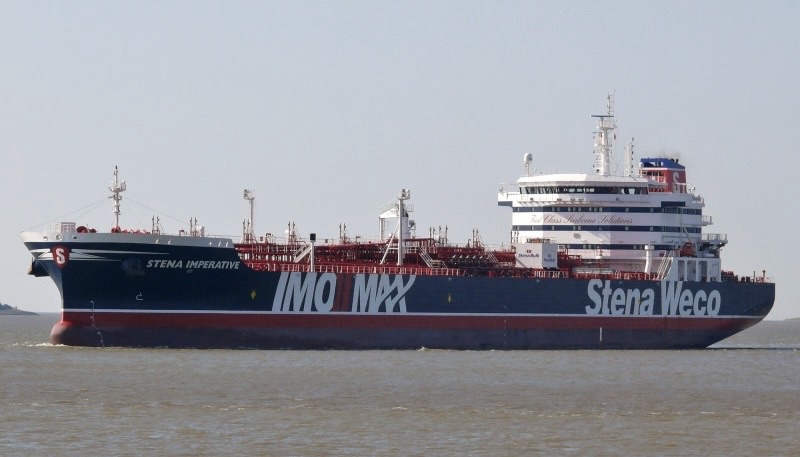
On 3 February 2026, a U.S.-flagged oil tanker, Stena Imperative, was approached and ordered to stop by multiple small armed boats believed to be affiliated with Iran’s Islamic Revolutionary Guard Corps (IRGC) while transiting the Strait of Hormuz north of Oman. The incident took place within the internationally navigable waters of the strait, a key chokepoint for global oil and LNG shipments.
According to maritime security reports, three pairs of armed Iranian gunboats ordered the tanker to halt and prepare for boarding. The Stena Imperative maintained engine speed and its course. A U.S. warship subsequently escorted the tanker through the area. Iran’s official media later claimed that another vessel had entered Iranian territorial waters without permission and was warned; it did not confirm the tanker’s identity.
In a related security development on the same day, U.S. Central Command reported that a U.S. fighter aircraft shot down an Iranian drone that had approached the aircraft carrier USS Abraham Lincoln in the Arabian Sea in what U.S. officials described as defensive action.
The United Kingdom Maritime Trade Operations (UKMTO) issued a general warning to all vessels in the strait to transit with caution and report suspicious activity.
Why it matters for maritime
The Strait of Hormuz remains one of the world’s most strategically critical maritime chokepoints, through which a significant portion of global oil exports and LNG pass daily. An encounter between state naval elements and a U.S.-flagged commercial vessel represents a notable escalation in maritime security risk.
Clear operational risk: Encounters with small armed craft capable of boarding actions directly affect safe passage planning and risk assessment for commercial traffic. Escalation potential: Such confrontations can rapidly escalate, affecting convoy routing, maritime insurance premiums, and voyage instructions for tankers and bulk carriers. Military-civil interface: The involvement of a U.S. warship escorting a commercial tanker highlights the interplay between naval force postures and merchant shipping in contested waterways.
Operators transiting the strait should continue to monitor UKMTO warnings, maintain vigilant communications, and be aware of potential interaction zones between naval forces and commercial vessels.



Leave a Reply