
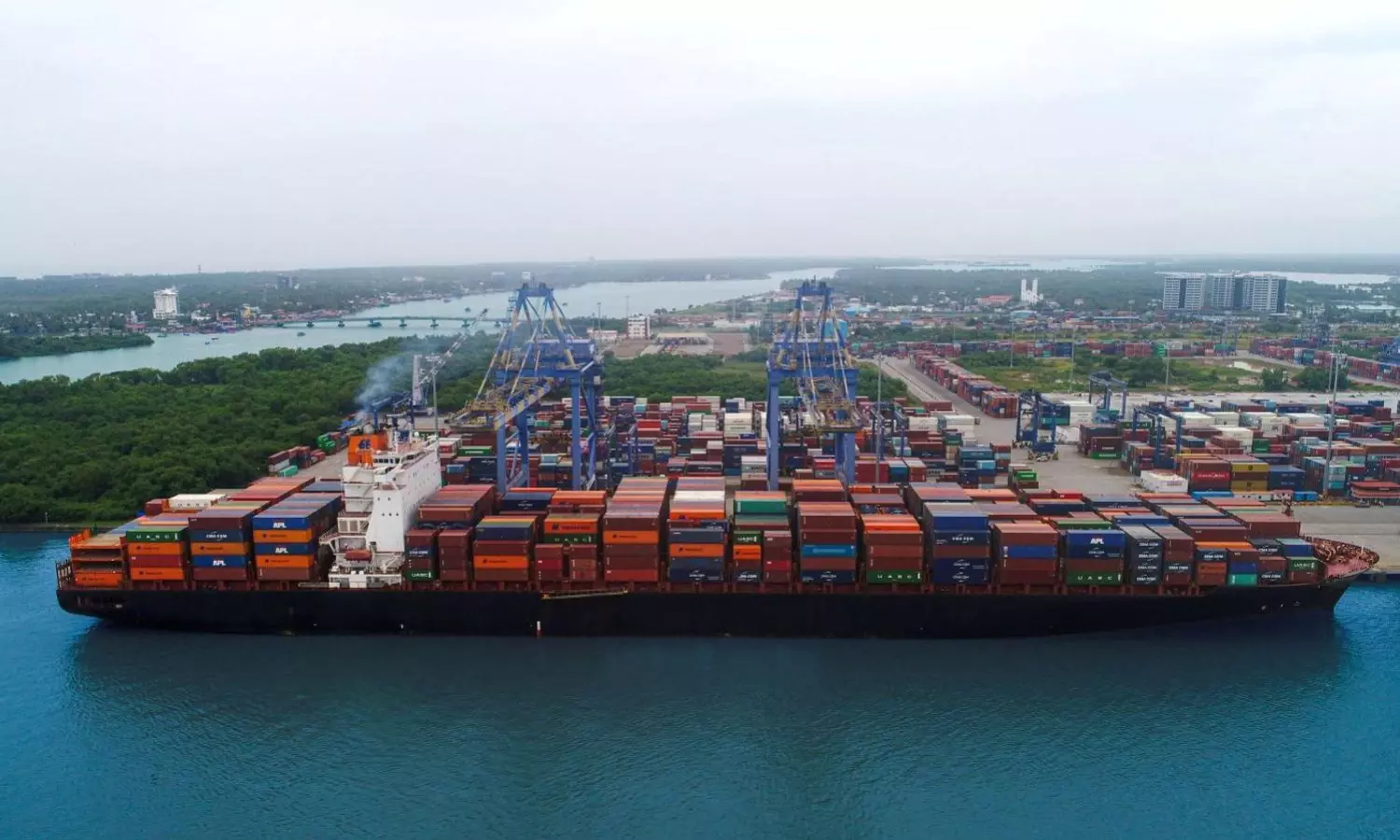
India and the European Union concluded a long-negotiated Free Trade Agreement (FTA) on 27 January 2026, alongside a broader strategic partnership framework. While the agreement spans manufacturing, services, and investment, its most immediate consequences will be felt across shipping, ports, and maritime logistics.
Maritime trade impact
The FTA significantly expands the cargo base moving between India and Europe by eliminating or reducing tariffs on 96.6% of EU goods entering India and granting preferential access to roughly 99% of Indian exports into the EU. For shipping lines, this translates into higher volume certainty across container, Ro-Ro, and project cargo trades.
The agreement also improves market access in services, including maritime and logistics services, easing operational barriers for European shipping, port service, and logistics companies operating in India. This is expected to increase foreign participation in terminal operations, ship services, and integrated logistics, particularly at major Indian gateways.
Ports, routing, and efficiency
Customs cooperation and regulatory alignment are a central pillar of the deal. Commitments to simplified documentation, faster clearance, and coordinated inspections directly target port dwell times, a persistent constraint on India–Europe trade. While no specific shipping routes are mandated, the deal strengthens the commercial case for direct deep-sea services between Indian ports and Northern Europe by improving predictability and turnaround efficiency.
Strategic and security dimension
Alongside the FTA, India and the EU reaffirmed cooperation on maritime security and freedom of navigation, anchored in UNCLOS principles. While framed at policy level, this alignment reinforces the shared interest in protecting critical sea lanes linking the Indian Ocean, Red Sea, and Mediterranean, through which India–Europe trade flows.
What this changes for shipping
For operators and charterers, the agreement:
- expands long-term India–Europe cargo demand
- improves viability of direct services over transshipment-heavy routings
- strengthens the role of Indian ports in Europe-bound supply chains
- increases competitive pressure on regional hubs handling India–EU cargo
Bottom line:
The India–EU agreement is not a maritime treaty, but it materially reshapes trade volumes, port economics, and shipping patterns on one of the world’s most strategic east-west corridors.




Leave a Reply