

With tanker freight exceeding a million dollars a day and Masters commanding extraordinary transit bonuses, Hormuz has exposed an uncomfortable reality. Shipping has found a price for human exposure to war, but the responsibility for accepting that risk still rests disproportionately with those onboard.
When a company asks a Master whether he is willing to proceed to Sohar or Fujairah, it seeks consent before committing the vessel. From the bridge, however, the implications extend far beyond agreement to proceed.
Sohar and Fujairah lie outside the Strait of Hormuz, but the threat now extends into anchorages, approaches and alternative loading areas. On 11 October, MT Petro Dolphin was struck by a drone at Sohar Anchorage. Nine Indian seafarers were rescued, while two remained missing in subsequent reporting.
The question from ashore therefore concerns more than a destination. It asks whether the Master is prepared to accept a level of risk that extends to the entire crew. My response was straightforward: it would depend on the financial compensation.
That should not be an uncomfortable subject ashore. The company has already priced the vessel, the charterer has priced the cargo, the insurer has priced the war risk, and the market has priced the freight. The Master has every right to question what value the company places on his personal, professional and physical exposure.
The larger concern is whether obtaining consent, even with financial compensation, is being treated as sufficient justification to proceed. The Master’s agreement cannot replace the crew’s individual rights or the company’s responsibility for assessing and controlling the risk.

The New Hormuz Economy
The money now being reported goes well beyond conventional danger pay.
The Financial Times reports that tanker Masters are being offered up to USD 100,000 per month for Hormuz operations, with bonuses of USD 50,000 per passage. Ordinary seafarers are reportedly receiving four to six times their normal wages, against typical Master earnings of around USD 15,000 per month.
The freight market exposes the other side of this transaction. According to Poten & Partners figures cited by Reuters, Middle East-to-Asia VLCC rates exceeded USD 1.2 million per day, compared with approximately USD 30,000 in January. On a different route, shipping two million barrels of US crude from the Gulf of Mexico to China was quoted at USD 80 million, equivalent to USD 40 per barrel in freight alone.
This is where the term mercenary Master becomes relevant. It describes a commercial arrangement in which extraordinary compensation is offered for accepting personal exposure in a conflict zone. The Master has every right to negotiate that compensation, but a per-transit bonus introduces another consideration. If changing threat intelligence makes postponement the correct professional decision, does the Master retain the agreed compensation, or does exercising sound judgement mean forfeiting a substantial financial reward?
The concern is whether a completion-linked bonus can compromise the very judgement the Master is expected to exercise. SOLAS Chapter V, Regulation 34-1 protects the Master’s safety decisions against interference from owners, charterers and operators. Yet the regulation does not determine bonus entitlement. Transit agreements should therefore explicitly protect Masters from financial pressure when postponement or withdrawal becomes the correct safety decision.
DeepDraft previously examined how rising war-risk costs and altered routing could turn Hormuz into a commercially restricted passage, even without a physical closure.

The Shuttle Illusion
Ship-to-ship (STS) transfers and shuttle operations may shorten exposure on one leg, but shift part of the risk into offshore cargo transfers.
Reuters reported that STS activity in the Gulf of Oman near Sohar had reached capacity limits following redirected Saudi crude exports, with VLCC charter rates reaching approximately USD 1.27 million per day.
Shuttle vessels still face the security threat, while STS operations introduce additional exposure through close-quarters manoeuvring, mooring, fendering, cargo hose connections and emergency disconnection arrangements. These activities demand close coordination between vessels. The operational risks of similar-size VLCC transfers, including changing freeboard, differential vessel response and mooring-load distribution, have already been examined in DeepDraft’s analysis of STS operations.
The commercial workaround therefore creates another point where a security incident can rapidly develop into a navigational, cargo-transfer or pollution emergency. Reducing exposure on one leg does not necessarily reduce the overall risk of moving the cargo.

The Bridge Under Electronic Warfare
UKMTO/JMIC have documented widespread GNSS interference, spoofing and AIS anomalies across the Strait of Hormuz, Gulf of Oman and Arabian Gulf. Britannia P&I has also warned that compromised GNSS data can affect interconnected navigational systems. The technical consequences of GNSS interference, and the need for independent position verification, were examined in DeepDraft’s earlier analysis of navigation under spoofing conditions.
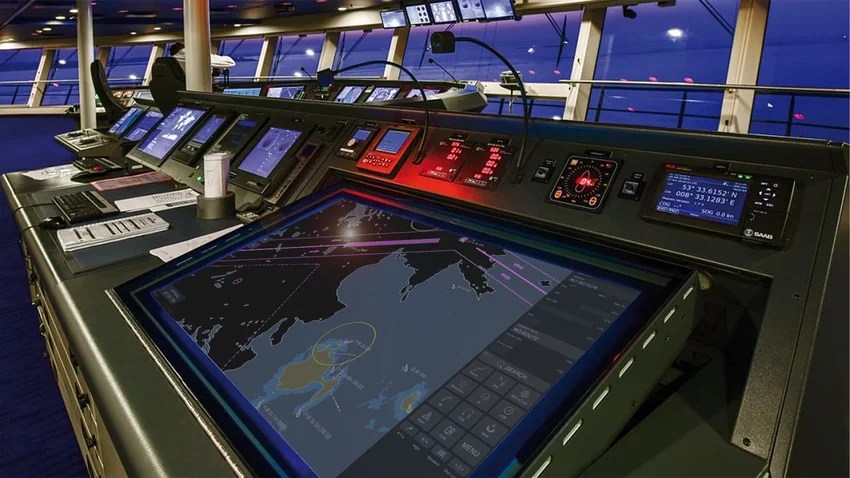
On a modern bridge, a corrupted position can appear consistently across multiple electronic displays, creating false confidence in the navigational picture. In congested waters, the OOW must increasingly rely on radar ranges, parallel indexing, visual bearings and independent position verification while monitoring traffic, security advisories and potential threats. The workload increases precisely when the bridge team is already operating under considerable psychological pressure.
For the Master, this creates an additional command responsibility. Bridge manning, navigation-system redundancy, contingency procedures and the ability to revert to independent fixing methods must be assessed before entering the area. These safeguards require prepared, competent watchkeepers, danger pay provides none of them.
Reading this as a maritime insider, seafarer, or enthusiast?
Subscribe to The DeepDraft for maritime analysis, daily SITREP updates, weekly briefings, and operational signals worth watching.
The Basic Wage Game
Under the ITF and Joint Negotiating Group’s Warlike Operations Area designation, seafarers covered by IBF agreements are entitled to a bonus equivalent to 100% of their daily basic wage, payable for a minimum of five days, along with enhanced death and disability compensation and the right to refuse entry with repatriation and two months’ basic wage compensation.
The weakness lies in how basic wage is defined. In many officer’s contracts, actual earnings comprise basic wage, fixed overtime, leave pay and various allowances. Consider a Master earning USD 20,000 monthly, with a basic wage of USD 2000 to USD 2,500. Under the standard IBF formula, the additional war-risk payment works out to approximately USD 60–83 per day, or just USD 300–417 for the minimum five-day period.
Though illustrative, these figures show how contractual compliance can still deliver limited compensation for extraordinary exposure.
This is where unions and employer groups deserve scrutiny. Why should compensation for exposure to missiles, drones and potential loss of life be calculated against the smallest component of a seafarer’s earnings? A war-risk premium should reflect actual contractual remuneration and the severity of exposure, rather than a payroll structure that minimises the amount payable.
Compliance with a collective bargaining agreement should establish the minimum protection, not become the industry’s justification for limiting compensation.

The Fragile Right to Refuse
The right to refuse entry into a Warlike Operations Area is an important protection, but its effectiveness depends on whether seafarers can exercise it without consequences for their careers.
In practice, pressure rarely needs to take the form of a direct order. It can operate through contract renewals, performance appraisals, manning-office relationships or future assignments. A Master may formally retain the right to refuse while knowing that his decision could influence how the company views his reliability and willingness to accept difficult assignments. The distinction between formal consent and meaningful choice was also central to DeepDraft’s examination of the Settebello deaths and recruitment failures.
Consent must therefore extend beyond an email confirmation. It requires disclosure of the current threat assessment, compensation terms, operational limitations and the crew’s individual refusal rights. More importantly, consent given before departure cannot be treated as permanent authorisation when the security situation changes.
If fresh intelligence indicates that the passage is no longer acceptable, the Master must be able to suspend or abandon the operation without commercial pressure or loss of agreed protection. Otherwise, consent becomes a mechanism for transferring responsibility from the company to the individual seafarer.

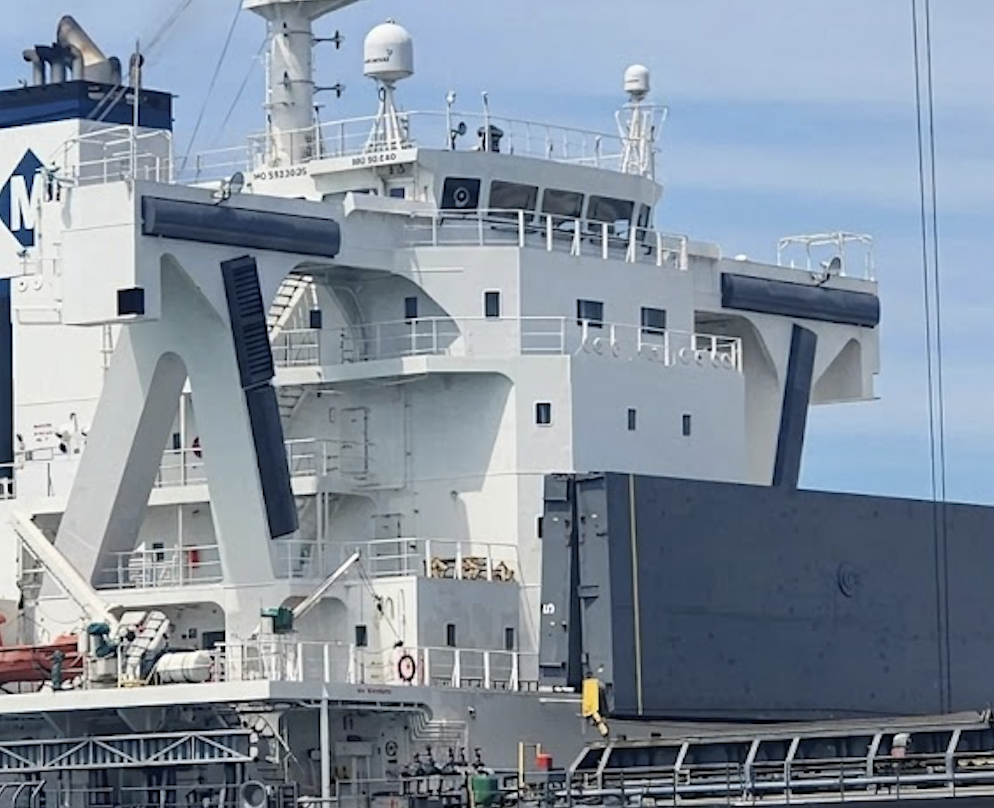
Photograph: Maersk Line / Wikimedia Commons (CC BY-SA 2.0). Representative image.
DeepDraft View
The Strait of Hormuz has not created shipping’s moral problem. It has exposed it.
The industry speaks easily about safety culture, crew welfare and the Master’s overriding authority when freight is normal. Hormuz tests those commitments when vessels earn crisis money and commercial pressure to sail is severe.
Shipping can price war risk into freight, insurance and charter terms while still managing seafarer exposure through basic-wage formulas and administrative consent. Lloyd’s List has reported charterers seeking co-assured status under shipowners’ war-risk policies to protect against insurers’ recovery claims. Commercial parties are negotiating how financial liability will be distributed if a casualty occurs, while the human exposure is still being addressed through consent and wage agreements. That imbalance deserves the same scrutiny as the extraordinary freight rates.
A company seeking consent must also accept responsibility for the conditions under which that consent is given. This requires transparent threat assessments, compensation based on actual earnings, protection against retaliation for refusal, and support for the Master’s authority to suspend operations when conditions deteriorate. These responsibilities cannot be discharged through an email confirmation and a transit bonus.
There is nothing dishonourable in a Master demanding danger money. The dishonour lies in a system that makes danger money the answer to danger.
Media Section
Sources
- Financial Times (FT)
- Reuters
- Poten & Partners
- Lloyd’s List
- UK Maritime Trade Operations (UKMTO)
- Joint Maritime Information Centre (JMIC)
- Britannia P&I Club
- International Maritime Organization (IMO)
- SOLAS Chapter V, Regulation 34-1
- International Transport Workers’ Federation (ITF)
- Joint Negotiating Group (JNG)
- International Bargaining Forum (IBF)
- The Indian Express



Leave a Reply