
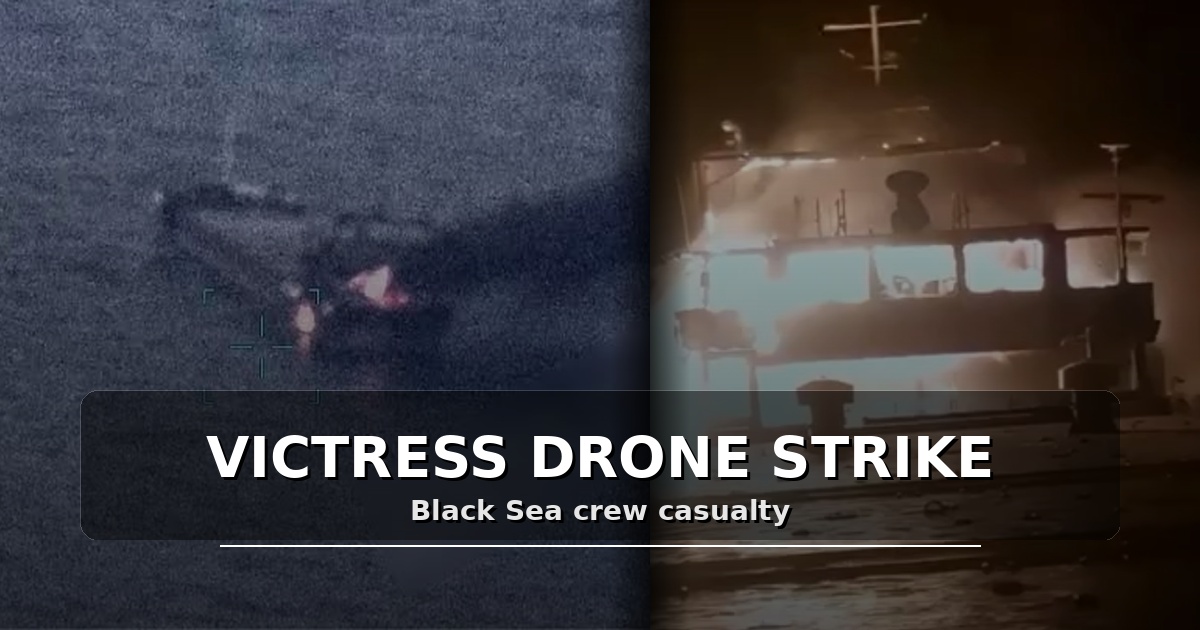
A Turkish-operated, Panama-flagged cargo ship was hit in the Black Sea, with one crew member killed and other vessels also reported struck.
The same operating cycle shows Hormuz LNG transits continuing under AIS-dark patterns, container rates rising and Fujairah bunker risk still disrupting voyage planning.
1. Black Sea Kinetic Strike: VICTRESS Hit by Drone, Crew Casualty Reported
• Reuters reported that Russian drones attacked three Black Sea vessels, killing an Egyptian crew member aboard the Turkish-operated cargo ship VICTRESS.
• Panama’s Maritime Authority earlier reported that one crew member was killed and two were injured after a drone attack on a Panama-flagged ship in the Black Sea.
• Other vessels under Palau and Belize flags were also struck, but reportedly continued their voyages.
• The incident converts the Black Sea risk picture from port-area disruption into direct crew-casualty exposure for commercial vessels operating near the conflict zone.
2. Hormuz LNG Movement: Dark Voyages and Partial Transit Recovery
• Tanker traffic through the Strait of Hormuz began picking up on Monday after Iran again claimed over the weekend that the waterway had been closed.
• Reuters-linked reporting said crude and LNG tankers resumed crossings, including Qatari LNG tankers and supertankers bound for Basra.
• Al Hamra and Mubaraz were reported to have completed two AIS-dark voyages out of Hormuz since the war began, reappearing after chokepoint passage.
• Gulf passage is therefore not closed, but it remains permissioned, commercially selective and operationally irregular, with AIS, routing authority and insurance documentation requiring shore-side control.
Reading this as a maritime insider, seafarer, or enthusiast?
Subscribe to The DeepDraft for maritime analysis, daily SITREP updates, weekly briefings, and operational signals worth watching.
3. Commercial / Market Impact: Container Rates and Bunker Costs Pressure Voyage Economics
• Drewry’s World Container Index rose 12% to USD 3,969 per 40ft container on June 18, driven by Trans-Pacific and Asia-Europe rate increases.
• The composite container index reached its highest level in 18 months, creating immediate exposure for shippers facing rolling cargo, peak-season booking pressure and contract repricing.
• Financial Times reporting said ships have waited up to 10 to 12 days to refuel in Singapore or Fujairah, compared with normal waits of two to three days.
• Fujairah bunker prices reportedly surged to USD 1,495 per tonne on June 3, a USD 714 premium against Singapore, while poor-quality fuel forced some vessels to debunker and replace supply.
4. Bunker / Technical Risk Layer: Fujairah Shortage Creates Fuel-Quality and Route-Planning Exposure
• Fujairah remains a critical bunkering hub near the Strait of Hormuz, but supply tightness and reduced product availability have pushed operators to consider alternate refuelling calls.
• Dan-Bunkering reported that Fujairah bunker tightness was expected to persist until at least mid-July, with limited cargo arrivals keeping availability constrained and premiums elevated.
• Masters should treat emergency bunker changes as technical-risk events, not only commercial delays, because off-spec fuel can trigger engine damage, debunkering, sampling disputes and off-hire arguments.
• Charterers and operators should confirm bunker stems, quality clauses, test procedures, deviation authority and cost allocation before committing vessels to Gulf, Singapore or alternate Asian fuel plans.
Strategic Summary & Actions Required
• Masters operating in the Black Sea should treat drone exposure as direct crew-risk exposure, verify current coastal and flag guidance, preserve VDR/AIS/radio records and escalate any attack, near miss or suspicious aerial activity immediately.
• Ship managers with Gulf or Black Sea fixtures should issue voyage-specific risk instructions covering AIS policy, bridge logging, routing approval, crew muster readiness, emergency communications and post-incident evidence preservation.
• Charterers and operators should price Hormuz and Black Sea voyages against war-risk, deviation, off-hire, delay, bunker availability and fuel-quality clauses before confirming laycan or cargo commitments.
• Liner and forwarding desks should review Trans-Pacific bookings against higher WCI levels, rolling-risk exposure, heavy-cargo restrictions and customer delivery promises before releasing firm shipment dates.
• Technical and marine fuel teams should treat Fujairah and Singapore bunker planning as a voyage-critical control point, with confirmed stem availability, retained samples, test procedures and alternate fuel ports agreed before arrival.
Operational Status
CRITICAL RED — Black Sea Drone Strike / Crew Casualty Exposure / Hormuz AIS-Dark Transit Pattern / Bunker and Container Cost Pressure
Latest DeepDraft Analysis
Sanctions exposure reaches the vessel through the Master’s signature, making voyage authority, document control and escalation discipline central to defensible shipboard compliance.
Related DeepDraft Articles & Analysis
Sources
Reuters, Drewry, Financial Times, Ship & Bunker, The DeepDraft
This update is part of the DeepDraft SITREP series covering developing maritime operational situations.



Leave a Reply