

Gulf risk has moved from transit permission into vessel condition, crew exposure and evidence control.
Ships held back by the Hormuz crisis may not return to service as clean, responsive assets. Time at anchor in warm Gulf water can change how a vessel answers the engine, how she cools, how she burns fuel and how confidently she can meet the next order.
At the same time, Gulf of Oman enforcement has brought disabled tankers, crew evacuation, fatalities, legal disputes and darker transit behaviour into the same operating picture. For Masters, managers, insurers and charterers, the question is now practical: is the vessel, crew, paperwork and underwater condition ready to support the voyage being ordered?
That is why this week’s DeepDraft analysis matters. The hidden operational penalty may already be forming below the waterline.
Weekly Analysis
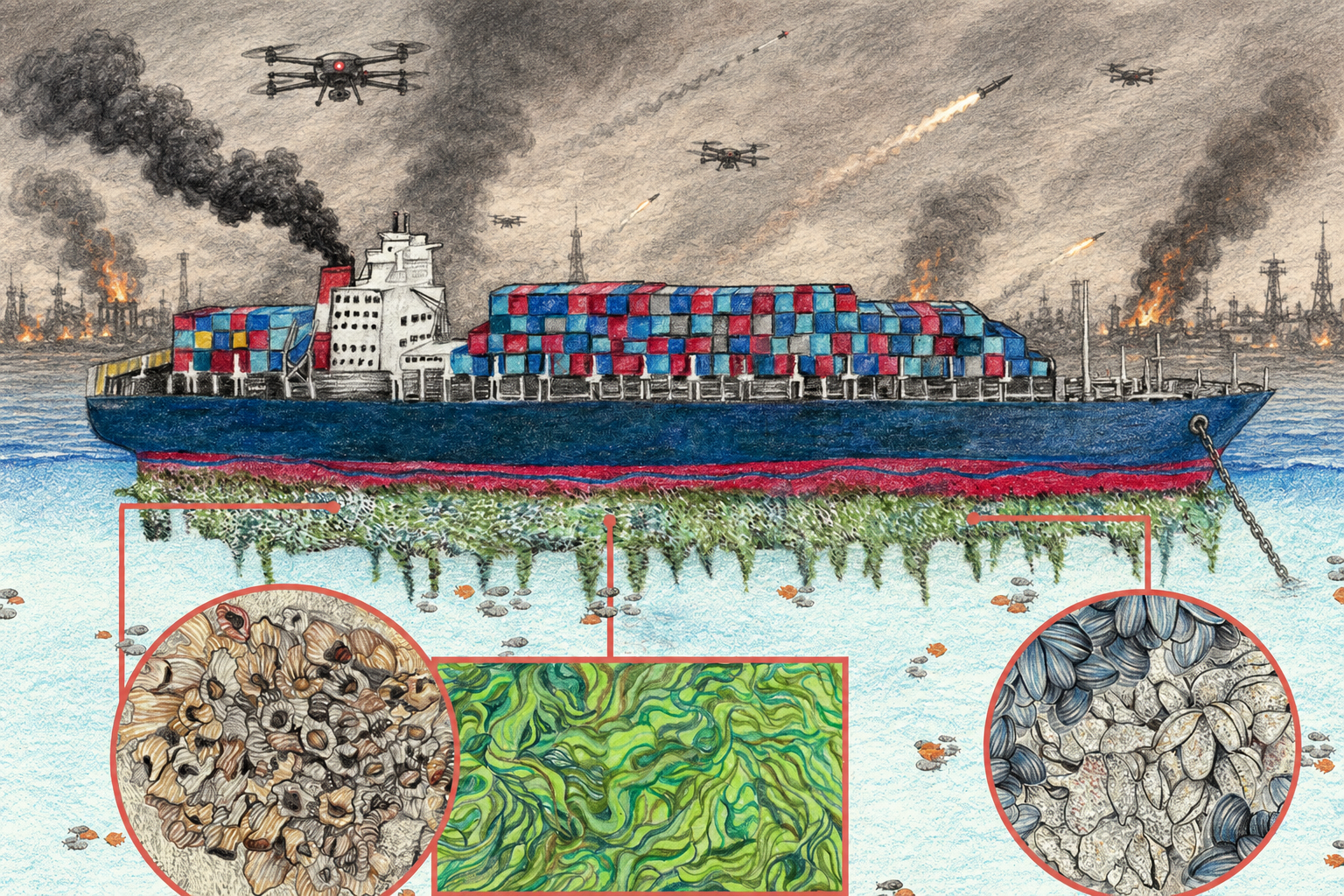
The Barnacle Problem Waiting Behind Hormuz is this week’s flagship DeepDraft analysis. It takes the Hormuz waiting problem away from political language and brings it back to the ship. Prolonged delay in warm, high-salinity Gulf waters can turn a waiting vessel into a different technical asset before the Master ever heaves up anchor. DeepDraft’s latest analysis frames the issue through hull fouling, propeller response, sea chest restriction, cooling-water margin and charterparty evidence.
The operational point is direct. A ship at anchor is not static. Antifouling coatings, sea chests, strainers, propellers and cooling systems are still exposed to the environment. Once movement resumes, clean-hull assumptions may no longer support speed, fuel consumption, manoeuvring response or engine-room cooling expectations. DeepDraft notes that the real question for stranded ships is not simply when they will move, but what condition they will be in when ordered to move.
For Masters and Chief Engineers, the article points to immediate verification before committing to restricted traffic or high-risk passage: RPM against speed, slip, vibration, fuel burn, strainer loading, seawater suction condition, MGPS performance and cooling-water temperatures. For owners, charterers and insurers, the second exposure is documentary. Noon reports, diver or ROV evidence, cooling data, vibration records, Letters of Protest and fuel-performance records may decide whether post-delay underperformance becomes a technical finding or a commercial dispute.
The analysis matters because the Gulf crisis may leave two queues. One for safe passage through the waterway. Another for underwater inspection, cleaning, evidence preservation and biosecurity acceptance at destination ports. A vessel may clear the geopolitical choke point and still face operational restriction through fouling, cooling limits or port-state biosecurity scrutiny.
This Week in Maritime: Timeline of Escalation
June 9 – Marivex Fire Adds Evacuation Risk to Gulf Enforcement
M/T Marivex was disabled off Oman, later reporting fire with all 24 Indian crew evacuated. The incident added emergency response, sanctions exposure and evacuation readiness to the Gulf security file, requiring operators to treat high-risk passage as a crew-safety and evidence-preservation matter.
June 10 – Suez Surcharge Shock Reprices Red Sea Return Planning
The Suez Canal Authority’s July 15 surcharge increases turned route selection back into a live cost, charterparty and voyage-planning issue. DeepDraft also flagged IMO safety language on Hormuz and radio-interference risk near Taiwan, putting routing economics and bridge-level communication discipline into the same operational file.
June 11 – Settebello Strike Turns Enforcement Into Crew-Risk Flashpoint
M/T Settebello was disabled off Oman, with Indian crew missing at the time of the SITREP and India raising formal concerns. The case sharpened the question of written voyage authority, sanctions screening, Master’s escalation rights, VDR preservation and legal defensibility when commercial ships are exposed to disabling action.
June 12 – Jalveer Extends Gulf Enforcement After Settebello Crew Deaths
M/T Jalveer became another Indian-crewed tanker disabled in the Gulf enforcement pattern, while India confirmed the deaths of three Settebello seafarers. DeepDraft treated the development as a crew-fatality file, with owners, managers, charterers and insurers needing to preserve AIS, VDR, VHF, cargo papers, voyage orders and charterparty instructions.
June 13 – Singapore Harbour Collision Reasserts Port-Water Safety Risk
Three deaths off Pasir Panjang shifted attention back to fatal harbour-craft exposure inside one of the world’s busiest port environments. DeepDraft connected the Singapore casualty with small-craft, close-quarters, bridge-team and local-control risks, reminding operators that routine harbour movements still carry severe consequences even while global attention remains fixed on Gulf security.
Full Live Wire coverage for the week:
https://thedeepdraft.com/category/wire/
Strategic Summary
The main operational implication is that Gulf risk has moved beyond passage approval. A vessel delayed by Hormuz disruption may come back into service with reduced underwater performance just as Gulf enforcement, crew exposure, sanctions scrutiny and dark-transit behaviour are increasing the workload on the bridge and ashore.
Ship managers, Masters, operators and insurers should watch three files next week: verified security instructions for Gulf and Oman approaches, the underwater readiness of vessels released after prolonged waiting, and the evidence trail after any incident, delay, deviation or performance loss. Written voyage authority, crew-risk assessment, hull-condition evidence and engine-room data should now be treated as active operational controls.
The risk likely to carry into next week is combined degradation. Vessel condition, crew safety, route uncertainty and claims pressure are moving together. A ship may be cleared to sail before the technical record and commercial paperwork are ready to support the voyage.
This report is part of the DeepDraft Weekly Maritime Brief series tracking operational, regulatory, and security developments across global shipping.

Leave a Reply