
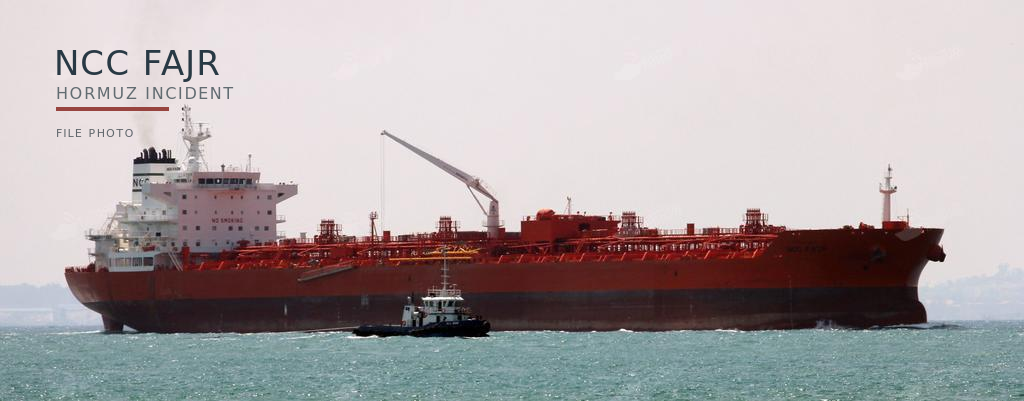
The projectile strike on FUJAIRAH ENERGY injured four seafarers, adding a confirmed casualty count and named vessel to this week’s Gulf attacks. A separate possible attack involving NCC FAJR was reported during a Strait of Hormuz transit on November 11.
1. FUJAIRAH ENERGY strike leaves four crew injured
- India’s Minister of Ports, Shipping and Waterways identified the vessel as the Liberia-flagged VLCC FUJAIRAH ENERGY, IMO 9723071.
- The minister said the vessel was struck by a projectile on November 10 while sailing from Al Ruwais to Dubai.
- Four of the vessel’s 22 crew members were injured. One Indian national sustained minor injuries and was taken ashore. The remaining 18 crew were reported safe.
- Six Indian seafarers were serving aboard the vessel.
- FUJAIRAH ENERGY is a 2015-built, 299,999 DWT VLCC managed by Sinokor Maritime.
- The vessel’s damage condition, cargo status, propulsion capability and any pollution consequences had not been confirmed at the reporting cutoff.
- No verified source had established that FUJAIRAH ENERGY was the ADNOC Logistics and Services vessel mentioned in earlier reporting.
2. NCC FAJR faces separate possible attack in Hormuz
- UK Maritime Trade Operations issued Warning 202-26 on November 11 after receiving a report concerning a tanker in the Strait of Hormuz.
- UKMTO’s initial warning did not identify the tanker or confirm crew injuries, damage or environmental impact.
- India’s shipping minister subsequently identified the vessel as NCC FAJR, a Saudi-flagged oil and chemical tanker, IMO 9595644.
- The minister described the incident as a possible attack and said the entire crew was safe, including three Indian seafarers.
- NCC FAJR is a 2013-built LR2 tanker of approximately 81,336 DWT.
- No authoritative account had confirmed the weapon involved, the precise damage condition or any pollution.
- The incident should remain separate from the FUJAIRAH ENERGY strike unless investigating authorities establish a connection.
3. Gulf crude transport costs continue to rise
- Newly reported Drewry data placed the October freight cost for moving crude from Fujairah to India’s west coast at approximately $7.51 per barrel.
- The comparable figure was $4.76 per barrel in September and $1.57 in late February, producing a reported increase of about 377 percent from the February level.
- Before the conflict, a representative Suezmax Gulf crude movement reportedly cost approximately $0.95 per barrel, with war-risk insurance then assessed separately at roughly 0.1 to 0.25 percent of vessel value.
- Reduced vessel availability, higher insurance exposure, ship-to-ship transfer requirements and longer routing have all contributed to the widening cost base.
- Kpler estimated Indian crude imports at approximately 5.6 million barrels per day in October.
- These figures describe a broader route-level market movement. They should not be treated as a current fixture quotation for any individual vessel.
4. IMO calls for stronger flag and port-state enforcement
- IMO Secretary-General Arsenio Dominguez called on flag, port and coastal states to strengthen enforcement around Strait of Hormuz operations.
- The organisation cited reports of substandard vessels, obscured IMO numbers, fraudulent registration, false-flag operations and unsafe practices.
- IMO reported 133 confirmed incidents as of November 10, with 25 seafarer fatalities.
- Owners and operators were urged not to expose seafarers to unacceptable risks.
- The statement increases regulatory pressure but does not itself create a new routing restriction, mandatory traffic measure or SOLAS amendment.
- Enforcement effectiveness will depend on vessel identification, registration verification, inspection access and the willingness of individual states to act against deficient ships.
Latest Analysis
Lightning Protection on Ships: Protecting the Equipment We Depend On
Modern ships depend on exposed electronic systems, yet lightning protection remains uneven. The analysis examines bonding, surge protection, maintenance and the consequences of assuming equipment will survive.
Related DeepDraft SITREPs
Related Analysis
Sources
UK Maritime Trade Operations, India’s Ministry of Ports, Shipping and Waterways, International Maritime Organization, Lloyd’s List, Drewry Maritime Research
This update is part of the DeepDraft SITREP series covering developing maritime operational situations.



Leave a Reply