

A Russian LNG carrier has appeared in the Baltic with heavy weapons mounted near the bridge.
The signal shifts boarding, close-approach and sanctions-enforcement risk around Russian energy shipping.
1. Armed Russian LNG Carrier Raises Baltic Risk
• Surveillance images obtained from Estonia show heavy machine guns mounted aboard the Russian LNG carrier Marshal Vasilevskiy, a commercial energy vessel supplying Kaliningrad.
• The vessel sailed as close as 13 nautical miles from the Estonian coastline while en route toward Russia’s Bolshoi Bor port in the Gulf of Finland.
• The images show two heavy machine guns positioned on the wheelhouse of the nearly 300-metre gas tanker.
• The weapons appear consistent with 12.7 mm Kord heavy machine guns, a system capable of engaging small craft and low-flying drones.
2. Commercial Vessel Armament Changes Boarding Calculus
• The visible armament changes the risk model for any attempted inspection, boarding, interdiction or close approach involving Russian-linked commercial energy tonnage.
• Baltic-state security teams may now have to treat a commercial LNG carrier as an armed stand-off hazard, not only a sanctions or cargo-screening target.
• The vessel’s Kaliningrad supply role places the signal inside a NATO-adjacent operating area where surveillance, inspection pressure and Russian energy logistics overlap.
• Masters operating in the Baltic should treat Russian LNG, FSRU or sanctioned-energy traffic as a potential close-approach hazard requiring wider CPA margins, VHF discipline and full bridge-record preservation.
3. Arctic Express Lifts LNG From Sanctioned Project Chain
• The newly Russian-flagged LNG tanker Arctic Express loaded LNG from a floating storage facility linked to the U.S.-sanctioned Arctic LNG 2 project.
• The cargo was loaded at the Saam facility near Murmansk on June 28, with the vessel heading west and destination unclear.
• Arctic Express was formerly Queen Cassiopeia under the Sierra Leone flag and is one of two LNG tankers recently added to Russia’s registry.
• The movement confirms that Russian LNG logistics remain active despite U.S. sanctions, EU short-contract restrictions and continuing scrutiny of Arctic LNG 2 cargo flows.
4. Container Rates Surge as Tariff Cargo Moves Early
• Freight shipping costs have reached their highest levels since the 2024 Red Sea crisis as shippers front-load inventory before new U.S. tariffs.
• China to U.S. East Coast rates rose to USD 7,880 per FEU, up 62% in one month.
• China to Mediterranean rates climbed to USD 6,431 per FEU, up 47% over the same period.
• The Platts Container Index rose 80% over 30 days, pushing freight procurement back into disruption-level pricing territory.
5. Hormuz Hull Condition Adds Delayed-Capacity Risk
• The latest DeepDraft SITREP already covered the June 29 Hormuz threat-level and route-control picture, while the technical recovery issue now sits with delayed vessel readiness.
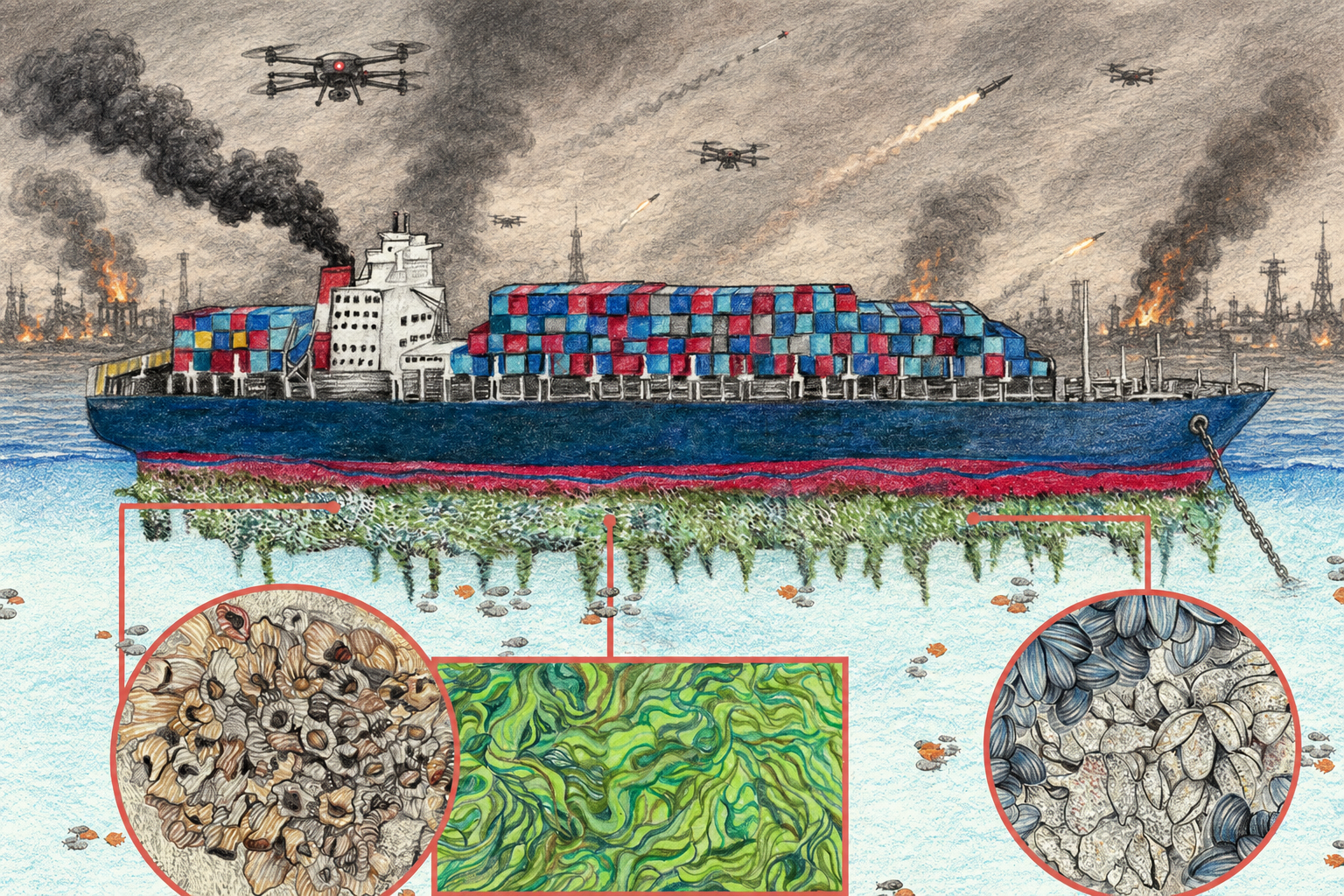
• Idle vessels emerging from the Gulf can carry very different hull conditions depending on coating age, water temperature, salinity, idle exposure and antifouling margin.
• Hull fouling, propeller growth and sea-chest restriction can reduce speed, increase bunker consumption and delay the real return of trapped tonnage into commercial service.
• Operators should separate Baltic armed-vessel risk, Russian LNG sanctions exposure, container-rate pressure and Hormuz hull-performance drag into distinct voyage-risk files.
Strategic Summary & Actions Required
• Masters in the Baltic should maintain wider CPA margins around Russian-linked LNG traffic, preserve AIS, radar, VDR, ECDIS and VHF records, and avoid non-essential close approaches.
• Ship managers and CSO teams should update Baltic transit guidance where Russian commercial vessels may be visibly armed or treated as military-adjacent security risks.
• Charterers, owners and insurers should review sanctions, boarding, deviation, off-hire and war-risk language for Russian LNG fixtures, especially where Arctic LNG 2-linked cargoes or Russian reflagging are involved.
• LNG desks should screen Marshal Vasilevskiy, Arctic Express, Arctic LNG 2-linked movements, Murmansk transshipment activity and Russian-flag changes before cargo acceptance or fixture approval.
• Container desks should review U.S.-bound cargo plans for tariff timing, booking validity, space allocation, detention risk and freight escalation before committing delivery windows.
Operational Status
RED — Armed Russian LNG Carrier / Baltic Boarding-Risk Shift / Arctic LNG 2 Sanctions Movement / Container Freight Pressure
Latest DeepDraft Analysis
Slime or Barnacles? Why Ships Foul Differently in Hormuz
Hormuz delays are now an underwater performance issue. Coating age, idle exposure, slime, barnacles and sea-chest fouling decide whether trapped vessels return cleanly or drag capacity.
Related DeepDraft Articles & Analysis
Sources
OCCRP, Follow the Money, Reuters, gCaptain, Financial Times, The DeepDraft
This update is part of the DeepDraft SITREP series covering developing maritime operational situations.




Leave a Reply