
Hormuz has not reopened to normal trade.
It has entered selective military clearance backed by VBSS, sanctions vetting and full AIS visibility.
1. VBSS Enforcement: Blue Star III Stopped and Released
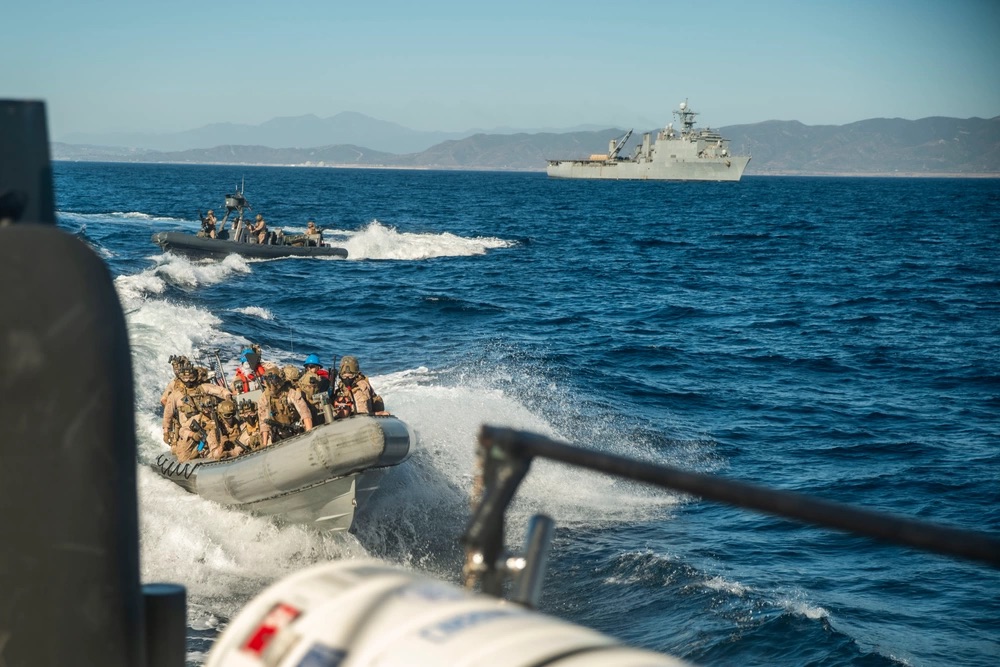
- U.S. Marines from the 31st Marine Expeditionary Unit boarded M/V Blue Star III in the Arabian Sea.
- The Comoros-flagged container ship was suspected of attempting to breach the U.S. blockade of Iranian ports.
- CENTCOM released the vessel after confirming it was bound for Sohar, Oman, not an Iranian terminal.
- The boarding confirms U.S. enforcement now reaches commercial tonnage beyond the Strait itself.
2. Blockade Tally: 39 Vessels Redirected
- 39 vessels have now been redirected by U.S. forces since the enforcement protocol began.
- More than 20 vessels remain immobilized at Chah Bahar as inbound and outbound Iran-linked trade remains blocked.
- Masters should ensure voyage instructions, charter-party orders and ECDIS route notes do not indicate Iranian port intent unless cleared.
- Operators must treat documentary mismatch, AIS gaps or ambiguous destination data as boarding triggers.
3. Selective Reopening: Idemitsu Maru Clears Hormuz
- Idemitsu Maru successfully exited the Strait of Hormuz at 01:35 GST today.
- The Japan-bound crude tanker represents the first clear operational signal of a vetted tanker channel.
- The emerging model is Selective Safety: non-hostile vessels with verified non-Iranian cargo are routed through a USN-secured safe pathway.
- Hormuz traffic remains fragmented, with 19 successful transits recorded in the last 24-hour cycle, mostly outbound.
4. Chabahar and Carbon Exposure Tighten
- The U.S. sanctions waiver for Chabahar Port expired on 26 April 2026.
- India is in active inter-ministerial talks to prevent port equipment, technical support and operations from falling under the blockade net.
- IMO MEPC 84 has moved into the technical working-group phase on Life Cycle Assessment for marine fuels.
- No immediate force majeure ruling exists for loitering, Cape detours or naval vetting delays; CII exposure continues for the 2026 reporting cycle.
Strategic Summary (For Masters & Ship Managers)
Hormuz reopening is conditional, not normalized.
Blue Star III proves commercial vessels can be boarded, searched and released under precision enforcement rules.
Idemitsu Maru proves vetted energy transit is possible, but only with clear cargo origin, destination, AIS visibility and naval coordination.
Chabahar-linked voyages, Gulf of Oman loitering and Cape diversions now require sanctions, bunker, insurance and emissions-impact review before fixture execution.
Operational Status
CRITICAL RED — Precision Enforcement / Selective Hormuz Transit / VBSS, Sanctions and CII Exposure / Full Documentation, AIS Visibility and Naval Coordination Required
DeepDraft Update
Latest Weekly Analysis: https://thedeepdraft.com/2026/04/27/vdes-and-ais-what-actually-changes-on-the-bridge/
Sources
Gulf News, The Week, IMO, The Hindu, CENTCOM, Reuters, AP
This update is part of the DeepDraft Live Wire series covering developing maritime operational situations.



Leave a Reply