
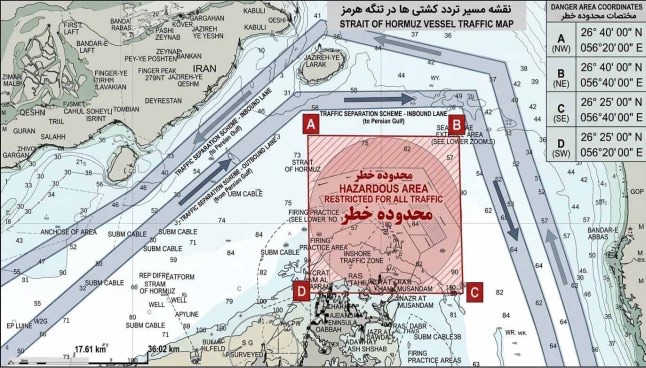
As of April 10, 2026, the Strait of Hormuz has entered a constrained operational phase where physical navigation risks, not legal clearance, are dictating vessel movement, with traffic levels remaining critically suppressed despite the 14-day passage window.
1. Route Shift: Larak Island Split Protocol.
– IRGC Navy has mandated deviation from standard TSS into a split routing around Larak Island.
– Inbound vessels routed north of Larak Island before entering the Gulf.
– Outbound vessels directed south of Larak Island toward the Sea of Oman.
– Central deep-water channel assessed as potential mine exposure zone.
– Littoral routing allows tighter control and monitored “cleared” transit lanes.
2. Traffic Reality: 90% Deficit in Movement.
– Only 10 vessels have transited since ceasefire implementation.
– Traffic levels approximately 90% below normal baseline.
– Gabon-flagged tanker MSG remains only confirmed non-Iranian tanker transit.
– Approximately 3,200 vessels globally impacted, including ~800 tankers awaiting movement.
– Majority of owners holding position pending insured security guarantees.
3. Market & Insurance: War-Risk Deadlock.
– War-risk premiums remain elevated despite ceasefire conditions.
– Underwriters treating Larak routing as high-risk deviation from standard navigation.
– Proposed ~$2 million transit fee by Iran creating chartering uncertainty.
– Oman publicly rejecting toll framework, citing international passage rights.
– Jurisdictional disagreement adding delay to commercial re-entry decisions.
4. Technical Update: UXO Clearing and High-Risk Navigation.
– UXO clearance operations ongoing at Ras Laffan, impacting LNG export normalization.
– New routing brings vessels closer to shore-based assets and restricted zones.
– Bridge teams increasingly dependent on AI-assisted situational awareness.
– Differentiation required between coordinated escorts and non-compliant vessels.
Strategic Summary (For Masters & Ship Managers).
– Treat Hormuz as a mine-risk navigation environment, not a reopened corridor.
– Operate outside standard TSS with strict adherence to Iranian coordination instructions.
– Avoid assumption of safe passage even within declared window.
– Expect continued delays until insurance and routing protocols stabilize.
– Align voyage decisions with confirmed security guarantees, not political announcements.
Operational / Market Status: CRITICAL AMBER – Route: Larak Split Active / Traffic: -90% / Status: Islamabad Summit Day 1.
DeepDraft Analysis (This Week):
GNSS interference and INS as a navigation fallback.
Sources: IRGC Navy Statements, Lloyd’s List Intelligence, UN Reports, Windward Analytics (as of April 10, 2026).
This update is part of the DeepDraft Live Wire series covering developing maritime operational situations.




Leave a Reply