
1. The Great Port Fee War
The U.S. and China started charging new fees on each other’s ships. This “trade tax” made it much more expensive to move goods between the two countries, forcing many shipping companies to change their routes or fleet owners.
2. India’s Port Law Makeover
India passed the Indian Ports Act 2025, throwing out rules from the early 1900s. This new law makes it easier for private companies to invest and allows ports to run faster and with less paperwork.
3. The “Cape” Route Becomes Normal
Because of safety risks in the Red Sea, ships continued to sail around the bottom of Africa (the Cape of Good Hope). By mid-2025, this became the “new normal,” even though it adds about two weeks to the journey.
4. New “Clean Energy” Fines
Europe’s FuelEU Maritime does not impose instant fines on individual port calls.
It sets progressively tightening GHG-intensity limits on energy used onboard ships calling EU ports.
Penalties apply only if ships fail compliance over the reporting period, not simply for using conventional fuel once.
Shore power (cold ironing) is encouraged and mandated only for certain ship types and ports, not universally.
5. India’s $145 Billion Investment
During “India Maritime Week,” the government secured a massive ₹12 lakh crore ($145 billion) in deals. This money is being used to build mega-ports and double the country’s shipping capacity.
6. The Rise of “Smart” Ships
The IMO MASS Code governs Maritime Autonomous Surface Ships, but fully autonomous deep-sea cargo ships are still rare.
What actually emerged in 2025 were high-automation, AI-assisted vessels operating with reduced crews, mainly on short-sea and regional routes in Asia and Europe.
7. A Reality Check for Green Fuels
The industry slowed down its rush into Methanol fuel because it’s currently too expensive and hard to find. Companies are now looking at more practical “bridge fuels” like LNG (liquid gas) to save costs.
8. Port Cyber-Attacks Hit Record Highs
As ports became more digital, they became targets. Several major ports in Europe and the U.S. were hit by ransomware attacks, causing weeks of delays and showing that “smart” ports need better digital locks.
9. India Becomes a Seafarer Superpower
India is firmly among the top 3–4 global suppliers of seafarers, particularly officers.
The claim “one in every eight seafarers” is Indian is aggressive unless tightly sourced.
A safer, defensible phrasing is “one in every eight to ten seafarers”, driven by expanded maritime education capacity and simulator-based training.
10. The World’s First “Green Hydrogen” Ports
Kandla Port, Paradip Port, and Tuticorin Port were designated as Green Hydrogen Hub projects.
They are not operational hydrogen bunkering ports yet.
They represent planned production, storage, and future maritime fuel infrastructure.
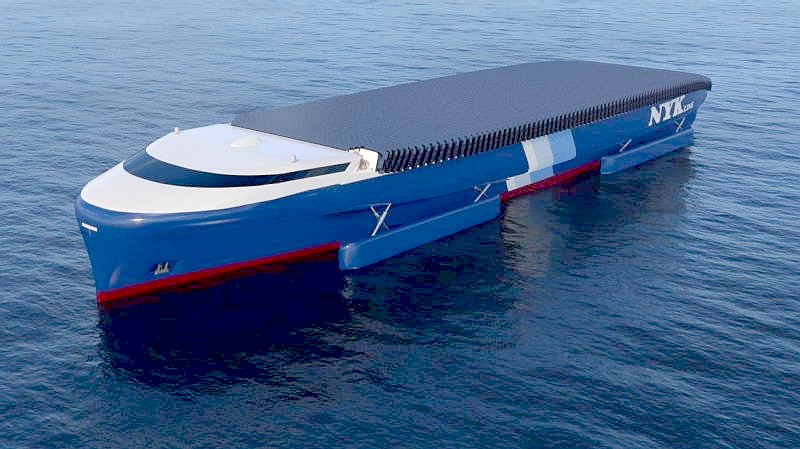
In 2025, the shipping world faced a mix of high-tech upgrades, new environmental rules, and shifting trade routes. Here are the top 10 events of the year
1. The Great Port Fee WarThe U.S. and China started charging new fees on each other’s ships. This “trade tax” made it much more expensive to move goods between the two countries, forcing many shipping companies to change their routes or fleet owners. 2. India’s Port Law MakeoverIndia passed the Indian Ports Act 2025, throwing out…
2–3 minutes

 The Deep Draft
Leave a comment