When people think of seafarers, the image that often comes to mind is of men and women under the open sky, surrounded by endless blue seas and blazing sunlight. It seems logical to assume that such a profession would guarantee sufficient vitamin D, the ‘sunshine vitamin.’ Yet, paradoxically, multiple studies show that seafarers are at disproportionately high risk of deficiency. For crews spending extended periods at sea with limited sunlight exposure, on night watches, wearing protective clothing on deck, or sailing in high latitude regions, natural production is severely restricted. This deficiency carries serious health consequences for seafarers and significant financial implications for shipping companies.
Causes of Vitamin D Deficiency
Several occupational and environmental factors make seafarers vulnerable:
• Engineers spend most working hours inside engine rooms with virtually no sunlight exposure.
• Deck officers spend long hours on bridge watches or paperwork, and when outside are covered in PPE (helmets, coveralls, gloves) that block UV rays.
• High latitude voyages offer little UVB radiation, especially during winter months.
• Shipboard diets are often low in vitamin D, with limited fortified foods or oily fish.
These combined factors mean vitamin D deficiency is not confined to one rank or role, it is a widespread occupational hazard for all seafarers.
Limited direct data exist for merchant crews but health surveys confirm the risk. A German study of European seafarers found that 76% were deficient or insufficient, with around one in four severely deficient. The e-Healthy Ship project reported that most Filipino and Burmese crews consumed diets below recommended vitamin D levels. This is not an isolated finding. Deficiency is now recognized as a widespread occupational hazard across crews of all nationalities, raising direct health and safety concerns.
Health Consequences
Vitamin D is vital for bone strength, muscle function, immunity, and even mental health. The clinical implications are far from theoretical, the vitamin D deficiency translates into tangible health problems at sea:
• Bone loss, osteoporosis, and stress fractures due to impaired calcium absorption.
• Chronic back pain, muscle weakness, and fatigue that reduce work performance.
• Greater vulnerability to respiratory infections such as recurrent colds, bronchitis, or pneumonia, which spread easily onboard.
• Skin and wound-healing problems, including eczema and delayed recovery.
• Mood and sleep disturbances such as low energy, poor rest, and depression like symptoms that compromise safety.
In my own sailing experience, I have seen P&I cases linked to these issues, some requiring costly diversions or crew changes.

Financial Impact on Shipping Companies
Health incidents at sea translate into substantial costs for operators. A single case may involve:
• Voyage deviation: On a VLCC consuming about 70 tonnes/day, even a short six-hour diversion adds ~17.5 tonnes of fuel. At an average bunker price of US$550/tonne, this equals nearly US$10,000 in fuel cost alone.
• Off-hire charges: On a spot charter of US$70,000/day, a six-hour delay translates to roughly US$17,500 in lost earnings excluding consequential charterer claims.
• Port and tug charges: Unscheduled calls require tugs, pilots, and agent fees, adding thousands more.
• Medical and hospital expenses: Evacuations or hospitalizations can run into tens or even hundreds of thousands of dollars, depending on location and severity.
• Crew change costs: Repatriation, escorts, and flying out substitutes create further disruption and expense.
Industry data suggest that a single medical deviation and repatriation can cost upwards of US$180,000 excluding lost time and potential reputational damage with charterers.
Why Vitamin D Deserves the Same Attention as Drug & Alcohol Testing
Shipping places enormous emphasis on drug and alcohol testing because of their immediate impact on safety. Seafarers are regularly tested, and results are enforced without delay.
By contrast, vitamin D deficiency receives little attention, even though it undermines long-term health and adds to costly medical cases. The paradox is clear, strict testing targets short-term risks, while chronic deficiencies are ignored.
In recent years, the industry has also turned its focus to mental health and psychological well-being. While this is a welcome development, the methods often used onboard such as mobile applications, questionnaires, or “gamified” activities can sometimes feel uncomfortable, intrusive, or even stressful for seafarers. These tools can seem oversimplified, and many crew hesitate to share honestly over confidentiality concerns.
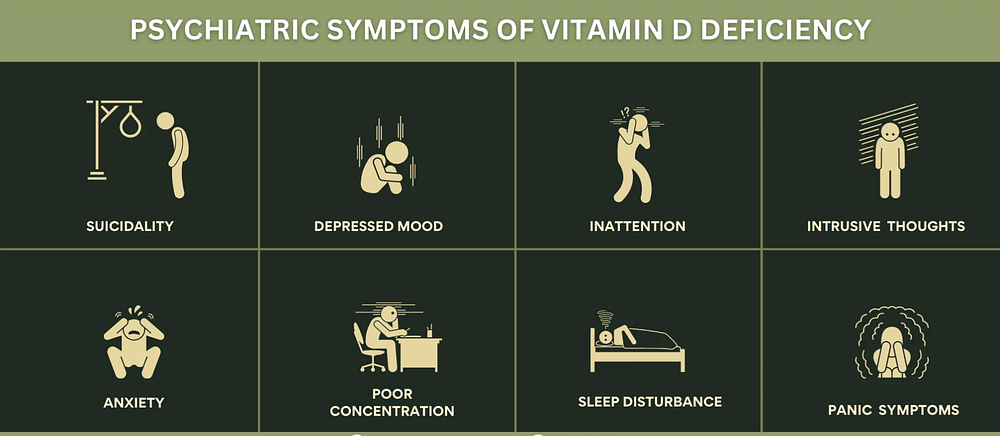
What is often overlooked is that vitamin D itself plays a proven role in mental health. Low levels are associated with low mood, poor sleep, fatigue, and depression-like symptoms, while supplementation in deficient individuals has been shown to improve mood and energy. Unlike invasive apps or forced “games,” vitamin D testing and supplementation offer a straightforward, confidential, and medically sound way to support both physical and psychological well-being.
So while the industry rightly emphasizes mental health, overlooking vitamin D means missing one of the simplest and most effective measures to strengthen the overall resilience of seafarers.
Prevention and Mitigation
Fortunately, prevention is straightforward and cost-effective. Companies can implement practical measures immediately:
• Routine Vitamin D Testing: Incorporate serum 25(OH)D checks into pre-employment and periodic medical exams.
• Supplementation: Provide daily vitamin D (1000–2000 IU) and calcium under medical guidance.
• Nutrition: Ensure fortified foods and vitamin D rich meals are available onboard.
• Awareness: Educate crew about the importance of vitamin D and safe sun exposure during off duty hours.
• Data Tracking: Record P&I medical cases linked to deficiencies to build a stronger business case for preventive programs.
Not all shipping companies provide the same level of resources to crew medical. Until such programs are consistently available, seafarers are encouraged to take personal responsibility by arranging vitamin D testing and preventive measures independently.
Final Recommendation
Given the clear occupational risk, proven health consequences, and heavy operational costs of preventable medical incidents, the shipping industry must act. A simple blood test and supplementation program costs very little compared with the hundreds of thousands lost in a single medical deviation.
Mandatory vitamin D screening and supplementation safeguard seafarers’ health, reduce costly medical incidents, and strengthen operational resilience. In an industry where every dollar and every life counts, this is not optional, it is smart business and the right thing to do
References
- Hjarnoe, L., & Leppin, A. (2013). Health promotion in the Danish maritime setting: challenges and possibilities for changing lifestyle behavior and health among seafarers. BMC Public Health, 13, 1165.
- Oldenburg, M., et al. (2018). Seafarer Nutrition Study (SeaNut): Vitamin D status among European seafarers. Journal of Occupational Medicine and Toxicology, 13(12). University Medical Center Hamburg-Eppendorf.
- Häsler, S., et al. (2020). The e-Healthy Ship study: Cross-sectional analysis of nutrition and health among merchant seafarers. Hamburg University of Applied Sciences.
- Jensen, O.C., et al. (2019). Occupational health challenges for Iranian seafarers. International Maritime Health, 70(2), 87–94.
- Holick, M.F. (2017). The vitamin D deficiency pandemic: Approaches for diagnosis, treatment and prevention. Reviews in Endocrine and Metabolic Disorders, 18(2), 153–165.
 The Deep Draft
Leave a comment