
The maritime risk envelope has expanded beyond the Strait of Hormuz into the Gulf of Oman. A reported strike on a tanker east of Fujairah and continued aerial threats targeting UAE infrastructure confirm that previously used “safe anchorage” zones are now within the active threat perimeter. At the same time, a limited pattern of “selective verification” is emerging, allowing restricted vessel movement under controlled conditions, while regional ports face severe congestion from diverted traffic.
1. Risk Migration: Fujairah Anchorage No Longer Low-Risk
• External incident: UKMTO reporting indicates a tanker was struck approximately 23 nm east of Fujairah, sustaining minor damage. This confirms exposure beyond the Strait itself.
• UAE threat environment: Air defence activity continues across UAE coastal zones, with repeated drone and missile interception events reported.
• Bunkering impact: Fujairah bunkering operations are facing delays as vessels reposition further offshore to reduce exposure to land-based threats.
2. Operational Shift: Emergence of “Verified” Transits
• Restricted movement: Transit volumes remain extremely low, with only a limited number of vessels clearing the Strait under coordinated conditions.
• Screening dynamic: Passage appears increasingly dependent on vessel identity, ownership linkage, and perceived alignment, indicating a controlled access regime.
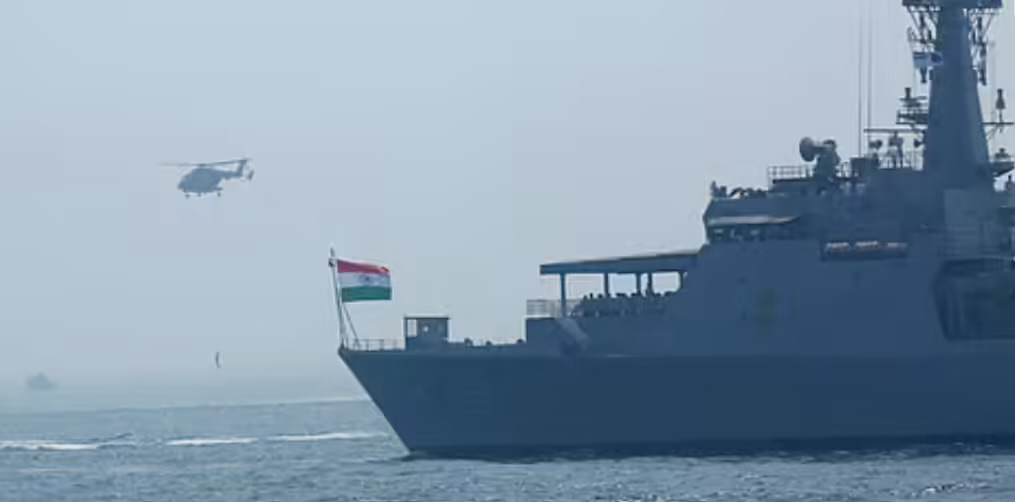
• Recent movements: Indian-flagged LPG carriers (Shivalik, Nanda Devi) have completed escorted transits, demonstrating that state-backed operations remain the most reliable pathway.
3. Logistics Breakdown: Gulf Gateway Saturation
• Khor Fakkan congestion: Terminal capacity has reached saturation, with sustained yard congestion preventing additional cargo inflow.
• Regional spillover: Ports across the region and Indian subcontinent are experiencing elevated congestion and berthing delays due to rerouted cargo.
• Transshipment strain: Colombo and Singapore are absorbing diverted flows, with extended dwell times for Gulf-bound cargo.
4. Market and Regulatory Pressures
• Trade displacement: Continued avoidance of Gulf ports is forcing structural rerouting across global supply chains.
• Capacity stress: Diversions via the Cape and transshipment hubs are tightening available vessel capacity across segments.
• Asset movement: Secondary market activity, including tanker sales, reflects liquidity adjustments amid elevated war-risk costs.
5. Navigation Hazards and Electronic Warfare
• GNSS degradation: High levels of GPS interference and AIS anomalies continue across the Gulf of Oman.
• Position uncertainty: “Ghosting” events are generating unreliable vessel positions, reducing confidence in digital navigation systems.
• Bridge practice: Masters should prioritize radar, visual bearings, and manual cross-checks for positional verification in affected areas.
Strategic Summary for Maritime Stakeholders
Expanded threat perimeter: The operational risk zone now extends well beyond the Strait into Gulf of Oman anchorages, reducing the viability of traditional waiting areas. Controlled access environment: Transit is increasingly governed by selective clearance and state influence rather than open commercial navigation.
Operational Status
EXTREME RISK / GULF OF OMAN EXPOSURE / PORT SATURATION
Sources
UKMTO / IMO / Reuters / Splash 24/7 / Lloyd’s List Intelligence / Windward.AI (March 18, 2026)
This update is part of the DeepDraft Live Wire series covering developing maritime operational situations.



Leave a Reply