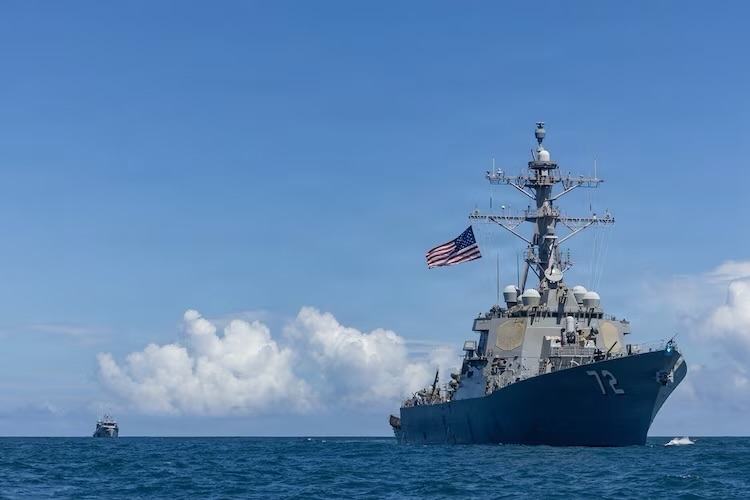
The operational status of the Strait of Hormuz has reached near-total stasis. As of March 16–17, traceable commercial transits have reduced to a minimal trickle, with fewer than six vessels clearing the waterway in a 24-hour period, representing a collapse of over 95% from pre-conflict averages. While the U.S. has activated a $20 billion federal insurance backstop, the transition to sustained escorted transits remains constrained by a widening diplomatic divide, as key allied nations decline participation in a unified naval framework. For Masters and operators, financial mechanisms are now in place, but operational access remains highly restricted.
1. Strait Transit Collapse: Minimal Movement Through Hormuz
• Near-zero activity: Multi-source intelligence (Windward / Lloyd’s List Intelligence) indicates a near standstill in visible commercial traffic, with only six vessels transiting within a 24-hour window.
• Identified movements: Vessels reported clearing the Strait include Nora (Guyana), Karachi (Pakistan), MDL Kamran (Panama), and Anthea (Marshall Islands).
• Operational pattern: Remaining movements are largely linked to non-Western or shadow fleet operators, often transiting under altered AIS profiles or with regional coordination.
2. Sovereign Breakout: Indian Naval Escorts Operational
• Successful transit: The Indian LPG carrier Shivalik (~40,000 MT cargo) has successfully reached Mundra following a naval-escorted transit.
• Ongoing extraction: The tanker Jag Laadki (~81,000 tonnes Murban crude) is currently under escort moving out of the Gulf of Oman.
• Residual exposure: Approximately 22 Indian-flagged vessels remain west of the Strait awaiting coordinated clearance windows.
3. Diplomatic Fracture: Coalition Response Weakens
• Allied hesitation: Japan, Australia, and several European nations have declined participation in the U.S.-led maritime security framework.
• French posture: France has confirmed its Charles de Gaulle carrier group will maintain a defensive stance in the Eastern Mediterranean rather than participate in Hormuz escort operations.
• Operational implication: The absence of a unified coalition is delaying the scale-up of escort corridors and limiting confidence for commercial operators.
4. Seafarer Safety and Humanitarian Pressure
• Fatalities: Verified reports indicate 20 seafarers killed or missing across multiple vessel incidents since February 28.
• Stranded crews: Approximately 20,000 seafarers remain aboard around 600 vessels across the Persian Gulf.
• Risk concentration: Prolonged anchorage in a kinetic environment is increasing exposure to both direct strike risk and fatigue-related operational hazards.
5. Navigation Hazards and Electronic Warfare
• GNSS disruption: Maritime intelligence indicates a 55% surge in GPS jamming, affecting more than 1,650 vessels.
• AIS anomalies: Persistent spoofing and “ghosting” are distorting vessel positions, complicating situational awareness.
• Bridge impact: Masters should expect degraded positional reliability and increased dependence on radar, visual, and manual cross-check navigation.
Strategic Summary for Maritime Stakeholders
Selective access regime: Only vessels backed by state-level naval protection or diplomatic clearance are currently achieving transit. Independent commercial movement remains effectively non-viable. Escort execution gap: A clear lag exists between financial instruments (insurance backstops) and physical escort implementation. Vessels at anchor should plan for extended waiting periods and sustainment readiness.
Operational Status
EXTREME RISK / LIMITED SOVEREIGN TRANSITS / COALITION FRAGMENTED
Sources
UKMTO advisories / IMO circulars / Lloyd’s List Intelligence / Reuters / ANI / Windward.AI (March 17, 2026)
This update is part of the DeepDraft Live Wire series covering developing maritime operational situations.


Leave a Reply