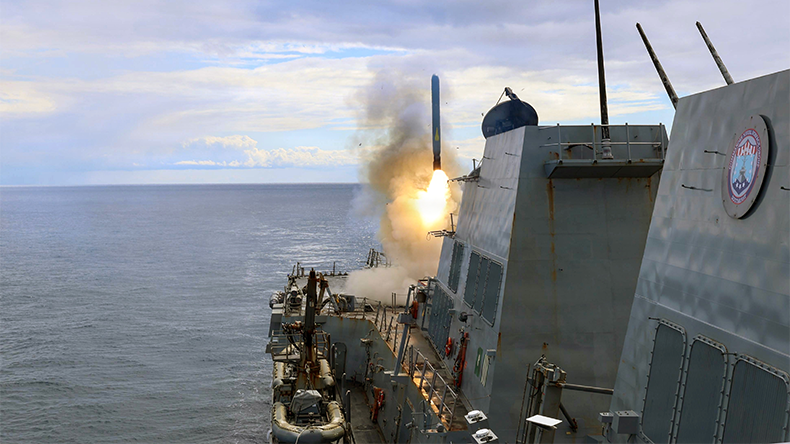
Update Note – 11 Mar 2026 – The analysis addressed independent “dark transit” decisions by commercial operators. Military-coordinated escort operations operate under a different risk structure, where navigation and situational awareness are managed by naval command systems.
The Current Context: Hormuz Under Escalation
The Strait of Hormuz is once again under active military escalation. The physical geography remains, but the operating climate has transformed. Since recent hostilities began around February 28, up to eight commercial vessels have been struck inside the Gulf. Transit volumes have collapsed by over 90 percent, leaving over 150 tankers anchored outside the chokepoint awaiting clarity. Approximately 9 percent of the mainstream VLCC fleet is trapped north of the Strait.
Simultaneously, war risk underwriters have issued cancellation notices, and VLCC freight has surged past $420,000 per day. In direct response, President Trump declared on social media that the U.S. will provide financial guarantees and potential Navy escorts. However, a political directive is not an instant tactical shield.
While no declared blockade seals the corridor, the waterway operates under explicit military threats. Traffic density has plummeted, shifting the environment from congestion management to militarised uncertainty.
Consequently, some owners are reportedly considering night transits with AIS intentionally disabled, a practice often called “dark transit.” This choice carries consequences far beyond bridge navigation.
To understand why, the industry must revisit the 1980s Tanker War, which fundamentally reshaped how maritime risk is allocated, insured, and absorbed.

The Structural Shift Since the 1980s
While the physical threat profile like the anti-ship missiles, and fast-attack craft largely mirrors the 1980s, the structure of modern navigation is materially different.
During the Tanker War, manual navigation (radar plotting, visual bearings, dead reckoning) was the normal condition, not a contingency. Traffic was managed procedurally, without GNSS dependency, ECDIS integration, or automated CPA/TCPA prediction architectures.
Today’s bridge relies on GNSS, AIS, and ECDIS integration for continuous positional data and collision avoidance. These systems unquestionably enhance safety in stable conditions, but they also deep interdependence. When GNSS integrity degrades through jamming or spoofing, the failure propagates: ECDIS overlays become suspect, CPA predictions lose reliability, and AIS identity data is compromised.
Competent bridge teams can still revert to manual cross-verification, but the architecture has flipped. In the 1980s, manual navigation was the primary mode; today, it is the fallback. That distinction defines the modern margin of resilience.

Deliberately disabling AIS removes a cooperative layer that modern vessels depend upon. SOLAS Regulation V/19 allows temporary suspension for acute security threats, but does not redefine AIS as optional when commercial incentives rise.
Critics may argue that in an environment plagued by spoofing, AIS is inherently unreliable anyway. This fundamentally misunderstands crisis bridge management. Spoofing degrades positional accuracy, the “where”, but AIS provides the “who”. Maintaining an AIS broadcast gives nearby bridge teams a verified identity to hail on VHF and correlate with radar targets. Deliberately going dark removes this cooperative identification layer and complicates traffic awareness in an already degraded environment.
Furthermore, AIS silence can also complicate coordination with naval forces providing regional overwatch. Naval coalitions rely on cooperative tracking for rapid overwatch; a dark vessel delays its own rescue. Commercially, disabling AIS without an imminent, localized threat risks catastrophic legal liability and voided P&I cover.
Crucially, hostile actors rely on multiple detection systems that do not depend on AIS transmission. Surface search radar, infrared sensors, and electronic intelligence can detect large vessels at sea. Satellite surveillance, including synthetic aperture radar (SAR), can identify ships through cloud cover and at night. AIS silence therefore does not create invisibility. It removes cooperative transparency while leaving the vessel detectable across several independent sensing systems.

The Information Shift: Visibility as Operational Pressure
The 1980s conflict unfolded within a slower information cycle, featuring delayed market reactions and longer decision windows. That world no longer exists.
Today, vessel movements are visible in near real-time through satellite AIS, commercial intelligence, and open-source networks. A strike, a spoofed position, or a sudden AIS gap circulates globally within minutes. The operating environment is shaped not only by weapons, but by visibility.
AIS silence only produces scrutiny. When a vessel disappears from cooperative tracking in a conflict zone, the absence itself becomes a signal. Charterers, insurers, and compliance desks monitor anomalies algorithmically, allowing underwriters to reassess exposure long before official investigations conclude.
Furthermore, vessels increasingly alter AIS static fields (such as broadcasting “MUSLIMS ON-BOARD”) to signal non-hostility. These unverified free-text entries offer no true protection. They merely highlight the erosion of data integrity, co-opting a cooperative transparency system into an unreliable signaling instrument that invites external scrutiny.
Real-time visibility also radically alters the human dimension. Crews receive updates on personal devices before formal company advisories, and families track anomalies online. In the 1980s, communication latency insulated crews; today, continuous digital exposure tests both technical seamanship and bridge leadership.
The conflict is no longer confined to the water. It exists in the data stream.

Regulatory and State Oversight
Modern transits through declared high-risk corridors take place under extensive institutional monitoring.
Flag administrations, maritime regulators, coastal authorities, and security agencies track vessel movements through integrated digital monitoring systems.
Advisories are issued rapidly, and high-risk routing decisions are not merely noted—they are, in certain circumstances, actively questioned.
In the 1980s, operational discretion at sea was broader once a vessel cleared port limits. Today, AIS anomalies, deviation from recommended corridors and routing through declared high-risk zones becomes compliance data points.
Regulatory oversight does not prevent navigation. It elevates accountability.
The modern master sails not only through water, but through an ecosystem of observation.

The Financial Illusion
Freight at $420,000 per day is compelling. It signals scarcity. It attracts attention.
But freight is incremental revenue. Capital exposure is absolute.
A modern VLCC represents roughly $150 million in asset value. When an owner considers a transit, they must distinguish between the “actuarial risk” and the “potential loss.” A 2% strike probability per transit yields an expected capital exposure of $3 million, a figure that effectively wipes out the “bonus” earned from ten days of elevated freight.
However, the actual value at risk is far higher. A strike doesn’t just cost $3 million; it risks the $150 million asset, the receipt value of the cargo, and massive liabilities for pollution, wreck removal, and fatalities. These catastrophic costs do not scale linearly with freight income.
As of the day of writing, major P&I clubs like Skuld have canceled war risk cover. Exposure has migrated directly to the owner’s balance sheet. While the U.S. administration’s pledge of insurance support attempts to plug this gap, state funds cannot prevent kinetic strikes. Freight markets respond to scarcity. Insurance markets respond to probability.
A rate of $420,000 per day reflects constrained supply. It does not neutralise catastrophic loss.

Commercial Pressure and Risk Allocation
Transit decisions in conflict zones rarely arise in isolation. They sit at the intersection of operational judgment, charterparty obligations, and insurance conditions.
Modern charter-parties contain war risk clauses, deviation provisions, and safe port warranties that directly influence routing decisions. When freight surges, commercial pressure intensifies, laycans tighten, and supply constraints shift bargaining power.
The decision to proceed becomes both operational and contractual. Where war risk cover has been withdrawn or materially repriced, electing to proceed without explicit endorsement transfers exposure asymmetrically to the owner. The economics of boldness must be evaluated against clause wording, not market headlines.
Ultimately, a miscalculation here does not just damage a vessel; it creates a “blast radius” of liability that attaches to the entire enterprise.

The Enduring Lesson
The Tanker War established a durable principle: sustained commercial operations in hostile maritime corridors require structured sovereign protection. In the 1980s, the turning point wasn’t a change in shipowner tactics; it was the implementation of organized convoys that redistributed exposure and stabilized trade through institutional coordination.
The ambiguity of the current crisis creates a dangerous financial illusion. Freight scarcity signals opportunity, while insurance withdrawal signals a concentration of risk. These signals are not equivalent.
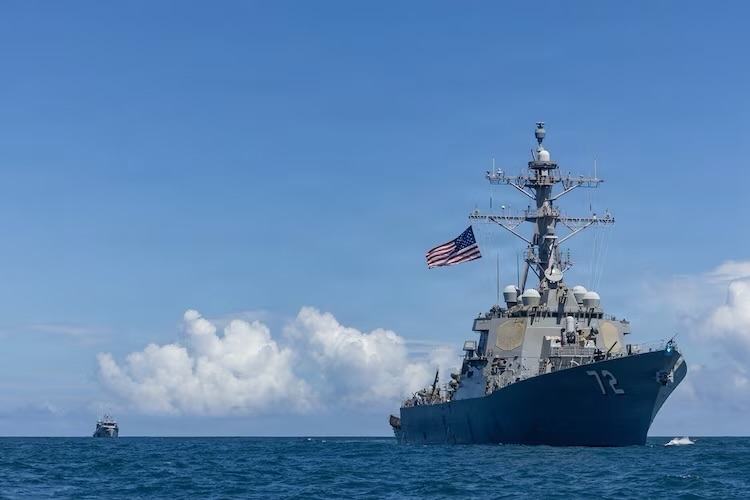
The “structure” the industry is waiting for and what President Trump’s recent declarations regarding Navy escorts attempt to signal, is the move back toward collective security. Until that shield is physically present, a “dark transit” is not an act of tactical brilliance; it is a gamble that converts professional operational judgment into total enterprise exposure.
The lesson from the 1980s was never about the courage of individual Masters or the boldness of owners. It was about the necessity of a state-backed framework to absorb the risks that private markets cannot.

Without that structure, unmanaged exposure does not merely affect a single voyage. It reshapes the very foundations of ship ownership.
Video Section
Sources: Reuters reporting; Baltic Exchange tanker market assessments; AIS vessel tracking platforms; public statement by U.S. President Donald Trump.



Leave a Reply