
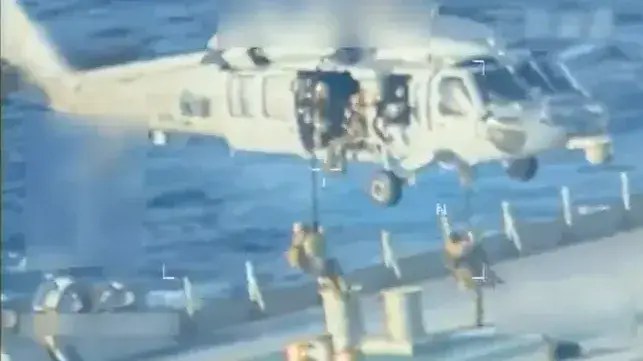
U.S. forces are continuing intensive maritime interdiction activity targeting tankers linked to sanctioned Venezuelan oil exports, forming part of an expanded naval enforcement posture in the Caribbean and Atlantic following earlier sanctions operations.
Recent Seizures and Interdictions
- Olina (Jan 9, 2026): The U.S. Coast Guard and military personnel seized the Aframax tanker Olina in the Caribbean Sea during a pre-dawn interdiction, marking the fifth tanker apprehended in recent weeks under ongoing enforcement of oil sanctions.
- Marinera (Jan 7, 2026): A Russian-flagged tanker previously tracked across the North Atlantic was boarded and seized after law enforcement cited sanctions violations.
- M/T Sophia (Jan 7, 2026): U.S. forces intercepted and took control of this Venezuela-linked tanker in Caribbean waters as part of the same campaign.
- Earlier Seizures: Tankers Skipper and Centuries were detained in late December 2025, with both vessels anchored off the U.S. Gulf coast after interdiction.
These operations reflect sustained efforts to enforce sanctions and disrupt oil shipments by vessels that have been identified by enforcement agencies as attempting to evade monitoring and compliance regimes.
Maritime Enforcement Posture
U.S. naval and Coast Guard assets, including carrier-based task elements, are actively involved in interception and boarding operations. Deployment patterns suggest coordinated surveillance and boarding actions across multiple oceanic regions, with a particular focus on sanctioned supply chains.
Officials have emphasised that interdicted vessels were operating in international waters and attempting to transit to or from Venezuelan export zones without complying with sanctions and maritime documentation standards. The frequency of tankers intercepted has increased over the past several weeks, underscoring enforcement intensity.
Operational and Market Implications
- Tanker routing and compliance: Owners, charterers, and brokers are reassessing exposure for tankers with historical or suspected links to Venezuelan cargoes, particularly those showing irregular AIS behaviour, mixed voyage patterns, or ambiguous flag registration.
- Insurance and risk: Ship insurers and P&I Clubs are reviewing war-risk and sanction-exposure terms for tankers operating in the Caribbean and Atlantic to align with evolving enforcement practices.
- Port and logistical decisions: Gulf and Caribbean ports are adjusting pilotage, berthing, and customs clearances in response to interdicted vessels arriving under escort or detention.
Bottom line:
Maritime enforcement related to Venezuelan oil sanctions is active and expanding, with multiple tankers seized in the past several weeks. This operation underscores heightened risk for non-compliant shipments and reflects evolving enforcement norms in sanctioned maritime trades.
 The Deep Draft
Leave a comment