
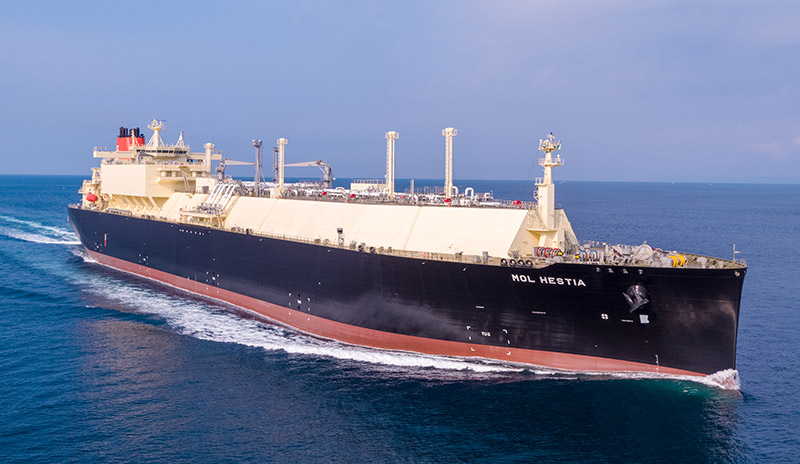
The United States has crossed a historic threshold in global LNG trade, becoming the first country to surpass 100 million metric tonnes of LNG exports in a single calendar year.
Preliminary industry estimates for 2025 place U.S. LNG exports at around 110–112 mmt, representing a year-on-year increase of roughly 20–25%. The surge has widened the gap between the U.S. and other leading exporters, including Qatar and Australia, and reshaped global LNG shipping patterns.
Capacity Expansion Driving Volumes
The growth was driven by the rapid ramp-up of new liquefaction capacity and sustained high utilisation at existing terminals.
- Venture Global’s Plaquemines LNG project in Louisiana contributed up to ~16 mmt during its ramp-up phase.
- Established terminals such as Sabine Pass and Corpus Christi operated close to nameplate capacity for much of the year.
In less than a decade, the U.S. has moved from zero LNG exports to supplying roughly one-quarter of global seaborne LNG trade, an expansion widely regarded as unprecedented in scale and speed.
FOB Model and Shipping Impact
A key differentiator remains the U.S. free-on-board (FOB) commercial model, which allows buyers to control destination and shipping. This has increased:
- Spot trading flexibility
- Tonne-mile demand
- Exposure of LNG shipping rates to regional price signals
For shipowners, U.S. LNG continues to be a primary driver of fleet utilisation and voyage diversity.
Europe Dominates Destination Mix
Europe remained the largest destination for U.S. LNG in 2025 as the region continued to reduce reliance on Russian pipeline gas. Winter demand was particularly strong, with heavy liftings toward the end of the year.
Emerging buyers, including Turkey and Egypt, also increased intake to manage regional supply risks.
Outlook
With Golden Pass LNG and further modular expansions scheduled to progress in 2026, U.S. LNG export capacity could approach double current levels by the end of the decade.
For maritime markets, this cements the U.S. as the core driver of LNG shipping demand, route flexibility, and spot charter volatility.
 The Deep Draft
Leave a comment