Incident Detail
After completion of the cargo operation and carrying out the mandated pre-departure checks, the pilot boarded the vessel at berth East 9 at 18:45 hours. The ship commenced unmooring at 18:55 hours and by 19:05 the vessel was clear of the berth. Proceeding outward the ship was turned inside the harbour under pilot advice and lined up to proceed out through the South and West breakwaters. Once the ship was lined up and on a course of 238º the pilot handed the con to the Master and advised that he would disembark. The pilot disembarked at 19:16 just before the ship passed between the breakwaters.
With the Chief Officer returning to the bridge after supervising the disembarkation of the pilot, the Master telephoned the Engine room and advised the Chief Engineer of the situation and agreed the time for Full away on passage. Speed was increased and as the ship was already proceeding at a speed between 6 and 7 knots, the bow thruster was switched off and the Chief Officer requested to shut down three of the four Framo hydraulic power packs, leaving one running to enable the crew to finish securing the ship for sea.
With the ship now increasing speed and moving parallel with the west breakwater, the Master decided to shut down one steering motor and switches off No.1 steering motor. The ship at this time was moving at a speed of about 8½ knots. Shortly thereafter, the helmsman reported that the steering was not working and the ship is sheering to starboard. The master thought that having switched off one steering motor, the manual steering has completely failed. He then switched no.1 steering motor back on and ordered hard to port helm. He then instructed the Chief Officer to re-start the Framo hydraulic power packs in order to re-start the bow- thruster. The helms-man advised that there was no steeering. At this point he attempted to engage automatic steering in order to override the manual steering. The automatic steering failed to engage due to the discrepancy between the actual helm position and the required automatic steering helm position and manual steering was engaged again. The helm was ordered amidships and the telegraph was moved to 100% astern pitch and ordered the forecastle deck too be cleared by the forward mooring station personnnel.
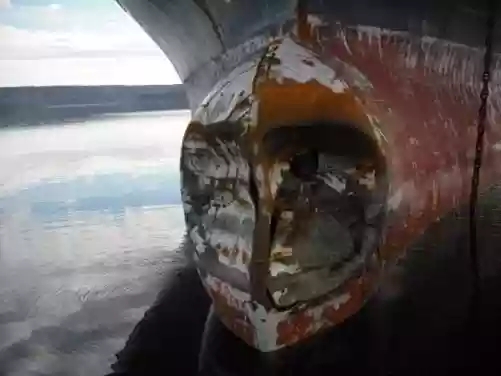
Shortly after with the ship swinging to starboard the ship contacted the west break water at approximately 19:22 hours, at a speed of about 3 knots bow on and almost immediately rebound off the breakwater. With the bow thruster restarted and the ship moving slowly astern coming of the point off contact with the breakwater the ship’ s bow was maneouvred to port using the bow thruster. Once the ship’s bow was clear off the breakwater, the ship heading away from the breakwater; astern pitch was reduced and eventually set to zero before once again increasing to ahead pitch and with the steering now restored the ship was maneouvred around and passed the breakwater head and out to the number one anchhorage, where the ship was annchored.
Findings
The maker of the steering ggar has attended the vessel to check for any anomalous function. The investigation carried out on the steering gear by Rolls-Royce showed the steering systeem was working and is fully functional.
This was backed up by the examination of the Voyage Data Recorder (VDR). The VDR has also shown that the steering gear was fully operational throughout the incident.
The inccident occurred due to a misunderstanding betweeen the Helmsman and the Master. The Helmsman was of the understanding that the Master had switched steering mode to autopilot. The Master had in fact switched off one of the steering gear pumps and not switched to auto pilot. This was not commmunicated to the bridge team.
When the helmsman was giving order to turn the vessel to port too steer a course of 238°, the rudder did respond however not as fast as expected under the action of single steering motor running. Rather than waiting for the ruddder to turn he put the helm amidships and reported “No steering””.
When the order to steer a course of 238° was given the vessel was swinging slowly to starbboard. Since the Master believed that steering was lost, he decided to take the speed off the vessel to reduce the impact and damage due hitting the breakwater.
Astern propulsion accentuated vessel’s swing to starboaard and before all way could be taken off, vesssel hit the breakwater.
All equipments were in good working order at all times.
The Root cause of the incident has been attributed to human errror as a result of failed communication betweeen the individuals of the bridge team. The vessel did not lose steering but the Helmsman assumed the steering was lost beecause he was not informed one steering gear pump was switched off.
Conclusion
This incident could have been avoided had the communication on the bridge been in accordance with best practice.
1. The Master did not inform the bridge team of his intention nor of his action. 2. The C/O did not at any point during the departure and harbour transit to sea involve himself in the navigation of the vessel.
3. The helmsman assumed the auto pilot was engaged and did not communicate effectively with the Master.
ShipHappens !!
 The Deep Draft
Leave a comment