
We have witnessed lots of Incidents/Accidents due to improper use of Power tools and we need to address and ensure all persons are aware of some basic Do’s and Don’ts.

Hand tools:
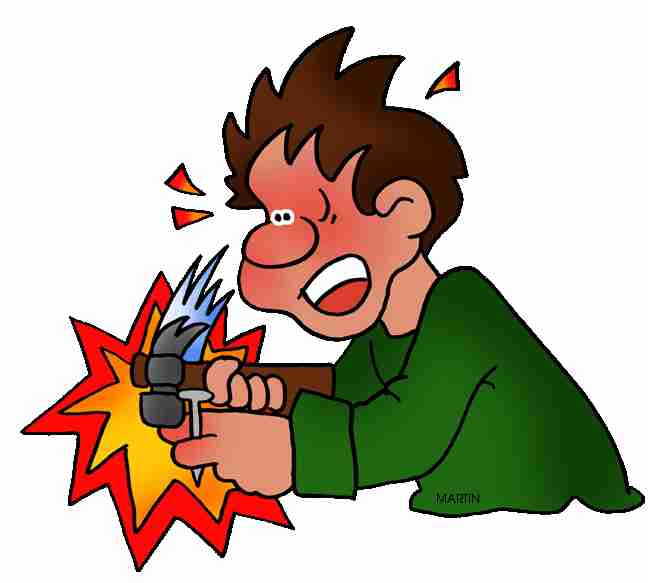
Hand tools are tools that are powered manually. Hand tools include anything from axes to wrenches. The greatest hazards posed by hand tools result from misuse and improper
maintenance.
Some examples include the following:
• If a chisel is used as a screwdriver, the tip of the chisel may break and fly off, hitting the user or other crew.
• If a wooden handle on a tool, such as a hammer or an axe, is loose, splintered, or
cracked, the head of the tool may fly off and strike the user or other crew.
• If the jaws of a wrench are sprung, the wrench might slip.
• If impact tools such as chisels, wedges, or drift pins have mushroomed heads, the
heads might shatter on impact, sending sharp fragments flying toward the user or other crew.
The following safety measures shall be complied with by crew using hand tools –
• The crew is responsible for the safe condition of tools and equipment used by him/ her.
• They shall not issue or permit the use of unsafe hand tools.
• Users should be trained in the proper use and handling of tools and equipment.
• Crew, when using saw blades, knives, or other tools, should direct the tools away from aisle areas and away from other members of the crew working in close proximity.
• Knives and scissors must be sharp; dull tools can cause more hazards than sharp ones.
• Cracked saw blades must be removed from service.
• Wrenches must not be used when jaws are sprung to the point that slippage occurs.
• Impact tools such as drift pins, wedges, and chisels must be kept free of mushroomed heads. • The wooden handles of tools must not be splintered.
• Iron or steel hand tools may produce sparks that can be an ignition source around
flammable substances. Where this hazard exists, spark-resistant tools made of nonferrous materials should be used where flammable gases, highly volatile liquids, and
other explosive substances are stored or used.
• Appropriate personal protective equipment such as safety goggles and gloves must
be worn to protect against hazards that may be encountered while using hand tools.
• Workplace floors shall be kept as clean and dry as possible to prevent accidental slips
with or around dangerous hand tools.
Power Tools:
The types of power tools are determined by their power source: electric, pneumatic, liquid fuel, hydraulic, and powder-actuated. On board vessel we mostly have Electric, Pneumatic & hydraulic power tools.
Standard Precautions for Power tools:
• Never carry a tool by the cord or hose.
• Never yank the cord or the hose to disconnect it from the receptacle.
• Keep cords and hoses away from heat, oil, and sharp edges.
• Disconnect tools when not using them, before servicing and cleaning them, and
when changing accessories such as blades, bits, and cutters.
• Keep all people not involved with the work at a safe distance from the work area.
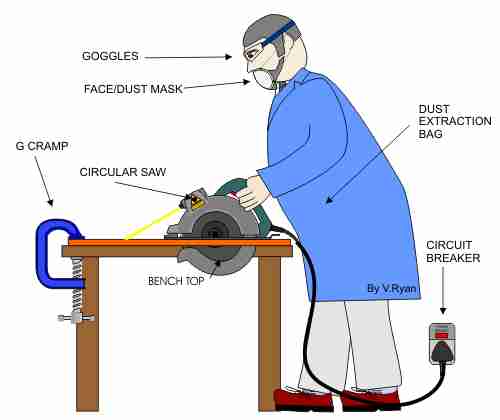
• Secure work with clamps or a vise, freeing both hands to operate the tool.
• Avoid accidental starting. Do not hold fingers on the switch button while carrying a
plugged-in tool.
• Maintain tools with care; keep them sharp and clean for best performance.
• Follow instructions in the user’s manual for lubricating and changing accessories.
• Be sure to keep good footing and maintain good balance when operating power
tools.
• Wear proper apparel for the task. Loose clothing, ties, or jewelry can become caught
in moving parts.
• Remove all damaged portable electric tools from use and tag them: “Do Not Use.
The exposed moving parts of power tools need to be safeguarded. Belts, gears, shafts,
pulleys, sprockets, spindles, drums, flywheels, chains, or other reciprocating, rotating, or
moving parts of equipment must be guarded. Machine guards, as appropriate, must be provided to protect the operator and others from the following:
• Point of operation.
• In-running nip points.
• Rotating parts.
• Flying chips and sparks.
Power tools must be fitted with guards and safety switches; they are extremely hazardous when used improperly. The types of power tools are determined by their power source; electric, pneumatic, liquid fuel, hydraulic, and powder-actuated. On Board we have mostly electric, Pneumatic and Hydraulic Powered tools.
Pneumatic Tools:
Pneumatic tools are powered by compressed air and include chippers, drills, hammers,
sanders, drills etc
There are several dangers associated with the use of pneumatic tools.
• First and foremost is the danger of getting hit by one of the tool’s attachments or by
some kind of fastener the worker is using with the tool.
• Pneumatic tools must be checked to see that the tools are fastened securely to the
air hose to prevent them from becoming disconnected. A short wire or positive
locking device attaching the air hose to the tool must also be used and will serve as
an added safeguard.
• When using pneumatic tools, a safety clip or retainer must be installed to prevent
attachments such as chisels on a chipping hammer from being ejected during tool
operation
• Eye protection is required, and head and face protection is recommended for
employees working with pneumatic tools.
• Compressed air guns should never be pointed toward anyone. Workers should never
“dead-end” them against themselves or anyone else. • Use of heavy jackhammers can cause fatigue and strains. Heavy rubber grips reduce
these effects by providing a secure handhold.
• Workers operating a jackhammer must wear safety glasses and safety shoes that
protect them against injury if the jackhammer slips or falls. A face shield also should
be used.
• Noise is another hazard associated with pneumatic tools. Working with noisy tools
such as jackhammers requires proper, effective use of appropriate hearing
protection.
Portable Abrasive Tools:
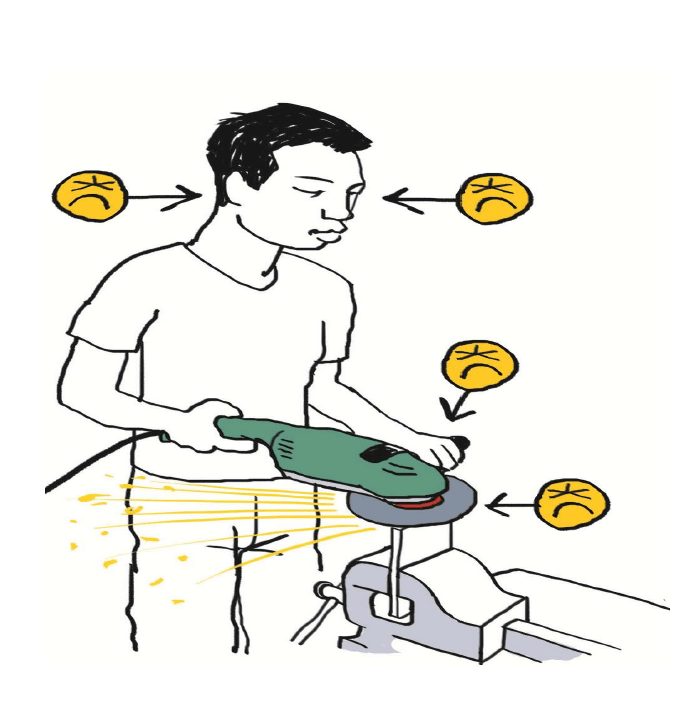
These tools are used for grinding; cutting, polishing; and wire buffing wheels create special safety problems because they may throw off flying fragments. Abrasive wheel tools must be equipped with guards that:
• Cover the spindle end, nut, and flange projections.
• Maintain proper alignment with the wheel.
• Do not exceed the strength of the fastenings.
When using a powered grinder:
• Always use eye or face protection.
• Turn off the power when not in use.
• Never clamp a hand-held grinder in a vise.
Electric Tools:
Personnel using electric tools must be aware of several dangers. Among the most serious
hazards are Electric Burns and Shocks. Even a small amount of current can lead to
fibrillation of the heart and death. It may also lead to a fatality resulting from the reflex of a shock, viz. fall if working on ladder or aloft.
To protect the user from shock and burns –
• Electric tools must have a 3-wire cord with a ground.
• Be plugged into a grounded receptacle
• Be double insulated or powered by a low voltage isolation transformer
The following general practices should be followed when using electric tools:
• Operate electric tools within their design limitations
• Use gloves and appropriate safety footwear when using electric tools
• Store electric tools in a dry place when not in use.
• Do not use electric tools in damp and wet locations unless they are approved for that
purpose.
• Keep work areas well lit when operating electric tools.
• Ensure that cords from electric tools do not present a tripping hazard.
Hydraulic Power Tools:
A hydraulic tool is one which is operated and effected by the action of water or other low
viscosity fluid. The fluid used in the hydraulic tools must be of fire-resistant type and must retain its operating characteristics at the most extreme temperatures to which it will be exposed.
The manufacturer’s recommended safe operating pressure must not be exceeded for
• Hoses
• Valves
• Pipes
• Filters
• Other fittings in the system.
Jacks are portable devices for lifting heavy loads through a short distance. Please check the following prior using the jack –
• They must have a stop indicator.
• Load limit should be marked prominently on the jack.
The following safety measures should be considered while using a jack –
• Stop limit must not be exceeded
• The load limit must not be exceeded
• It should never be used to support lifted load.
To set up a jack, make certain of the following –
• The base of the jack should rest on a firm and level surface
• The jack is correctly centered.
• The jack head bears against a level surface
• The lift force is applied evenly
Proper maintenance of jacks is essential for safety. All jacks must be lubricated regularly. In addition the jack must be inspected periodically according to a schedule governed by the nature of work used for.
General Requirements of Safety in Workshop
The following rules apply to all workshop personnel, whether they are regular users of the workshop or just occasional users:
• Keep the workshop clean and tidy at all times;
• Always seek instruction before using an unfamiliar piece of equipment;
• Only use tools and machines for their intended purpose;
• Report all damaged equipment and do not use it until it has been repaired by a
qualified person;
• Where machine guards are provide they must be kept in place;
• Never distract the attention of another staff member when that person is operating
equipment and never indulge in horseplay;
• Always use the appropriate Personal Protective Equipments and
check that they are clean, suitable, fitting well and in good condition before
and after use;
• Long hair needs to be restrained by either a tie or hat;
• Never use compressed air for cleaning clothing and machinery;
• Report all hazards and unsafe conditions and work practices.
It is the responsibility of the officer in charge of the workshop to ensure that users of the
workshop only occasionally adopt the same safety precautions and procedures as regular workshop users.
Machinery Installation
• Manufacturers of machine tools incorporate various safety features many of which
concern the safety of the machine itself.
• Each machine should be inspected prior to commencement of work to ensure that all
guards are correctly fitted. • Machinery, plant and equipment should have sufficient space around them and
provided with safe footholds around an individual machine to allow for normal
operation, adjustment and ordinary repairs.
Machine Controls
Machine controls should be in accordance with the following requirements:
• Start-stop controls of the push button type easily visible, readily accessible and
incorporating both no-volt and overload release;
• Start buttons should be shrouded or recessed, colored green and the word START
shall be indicated on or near the button. Starting levers and handles should have a
provision for automatic retention in the “off” position;
• Stop buttons shall be long, easy to locate, colored red and clearly marked with an
identifying symbol or the word STOP. Each machine shall have a stop control for
disconnecting power and the control should be readily and safely accessible to the
operator from the normal operating position;
• Emergency stop buttons of the mushroom-head type, prominently and suitably
labeled, should be installed at selected positions so that pressing any one of the
buttons will immediately operate the circuit breaker and disconnect the supply from
the machines.
Drilling Machines
• A properly designed drift should be used to remove tapered drills or chucks from the
spindle. Fixtures, machine vices or workpieces should be clamped to the table or set
against stop bars. Strip material or non-ferrous material should not be drilled unless
it is securely clamped or held against a stop.
• When the flutes of a drill become choked with swarf, the machine must be stopped
before the swarf is removed. Hinged guards should be provided to completely
enclose the upper part of the drill spindle, pulleys and belt drives.
• Operators need to be aware of the danger of leaving chuck keys in the chuck after
removing or replacing a drill.
Lathes
• All controls must be in the neutral position before the lathe is started and the
isolating switch must be off while adjustments are made to the machine e.g. gear
changing, when the machine is not in use, or to remove swarf.
• Chuck jaws, centres and retaining screws should be maintained in good condition
and tools, measuring instruments or any other object should not be kept on the
moving saddle, lathe bed or head stock.
• For capstan lathes, stock bar guards should be provided and kept adjusted so that
the bar stock does not project beyond the limits of the guard. The chuck face-plate
or other holding device should be effectively guarded where practicable.

Milling Machines
Operators of milling machines should observe the following:
• exercise care when using fast traverse levers in order to avoid running the job into
the cutter and never attempt to remove the arbor nut by applying power to the
machine;
• clamp the job or vice firmly on the table before starting the machine, and, where
necessary, to provide steady supports to prevent vibration;
• the use of the correct type of handling equipment when heavy cutters are involved
and the use of a chip guard when a fly cutter is used;
• When an unguarded cutter is in motion, the hands and fingers must be kept well
away from the cutters.
Metal-Cutting Guillotines
The following requirements apply to the safe use of metal-cutting guillotines:
• Guards must be provided to prevent the operator’s fingers from contacting the knife
or clamp from either the front or rear of the machine.
• Only one person should be allowed to operate the machine at the one time and
where long material is being cut and cannot be adequately supported by the work
table, additional supports should be provided.
• A hand-operated guillotine should be made inoperative when not in use either by
removal of the handle or by the use of a locking or similar device. • The shear edges of the blades should be maintained in good condition and blade
clearance must be adjusted in accordance with the manufacturer’s recommendation
appropriate to the thickness of the material being cut.
• Waste scrap metal provides a hazard for the hands and protective gloves should be
worn when the metal is handled. A container should be provided for waste material
from the guillotine.
Power Hacksaws
• An automatic knock-off switch should be used at all times and a regular check should
be carried out to ensure it is in good order.
• The work must be secured, adequately supported and the length of any overhang
should be clearly indicated to avoid it being a hazard to any other person.
ShipHappens !! Be Safe !
 The Deep Draft
Leave a comment