
NARRATIVE
When due for her annual overhaul, a ferry was to be replaced by another vessel. The two vessels met and the crews changed over. Apart from the motorman who remained onboard, the delivery crew was now manning the ferry. The voyage south was to be made in stages, dependent on weather conditions, with overnight stops as required. The chargehand in command was experienced and qualified, and had regularly undertaken delivery voyages in this area. The first leg of the voyage passed without any problem and she spent the night near a town. The forecast on the following day was for wind strength 4 to 6 increasing to force 7 in the evening. It was decided she could reach a nearby town by nightfall and before the weather deteriorated. The ferry sailed from the first town at 0730. Later in the day, the wind had increased to force 6. At 1755, the forward main engine stopped due to choked fuel filters. These were cleaned, the engine restarted, and the vessel resumed her voyage.
The wind then increased further. While lining up the leading lights for entry into the nearby town at 2110, the aft main engine stopped. Soon afterwards she grounded under the influence of beam seas and the wind. Again the cause of the engine stoppage was found to be choked fuel filters. These were cleaned and the engine restarted. The vessel soon came off the ground and made her way safely into harbour under her own power.
CONCLUSION
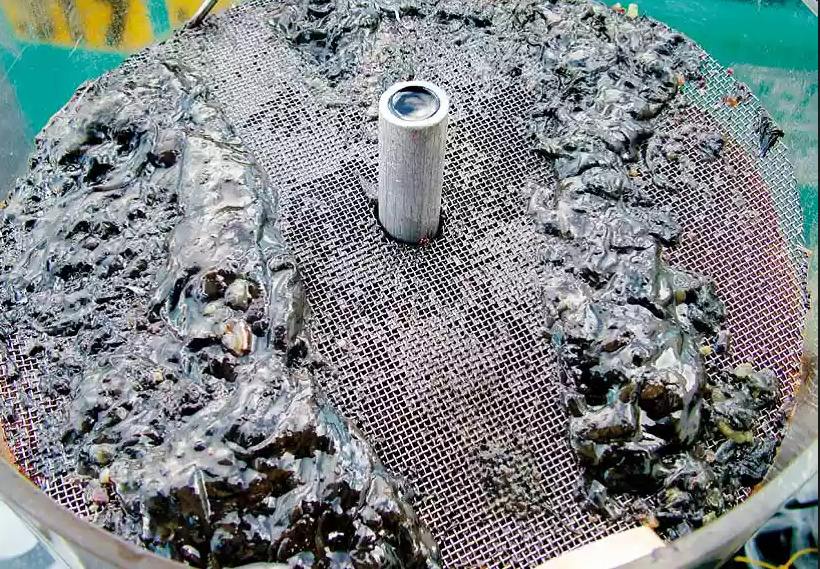
– The subsequent investigation found that the fuel tank was contaminated with bacteria, which had formed black deposits on the internal tank structure. The deposits had broken away during the rough weather and had entered the fuel systems. These built up in the fuel filters and eventually led to fuel starvation.
– The frequency of choked filters had been recorded while in service and the question of fuel tank cleaning was to be investigated during the overhaul. The owners later established that the “blocked fuel filter” problem, although known to the motorman, had not been identified on the handover notes. This potential problem was not therefore known to the chargehand in command.
WHAT IS FUEL BACTERIA??
When it comes to bunkering with diesel, the biggest threat comes in the smallest package. Microbes, better known as bacteria, find sustenance in diesel fuel and the water it attracts. These bacterium can lead to fuel fouling, tank corrosion, and clogged filters. In fact, a microbial colony can consume as much as 2% of your fuel while spoiling the rest. Understanding bacteria in diesel is key to protecting your diesel from a microbial growth outbreak.
MICROBES SURVIVE ON “FOOD & WATER”
Microbes reproduce at the bottom of tanks where diesel and water are stagnant and can rapidly grow with high temperatures.
CONTAMINATED FUEL BECOMES UNUSABLE
Once the outbreak of bacteria reaches a certain point, the fuel becomes permanently contaminated. Microbes can breed in either the storage tank or in a piece of machinery that has been holding stagnant fuel in it for an extended period of time. Whether microbes are dead or alive, they will cause fuel system damage such as corrosion, rust, and filter plugging. It is recommended to prevent bacterial growth before it starts, and even more important to eliminate it immediately once an outbreak is detected.

MICROBES VS. ALGAE
It is important to note the difference between microbial growth and algae. Microbial colonies are bacteria or fungus whereas algae is a photosynthetic organism which needs sunlight to thrive. Due to the lack of light present in an enclosed fuel tank, it is unlikely for algae to bloom. The bacteria found in diesel does not need light in order to survive, therefore fuel tanks become the perfect breeding ground.
MICROBE PREVENTION – ANTIBIOTICS
It is recommended that fuel be treated to control the possibility of microbial growth in diesel. It is important to use a diesel biocide or an additive that has some sort of microbial growth remover to get rid of the sludge. It is designed for both diesel and biodiesel blends and is best added right before or right after refilling fresh fuel to the tank. Bottom line: to protect yourself from a bad batch of diesel or providing the perfect conditions for bacterial growth, be sure to use an additive with a biocide to keep on steaming full ahead!
BENEFITS OF USING A GOOD BIOCIDE
- Kills microbes (bacteria and fungi) that grow in dispersed and free water .
- Prevents fuel-filter plugging – helps prevent fuel system failures
- Protects fuel system components against organic acids caused by microbial growth – prevents fuel tank corrosion
- Improves fuel performance
- Reduces engine maintenance costs

Wish you all a bon voyage and safe seas !!
 The Deep Draft
Leave a comment